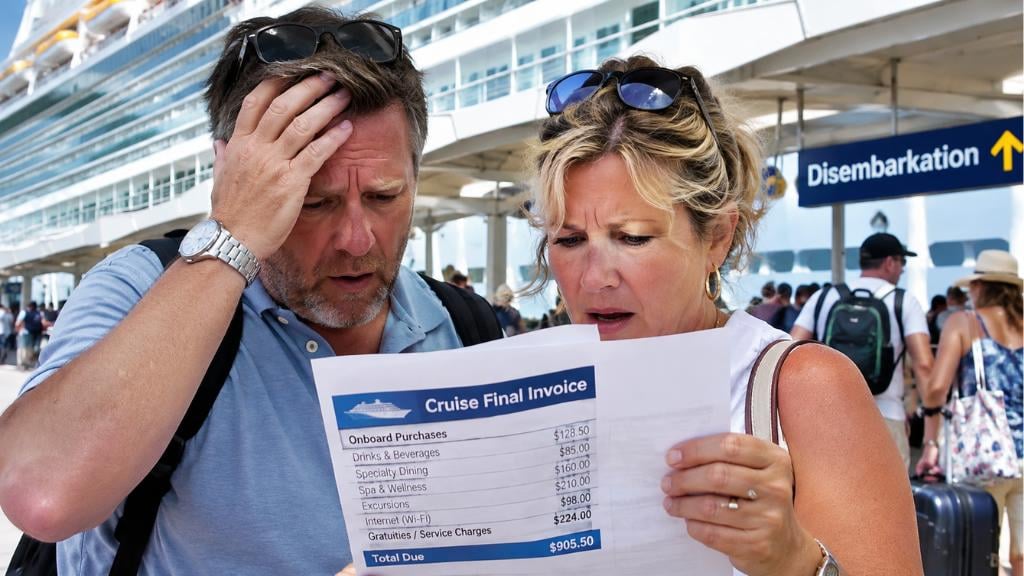
Your cruise final bill can contain some expensive surprises if you don’t check it before leaving the ship. Even if you thought you had everything covered, unexpected drink charges, gratuities, internet purchases, and other onboard expenses can add up before disembarkation day.
The tricky part is that most cruise passengers aren’t thinking about their spending when they’re getting ready to go home. They’re packing suitcases, checking departure instructions, enjoying their final evening, and making sure everyone has their belongings.
That’s exactly why checking your onboard account before leaving is so important.
Most cruise lines allow passengers to review their onboard spending through the cruise app, interactive television, or guest services. Taking a few minutes to review those charges can help you catch mistakes while you’re still onboard and have an opportunity to question them.
Here are five surprise charges to look for on your cruise final bill, how they happen, and what to do if something doesn’t look right.
Table of Contents
What You Need to Know About Your Cruise Final Bill
Most major cruise lines operate a cashless onboard account system. Instead of paying separately every time you order a drink, visit a specialty restaurant, or purchase something in a shipboard shop, charges are added to your onboard account.
Your cruise card or wearable device is linked to that account, making it easy to purchase things without carrying cash. However, convenience can also make it easier to lose track of spending.
Depending on your cruise line and purchases, your final account may include:
- Beverage purchases and additional gratuities.
- Specialty dining and restaurant charges.
- Internet packages and connectivity purchases.
- Spa treatments and onboard services.
- Shore excursions and other activities.
- Casino-related charges.
- Taxes, fees, and applicable service charges.
- Adjustments or credits to your account.
The important thing is that your cruise fare and onboard spending are two different things. Even if you’ve prepaid several extras, you may still have additional charges to review.
Let’s look at the five areas most likely to catch passengers by surprise.
1. Drink Charges You Thought Were Included

Drink charges are one of the first things I’d check on a cruise final bill. Cruise drink packages can make onboard spending easier to manage, but they don’t necessarily cover every beverage or every charge associated with ordering drinks.
For example, depending on your cruise line and package, you might still encounter:
- Drinks above your package’s permitted price limit.
- Certain premium beverages.
- Bottles of wine or champagne.
- Drinks purchased for someone else.
- Additional gratuities where applicable.
- Purchases made before your package became active.
There can also be confusion when passengers assume every beverage ordered onboard is automatically included.
On some cruise lines, certain specialty coffees, fresh juices, premium bottled water, and other drinks may be treated differently depending on the package.
Royal Caribbean is a good example of why it’s important to understand the details. Its beverage packages have specific terms, and not every drink or purchase is necessarily covered.
If you’ve purchased a drink package, check that the package was correctly applied to your account and that individual beverage charges aren’t appearing unexpectedly.
What to check in your cruise final bill:
- Review individual drink transactions.
- Look for drinks charged at full price despite having a package.
- Check whether additional gratuities were applied.
- Confirm the dates your package was active.
- Question any purchase you don’t recognize.
If you’re still deciding whether a beverage package is worth buying, use my free cruise drink package calculator so you can help yourself understand the costs before sailing.
2. Automatic Gratuities and Additional Service Charges That Increases Cruise Final Bill

Gratuities are another area that can cause confusion when reviewing your cruise final bill. Many cruise lines automatically add daily gratuities to passengers’ onboard accounts unless they’ve been prepaid or another arrangement applies.
These charges typically help compensate crew members who provide services throughout the cruise.
The surprise happens when passengers forget whether they prepaid their gratuities or assume every service charge is already included.
You might see charges associated with:
- Daily onboard gratuities.
- Beverage purchases.
- Specialty dining.
- Spa services.
- Other services where additional gratuities apply.
It’s important to distinguish between daily gratuities and additional service charges.
For example, a beverage purchase may have a service charge or gratuity applied separately, depending on the cruise line and whether you have a beverage package.
That doesn’t automatically mean you’ve been charged twice.
However, if you prepaid daily gratuities before sailing, you should check whether those charges have also appeared on your onboard account.
What to check:
- Confirm whether daily gratuities were prepaid.
- Review any automatic gratuity charges.
- Check additional service charges on individual purchases.
- Look for duplicate gratuity entries.
- Ask guest services to explain anything you don’t understand.
My advice is to keep your pre-cruise payment confirmation. It’s much easier to question a charge when you can show exactly what you’ve already paid.
3. Internet Charges You Didn’t Expect

Internet charges can also appear on your cruise final bill, particularly if you purchased a Wi-Fi package or used onboard connectivity without fully understanding how the charges worked.
Cruise internet packages often operate differently from ordinary home internet or mobile data plans.
Depending on the cruise line, packages may be sold by device, passenger, or other usage arrangements.
Some passengers accidentally create additional charges by:
- Purchasing an extra device connection.
- Upgrading an existing internet package.
- Activating a package they didn’t intend to purchase.
- Making a purchase through an onboard internet portal.
- Forgetting that an internet package was already included in a booking benefit.
Another potential issue is sharing an internet package. Some cruise lines allow passengers to switch between devices, while others have specific rules about simultaneous connections and package access.
If you’re planning to use Wi-Fi while exploring ports instead of purchasing an onboard internet package, make sure you understand the potential risks of connecting to public networks. Read my guide to Cruise Port WiFi Risks before connecting.
If you purchase an additional connection without realizing it, the cost can add up.
What to check:
- Confirm how many internet packages you purchased.
- Check the number of devices included.
- Review any upgrade transactions.
- Look for duplicate internet purchases.
- Compare the charges with your original purchase confirmation.
If you don’t need internet throughout your cruise, consider whether a smaller package or occasional connectivity is enough.
It’s much better to understand the package before boarding than to discover unexpected charges when your vacation is over.
4. Specialty Dining, Room Service, and Onboard Food Purchases

Food is another area where passengers can underestimate their onboard spending.
Most cruise fares include meals in designated dining venues, but not every restaurant or food purchase is necessarily included.
Specialty restaurants, premium food experiences, and certain room service orders can generate additional charges.
This can be especially confusing for first-time cruisers who assume that everything to eat onboard is included in the cruise fare.
Possible charges include:
- Specialty restaurant reservations.
- Premium dining experiences.
- Certain room service orders.
- Food purchased from extra-charge venues.
- Special dining events.
- Applicable restaurant service charges.
The details vary between cruise lines and individual ships. For example, some ships offer complimentary casual dining options alongside specialty restaurants that charge extra.
Other dining venues may have different pricing arrangements depending on the experience.
What to check:
- Review specialty dining transactions.
- Confirm any restaurant deposits or credits.
- Look for room service charges.
- Check whether dining package benefits were applied correctly.
- Question duplicate restaurant charges.
One thing worth remembering is that a dining package doesn’t necessarily mean every restaurant experience is free. Some packages have exclusions, surcharges, or reservation conditions.
If you purchased a dining package, compare your final transactions against the package terms before leaving the ship.
5. Mini-Bar, Shopping, and Other Small Purchases That Add Up in Cruise Final Bill

This is the category I’d pay particular attention to because small purchases are easy to forget.
During a cruise, you might purchase a few souvenirs, grab something from the onboard shop, or use an item from your cabin mini-bar.
Each transaction may seem insignificant at the time. But several small purchases can turn into a surprisingly large final balance.
Common charges to look for include:
- Mini-bar drinks and snacks.
- Bottled water.
- Onboard merchandise.
- Souvenirs and clothing.
- Arcade purchases.
- Laundry services.
- Spa products.
- Other incidental cabin purchases.
Another thing worth checking is whether a purchase was charged to your cabin account more than once.
For families, this can become particularly important when several people share the same onboard account.
Children may have charging privileges through their cruise cards, depending on the account settings and parental controls.
You might not realize how much everyone has spent until the final statement arrives.
What to check:
- Review every mini-bar transaction.
- Check onboard shop purchases.
- Look for duplicate transactions.
- Review charges made by other passengers linked to your account.
- Confirm that any unused purchases or credits are reflected correctly.
For families, I’d recommend setting clear spending expectations before the cruise begins.
It’s much easier to manage onboard spending when everyone understands which purchases are allowed and who is responsible for them.
Cruise Final Bill Checklist: What to Review Before Disembarkation
You don’t need to spend your final evening going through every purchase in detail.
However, taking five to ten minutes to review your account can help you catch problems before leaving the ship.
Here’s a simple checklist.
| Charge to check | What to look for |
|---|---|
| Drinks | Unexpected or duplicate purchases |
| Gratuities | Prepaid versus onboard charges |
| Internet | Extra devices or unwanted upgrades |
| Dining | Specialty restaurant and room service charges |
| Mini-bar and shopping | Forgotten or incorrect purchases |
I’d also recommend checking the following:
- Make sure your name and cabin information are correct.
- Review transactions from the entire sailing.
- Check that onboard credits have been applied.
- Look for refunds or adjustments that haven’t appeared.
- Confirm the final balance and payment method.
Don’t wait until you’re standing in the cruise terminal to discover a billing problem. It’s generally much easier to speak with guest services while you’re still onboard.
How to Check Your Cruise Final Bill Before Leaving the Ship
Most major cruise lines provide ways to review onboard spending before disembarkation. The exact process varies, but these are the most common options.
1. Use the Cruise Line App
Many cruise lines allow passengers to review their onboard account through the official mobile app.
Depending on the cruise line, you may be able to see individual transactions, account balances, and purchases made during the sailing.
Check the app during the cruise rather than waiting until the final morning. For example, Royal Caribbean explains how passengers can access their onboard account details and request a copy of their cruise invoice or final statement.
2. Check Your Cabin Television
Some ships offer an interactive television system that displays onboard account information.
This can be useful if you don’t have an internet package or prefer not to use your phone. Availability and functionality vary by ship.
3. Visit Guest Services
If something looks incorrect, guest services is usually the best place to start. Bring any relevant receipts or purchase confirmations and explain which transaction you want reviewed.
If a charge is disputed, ask for an explanation and request that it be investigated before your departure.
4. Review Your Cruise Final Bill Statement
Cruise lines generally provide a final account statement showing the balance and relevant transactions.
Review it carefully, particularly if you’ve used several onboard services or shared an account with family members. Keep a copy for your records.
What Happens If You Find an Incorrect Cruise Charge in Your Cruise Final Bill?
Finding an unexpected charge doesn’t necessarily mean you’ve been overcharged.
Sometimes a purchase is legitimate but simply forgotten. Other times, there may be a duplicate transaction, an incorrectly applied package, or a billing mistake.
If something doesn’t look right, take these steps.
Step 1: Identify the transaction.
Write down the amount, date, and description shown on your onboard statement.
Step 2: Gather supporting information.
Look for receipts, package confirmations, pre-cruise payment records, or other documentation.
Step 3: Contact guest services.
Explain the problem clearly and ask them to investigate the transaction.
Step 4: Request clarification or an adjustment.
If the charge is incorrect, ask for it to be corrected and confirm that the adjustment appears on your account.
Step 5: Keep your final statement.
If the issue remains unresolved, keep the documentation and contact the cruise line through its official customer service channels after your sailing.
One important tip: Don’t assume that leaving the ship means you can no longer question a charge. You can still contact the cruise line afterward, although resolving an issue may be easier while you’re onboard.
Who Should Pay Extra Attention to Their Cruise Final Bill?
Although every passenger should review their account, some cruisers have more reason to be careful.
Families: Multiple people may be making purchases through linked onboard accounts. Small charges can add up quickly.
First-time cruisers: If you’re unfamiliar with how onboard accounts work, it’s easy to assume more things are included in your cruise fare than actually are.
Drink package holders: Check that your package has been applied correctly and that individual purchases haven’t been charged unexpectedly.
Passengers with onboard credits: Make sure applicable credits have been used and correctly reflected in your account.
Cruisers who prepay extras: Keep confirmation records for gratuities, dining, excursions, and internet purchases so you can identify potential duplicate charges.
Budget-conscious travelers: Reviewing your spending during the cruise can help prevent an unpleasant surprise when your vacation ends.
Common Mistakes to Avoid When Checking Your Cruise Final Bill
Waiting Until Disembarkation Morning
Why it is a problem: Guest services can become busy as passengers prepare to leave, making it harder to resolve a complicated billing issue.
Extra considerations: Some adjustments may require additional investigation or supporting documentation.
Better alternatives: Check your onboard account at least once during the cruise and again on your final evening.
Assuming Every Charge Is Incorrect
Why it is a problem: Some transactions may be legitimate purchases or additional service charges you simply forgot about.
Extra considerations: A drink package or dining package may have exclusions and specific conditions.
Better alternatives: Compare individual transactions with your package terms and purchase confirmations before disputing them.
Forgetting About Family Purchases
Why it is a problem: Children or other passengers linked to your onboard account may make purchases you weren’t expecting.
Extra considerations: Different cruise lines offer different account controls and spending arrangements.
Better alternatives: Review family transactions and establish spending limits or permissions before boarding.
Throwing Away Receipts
Why it is a problem: Without supporting documentation, it can be harder to explain why you believe a charge is incorrect.
Extra considerations: Digital receipts and pre-cruise confirmations can also be useful.
Better alternatives: Keep important purchase confirmations until your final account has been settled.
FAQs About Cruise Final Bills
1. When do you receive your cruise final bill?
Most cruise lines make onboard account information available before disembarkation and provide a final statement around the end of the sailing. The exact timing and delivery method vary.
2. Can you check your cruise bill before the last day?
Yes. Many cruise lines allow passengers to review onboard spending through their mobile apps, interactive cabin televisions, or guest services.
3. Can you dispute a cruise final bill after leaving the ship?
Yes. You can contact the cruise line’s customer service department after your sailing if you discover an incorrect charge. However, resolving the issue while still onboard is often more convenient.
4. Do prepaid gratuities appear on your final cruise bill?
They may appear differently depending on the cruise line and how the payment was processed. Check your original confirmation to make sure you haven’t been charged twice.
5. Can a cruise line charge your credit card after you leave the ship?
Yes. If you have an outstanding onboard balance, the cruise line generally processes the final amount using the payment method linked to your onboard account.
6. Are drink package gratuities included in the package price?
This depends on the cruise line and package terms. Some packages include the applicable gratuities in the purchase price, while others may handle service charges differently.
7. Do onboard credits reduce your final cruise bill?
Generally, applicable onboard credits are deducted from eligible purchases or your onboard balance. However, restrictions can apply, so check which purchases qualify.
8. Can you get a refund for an incorrect cruise charge?
If the cruise line confirms that a charge was incorrect, it may issue an adjustment or refund. The process and timing depend on the cruise line and payment method.
9. Do children get their own onboard spending accounts?
Children can have onboard charging privileges linked to their cabin or family account, depending on the cruise line and account settings. Parents should check the available controls before sailing.
10. Should you tip extra if you’ve already paid cruise gratuities?
Additional tipping is generally optional unless a specific service charge or policy applies. Daily gratuities and optional additional tips are different things.
Jim’s Take: Never Leave the Ship Without Checking Your Cruise Final Bill

I think checking your cruise final bill is one of those small things that can save you a lot of frustration.
After spending several days enjoying your vacation, the last thing you want is to discover an unexpected charge on your credit card a few days after returning home.
The five areas I’d check first are drinks, gratuities, internet, specialty dining, and small purchases.
These are the categories where it’s easiest to lose track of spending, particularly when everything is charged to your cabin account instead of being paid for individually.
I’d also make a point of checking the account before the final morning. You don’t want to be standing in a long guest services line when everyone else is trying to disembark.
One other thing worth remembering is that prepaid extras aren’t always handled the same way across cruise lines. Keep your confirmations, especially for drink packages and gratuities.
My rule is simple: Enjoy the cruise, spend what you’re comfortable spending, but always check the final statement before going home.
Final Verdict About Cruise Final Bill
Your cruise final bill shouldn’t be an unpleasant surprise at the end of an otherwise great vacation. Take a few minutes to review your onboard account, check for duplicate transactions, confirm prepaid extras, and question anything you don’t recognize.
Pay particular attention to drink purchases, gratuities, internet packages, specialty dining, and small onboard purchases. If you spot a mistake, speak with guest services before leaving whenever possible.
A little attention on your final evening can help you avoid unnecessary expenses and finish your cruise with one less thing to worry about.