Things first-time cruisers always forget to pack can turn an easy vacation into an annoying, expensive one faster than most people expect.
My view is simple; cruise packing is not really about bringing more stuff. It is about bringing the right stuff for a small cabin, limited outlets, aggressive air conditioning, port-day logistics, and the reality that once the ship leaves port, forgotten basics suddenly become overpriced problems.
Table of Contents
Quick Verdict
If it were me, I would never board without these basics:
- a non-surge power cube
- magnetic hooks
- a real embarkation-day carry-on
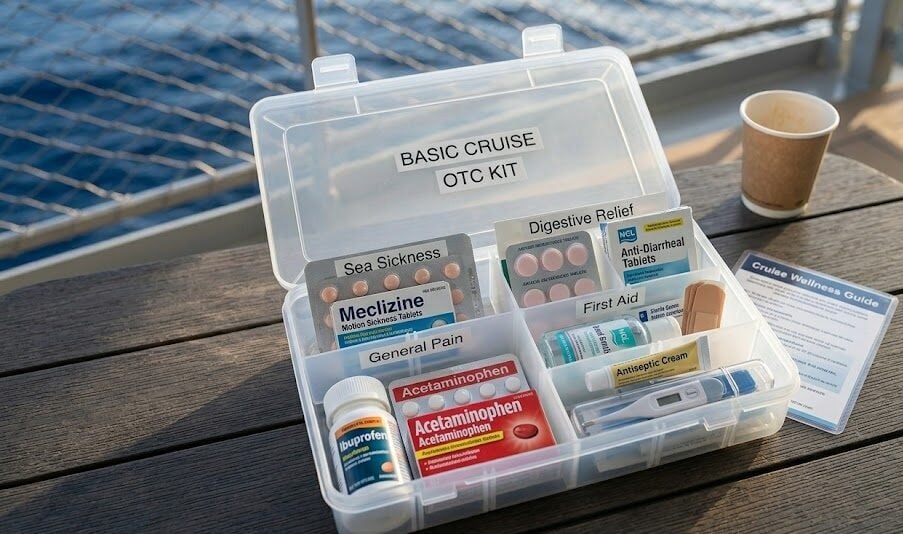
- basic OTC medication
- a light sweater for indoor spaces
- printed travel documents as backup
What I would not do is pack like I am going to a land resort, assume the app will handle everything, or leave basic medicines and charging gear to chance.
That is where a lot of first-cruise regret starts.
The Real Mistake Most People Make
The biggest packing mistake first-time cruisers make is focusing too much on outfits and not enough on cabin function.
They remember swimsuits, dinner clothes, and sandals. But they forget the things that make a cruise cabin actually livable: storage tools, charging tools, medicine, a better carry-on setup, and a few practical items that save a shocking amount of frustration.
A non-obvious truth here is that cruise cabins punish disorganization much more than hotel rooms do. They are smaller, colder, more clutter-prone, and much less forgiving when you forget something simple.
The best-packed cruisers are not the ones with the biggest suitcases. They are the ones who make a tiny cabin work well from the first hour onboard.
Quick Decision Guide: Pack This, Skip That
| Pack This | Skip This | The Reason |
|---|---|---|
| Non-surge power cube | Standard surge protector | Surge protectors are often prohibited and may be confiscated |
| Wrinkle release spray | Travel iron or steamer | Heating elements are usually banned onboard |
| Reusable water bottle | Cases of bottled drinks | Cruise lines often restrict or complicate large beverage carry-ons |
| Printed passport copies and boarding info | Relying only on the app | Port Wi-Fi and terminal connectivity can fail at the worst time |
| Embarkation-day carry-on | Putting essentials in checked luggage | You may not see your suitcase until late afternoon or evening |
The 21 Things First-Time Cruisers Always Forget to Pack
When you compare different Royal Caribbean ship classes, cabin layouts and storage vary a little, but the items that make the room actually functional stay surprisingly consistent. These are the things first-time cruisers always forget to pack and then wish they had brought.
1. Magnetic Wall Hooks
Cruise cabin walls are usually steel, and that makes magnetic hooks one of the smartest packing upgrades you can bring.
You can hang swimsuits, hats, lanyards, tote bags, light jackets, and random daily-use items without turning the chair, bed, or vanity into a dumping ground.
I usually think this is one of the highest-value packing items for the price. In a small cabin, vertical storage matters more than extra drawer space you do not have.
2. A Cruise-Approved Non-Surge Power Cube
This is one of the most practical things first-time cruisers always forget to pack because they assume the cabin will have enough outlets.
Sometimes it will not. Older ships especially can be stingy with plugs, and even newer cabins are not always set up for the number of devices people carry now.
Bring a cruise-approved non-surge cube or splitter, not a standard household surge protector. If it were me, I would treat this as essential, not optional.
3. A Battery-Powered Nightlight
If you book an interior cabin, it can become pitch black at night. That is great for sleeping, but much less great when you wake up at 2:00 a.m. and need to find the bathroom without smashing your shin on furniture.
A tiny motion-sensor nightlight is one of those items that feels unnecessary until the first night onboard.
Good cruise packing is often about preventing small annoyances before they happen.
4. A Pop-Up Mesh Hamper
Dirty laundry gets out of control fast in a small cabin.
If you do not have a dedicated place for it, it ends up in a pile on the floor, on the couch, or half-in and half-out of your suitcase. That makes the cabin feel messier than it really is.
A cheap pop-up hamper solves that immediately. I think this matters far more than packing “better” outfits.
5. Liquid Hand Soap
A lot of cruise bathrooms are functional, not luxurious. The provided soap setup is not always what people want, and sometimes it is just not very pleasant to use.
Bringing a small bottle of liquid hand soap is one of those low-effort upgrades that makes the bathroom feel cleaner and more normal.
Little cabin-comfort items add up fast on a weeklong cruise.
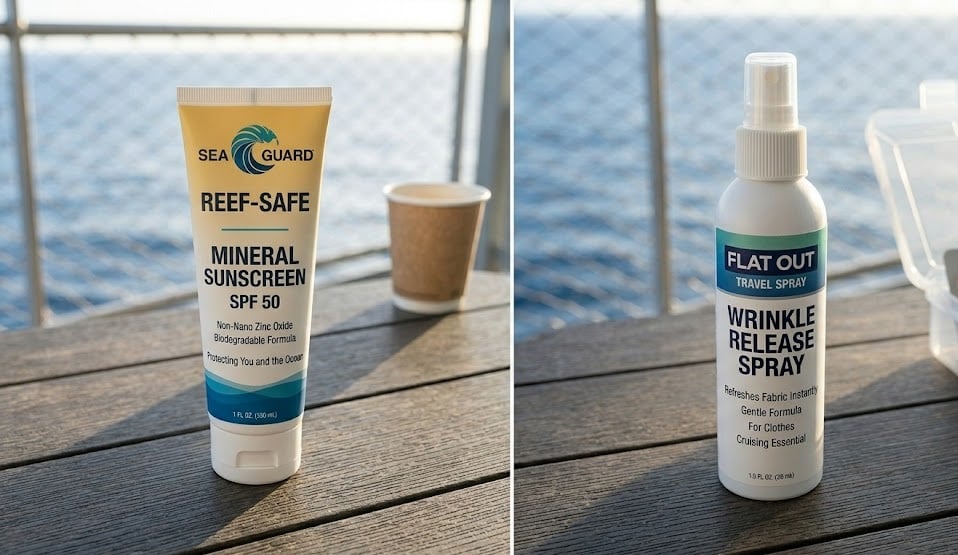
6. Wrinkle Release Spray
Travel irons and steamers are usually prohibited, which surprises a lot of first-timers.
That means wrinkle release spray is the smarter answer. Spray the item, hang it up, and let the bathroom steam during a hot shower help the fabric relax.
If it were me, I would absolutely bring this instead of gambling on wrinkled evening clothes or getting something confiscated.
7. A Light Sweater or Cardigan
This is one of the classic things first-time cruisers always forget to pack because they are focused on tropical weather.
Outside may be hot. Inside can feel freezing. Dining rooms, theaters, lounges, and indoor public spaces are often aggressively air-conditioned.
I would not board without one lightweight layer, even on a Caribbean cruise. The ship interior and the weather outside are two different worlds.
8. Motion Sickness Medication
Even people who never get motion sick at home can feel off on a ship, especially if the water gets rough or the cabin is far forward.
Pack something simple just in case. Do not assume you will not need it. And do not assume the onboard option will be cheap or convenient when you do.
This is especially important if you are still figuring out what kind of cabin location works best for you on different ships, which is one reason guides like Royal Caribbean ships by age can be useful when you are planning.
9. Small Bills for Tips
The ship itself may be mostly cashless, but you still want a small amount of physical cash.
Luggage porters at the terminal, room service delivery, and local guides in port are all much easier to tip with small bills than with awkward large notes or nothing at all.
I usually think a small stack of ones and fives is enough.
10. Lanyards or a Better Way to Carry Your Room Key
Your SeaPass or room key gets used constantly. You open the cabin, buy drinks, get on and off the ship, and verify purchases with it.
Having it buried in a bag or shoved into the wrong pocket gets old quickly. A lanyard, badge holder, or some other simple carry method makes life easier fast.
This is not glamorous, but it is practical.
11. A Basic OTC Pharmacy Kit
This is one of the most expensive categories to forget.
Ibuprofen, antacids, allergy tablets, bandages, blister care, cold medicine, aloe, and similar basics can be wildly overpriced onboard. And sometimes the onboard shop hours are less convenient than people expect.
If it were me, I would pack a dedicated Ziploc or pouch just for everyday medical basics. That one little kit can save you a surprising amount of money and hassle.
12. Towel Clips for Windy Pool Decks
Pool decks can get windy, especially while the ship is moving. Towel clips are a tiny item, but they keep your lounger setup from becoming annoying every time a gust hits.
Are they absolutely essential? No. Are they one of those surprisingly useful cruise-specific items people wish they had? Yes.
I think they are especially worth it on warm-weather itineraries where you know you will spend a lot of time outside.
13. Reef-Safe Sunscreen
Not all sunscreen rules are the same everywhere, and some destinations are stricter about what is allowed or encouraged.
More importantly, the last place you want to discover a sunscreen problem is onboard or in port when your choices are overpriced, limited, or both.
I would pack the one you already know works for you and check destination-specific rules beforehand.
14. A Waterproof Phone Pouch or Lanyard
If you are planning beach stops, pool time, or water activities, a waterproof phone pouch is one of the smartest little packing additions you can make.
It keeps the phone dry, keeps sand off it, and lets you take photos without constantly worrying about where to stash your device.
This is especially useful on active beach days at places like Perfect Day at CocoCay.
15. A Reusable Water Bottle
Hydration on a cruise sounds easy until you realize you are walking a lot, sitting in the sun, and not always near the exact drink station you want.
A reusable bottle makes the whole day easier and cuts down on the temptation to buy bottled drinks just because it is convenient.
Simple items that make the day easier are often better than fancy items you barely use.
16. Ziploc Bags
Ziploc bags are one of those boring items that become useful over and over again.
Wet swimsuits, sandy items, damp sunscreen bottles, small medications, electronics on beach days, leftover snacks for later, jewelry during excursions… they solve a lot of little problems without taking up real space.
If it were me, I would pack several sizes.
17. Printed Travel Documents and Backup Copies
Apps are useful until they are not.
Terminal Wi-Fi can be unreliable, phones die, screenshots get buried, and people discover at the exact wrong moment that they were relying too heavily on one device.
Always keep printed copies of passports, boarding details, travel insurance, and anything else you would hate to lose access to in a moment of stress.
Paper backups still matter more than people want to admit.
18. Pre-Downloaded Entertainment
Ship Wi-Fi has improved, but that does not mean it works like your living room at home.
Streaming can still be inconsistent, especially when everyone onboard is trying to use the network at the same time. Download shows, playlists, audiobooks, and anything else you know you might want in advance.
I think this is especially useful for flight days, downtime in the cabin, and kids who do not respond well to “the Wi-Fi is acting up.”
19. A Highlighter or Simple Planning Tool
If you like paper schedules, excursion notes, or keeping your trip organized visually, a highlighter is still useful.
Yes, the app exists. But some people just think better when they can mark up the daily plan, circle show times, and keep track of what actually matters.
I would not call this universal, but for the right traveler it is a very good small-item addition.
20. A Dedicated Embarkation-Day Carry-On
This is one of the most important things first-time cruisers always forget to pack correctly.
They bring a carry-on, but they do not build it for the first 8 to 12 hours of the cruise. That is the mistake.
Your carry-on should include your swimsuit, medications, travel documents, sunscreen, phone charger, valuables, and anything else you may need before your checked luggage appears.
If it were me, I would treat that bag like a first-day survival kit, not just a spare tote.
21. A Basic Watch Set to Ship Time
This one sounds old-school until it saves you from a port-day mistake.
Phones can shift time zones automatically depending on local networks, but the ship runs on ship time. Those are not always the same thing.
If you are on an independent excursion, a simple watch can be the easiest way to avoid an ugly “I thought I had another hour” mistake.
Common Mistakes to Avoid When Packing
Packing Wine in Checked Luggage
Why it is a problem: If your cruise line allows wine, it usually needs to be carried on, not buried in checked luggage.
Extra considerations: Broken bottles can ruin your clothes, and security may need to inspect what you brought anyway.
Better alternative: Hand-carry permitted wine. Or, if you are already debating beverage costs, use that money and effort more strategically by deciding ahead of time whether Royal Caribbean drink package worth it for your trip.
Putting Daily Medications in Checked Bags
Why it is a problem: Your checked suitcase may be unavailable for hours, and if it is delayed, you have a real problem instead of a small inconvenience.
Extra considerations: The ship is not a full-service pharmacy, and replacing certain medications onboard may be impossible or extremely difficult.
Better alternative: Keep all daily medications, emergency prescriptions, and motion-sickness backup in the bag that stays with you at all times.
Ignoring Port-Day Clothing Reality
Why it is a problem: Some travelers pack only pool and resort clothes, then realize too late that certain cultural, religious, or city excursions require more coverage and better walking comfort.
Extra considerations: This is especially relevant on European itineraries and certain historic or religious sites.
Better alternative: Pack at least one lightweight outfit that covers shoulders and knees, plus real walking shoes you trust.
Step-by-Step: How I Would Pack for a Cruise
1. Pack for the cabin first
Before I think about outfits, I would think about making the room work. That means storage, charging, laundry control, and the items that keep the cabin from feeling chaotic.
2. Build the carry-on before the suitcase
Your first-day bag matters more than people realize. Pack it like you may not see your checked luggage until evening.
3. Create one small pharmacy pouch
Do not scatter medicine through multiple bags. Put it all in one place so you can find it instantly when you need it.
4. Pack for the actual itinerary, not the fantasy version
If the trip is port-heavy, you probably need more walking comfort and less eveningwear drama. If the trip has multiple sea days, comfort items matter more. If you are on a ship where you expect to spend more time in the cabin, room function matters even more, which is why broad comparisons like Royal Caribbean ships by size can sometimes help set better expectations.
5. Remove the prohibited items before you zip the bag
Do one final pass for banned electrical items, restricted beverages, and anything else that could cause problems at embarkation.
Best Packing Priorities by Traveler Type
| Traveler Type | Top Packing Priority | What to Avoid |
|---|---|---|
| First-time cruisers | Embarkation-day carry-on and document backups | Relying only on the app |
| Families | Pharmacy kit and cabin organization tools | Letting essentials get buried in checked bags |
| Light sleepers | Nightlight, sweater, and better room setup | Assuming the cabin will feel like a hotel room |
| Budget travelers | OTC meds, reusable bottle, and charging gear | Buying basics onboard |
| Port-heavy itinerary travelers | Walking clothes, watch, and document folder | Packing only pool-day items |
Who This Advice Is Best For
This advice is best for:
- first-time cruisers
- families trying to stay organized in a small cabin
- travelers who hate paying onboard markup for forgotten basics
- light sleepers who want the room to feel more functional
- anyone who wants embarkation day to feel smoother
The more easily you get irritated by clutter, lines, or avoidable extra costs, the more this packing advice matters.
Who Should Relax About All This a Bit
You can be a little looser with this advice if:
- you cruise often and already have a refined packing system
- you are staying in a very large suite with much more space
- you do not mind paying extra onboard for convenience mistakes
- you genuinely travel light and stay organized naturally
Even then, I would still care about the carry-on strategy, the medication kit, and the charging setup. Those three mistakes catch almost everybody eventually.
Jim’s Take

Things first-time cruisers always forget to pack usually come down to one issue… people do not realize what a cruise cabin actually feels like until they are already living in it.
I think first-timers often overfocus on clothes and underfocus on room setup. After a few cruises, most people realize the room works better when you have the basics right: charging, storage, medicine, and a carry-on that keeps the first day easy.
If it were me, I would rather have my magnetic hooks, my non-surge power cube, my OTC meds, and a clean room setup than an extra pair of shoes or one more dress shirt I probably will not use.
I usually think a cruise cabin should feel like a small, organized reset space. Not glamorous, necessarily… just functional, calm, and easy to live in. On energetic ships, that matters even more because the room becomes the place where you recover from everything else.
The cruisers who enjoy their vacations most are usually not the ones who packed the most. They are the ones who packed the smartest.
FAQs: Things First-Time Cruisers Always Forget to Pack
Can I bring my own coffee maker or kettle?
No. Items with exposed heating elements are usually prohibited and may be confiscated. If coffee matters to you, it is better to plan around the ship’s options in advance, including guides like Royal Caribbean coffee.
Do I need to pack a hairdryer?
Usually, no. Most cabins include one. But they are often weaker than what people use at home, so travelers with specific styling needs sometimes still prefer bringing their own if the cruise line allows it.
Should I pack beach towels?
Usually not. Most mainstream cruise lines provide pool and beach towels, so packing your own often just wastes space.
What kind of shoes do I really need?
Most people do well with three categories: comfortable walking shoes, sandals or pool shoes, and one nicer pair for evening. Beyond that, shoe packing often gets excessive fast.
Are there laundry facilities on the ship?
It varies by line. Some ships have self-service laundry, while others require paid laundry service. That difference matters, especially on longer cruises.
Do I really need printed documents if I have the app?
Yes, I think so. The app is useful, but it is not a perfect backup if your phone dies, Wi-Fi struggles, or you need to show something quickly during embarkation or in port.
Final Recommendation
The smartest cruise packing is not about bringing more. It is about bringing the items that make a small cabin, a busy embarkation day, and a long week at sea easier to manage.
Pack for cabin function. Pack for first-day survival. Pack for onboard overpricing. And pack like your phone, the Wi-Fi, and the ship store will all be slightly less convenient than you hope.
That is usually how you avoid the expensive, annoying mistakes first-time cruisers make over and over again. To ensure you are fully compliant with 2026 security standards, always double-check the Official TSA Prohibited Items List for your flights, and cross-reference it with your specific cruise line’s prohibited items page.