Can a Last-Minute Court Battle Save America’s Legendary Ocean Liner?
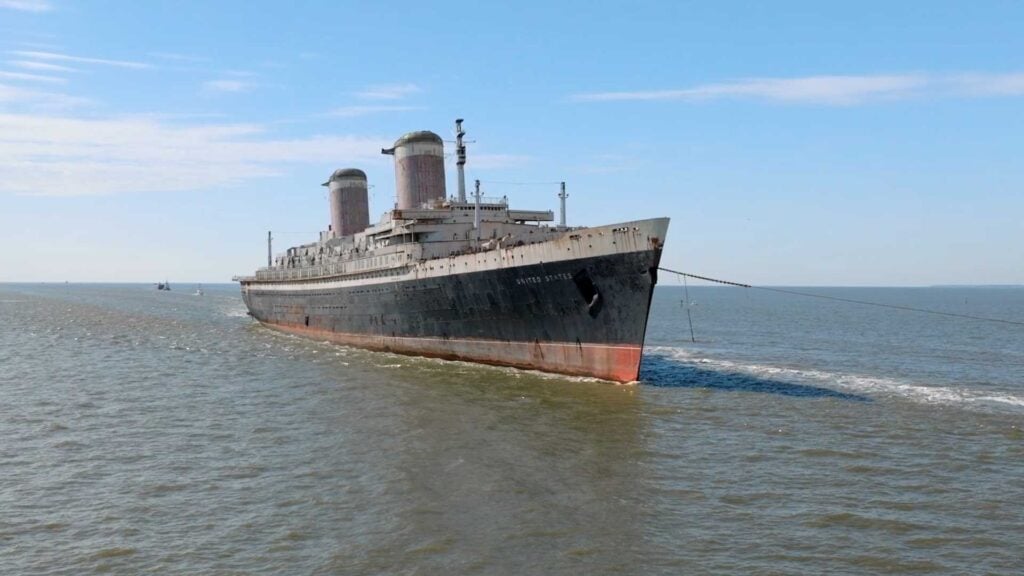
For more than seven decades, the SS United States stood as a symbol of American engineering, ambition, and the golden age of transatlantic ocean travel. Built to cross oceans at extraordinary speeds, she carried thousands of passengers and earned a place in maritime history that few ships could ever claim.
Now, one of America’s most celebrated ocean liners is preparing for a very different kind of voyage. After years of uncertainty, failed preservation efforts, and a lengthy stay in Mobile, Alabama, the nearly 1,000-foot vessel is scheduled to be deliberately sunk in the Gulf of Mexico.
The plan is to give the historic ship a second life as the world’s largest artificial reef, creating a new underwater habitat and an attraction for fishermen and scuba divers. On paper, it sounds like a remarkable way to give an aging ocean liner a new purpose. But beneath the surface, the decision has sparked a controversy that could have far-reaching consequences.
Why sink a ship with such an extraordinary history instead of finding a way to preserve it? Could the remaining paint coatings pose an environmental threat? Have federal authorities properly followed America’s environmental and historic preservation laws? And with the ship’s final departure approaching, is there still a chance to stop the operation?
The answers go far beyond the fate of one historic vessel. They involve a preservation battle, concerns about potentially hazardous materials, and a legal challenge that has put the entire reefing project under scrutiny.
Here’s what happened, why the controversy matters, and what comes next for the SS United States.
Table of Contents
Why Is the SS United States Sinking Instead of Being Preserved?
The story begins with a ship that was once considered one of America’s greatest maritime achievements.
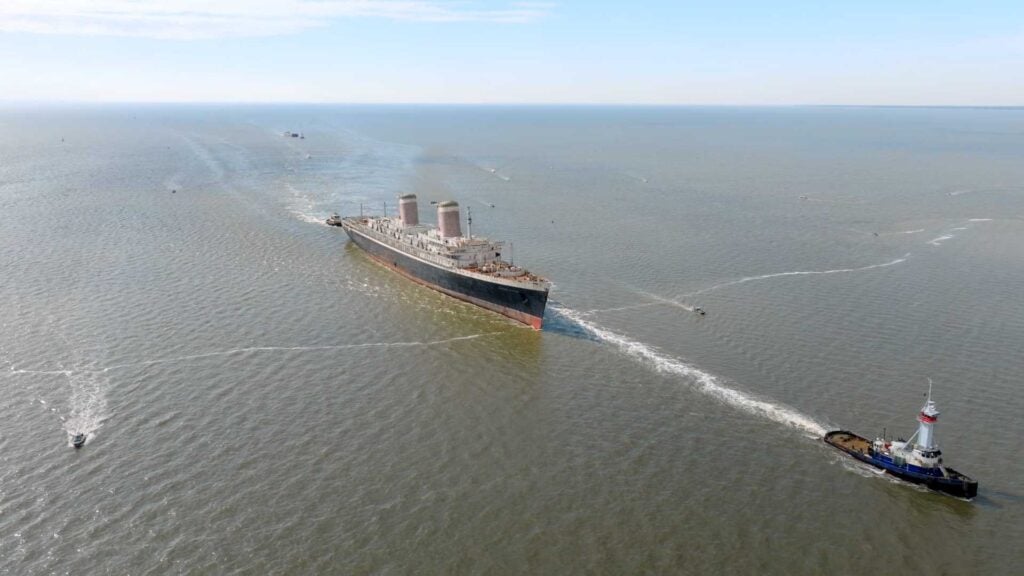
Launched in 1951 and entering service in 1952, the SS United States was designed by renowned naval architect William Francis Gibbs. Built by Newport News Shipbuilding in Virginia, she was the largest passenger liner constructed in the United States and was designed with speed, safety, and engineering innovation in mind.
On her maiden voyage in July 1952, the liner crossed the Atlantic and established a new westbound and eastbound speed record. She completed the eastbound crossing in approximately three days, 10 hours, and 40 minutes, reaching an average speed of more than 35 knots.
That achievement earned her the prestigious Blue Riband and a lasting place in maritime history. Even today, she holds the record as the fastest ocean liner to cross the Atlantic.
However, the golden age of ocean liners did not last forever. Commercial passenger aviation transformed international travel, making long-distance ocean crossings less attractive to ordinary travelers.
The SS United States was withdrawn from commercial service in 1969. Although several attempts were made over the following decades to restore or repurpose the vessel, none resulted in a permanent solution.
The ship eventually spent years docked in Philadelphia, where maintaining such a massive vessel became increasingly expensive.
In October 2024, Okaloosa County, Florida, acquired the liner for approximately $1 million. Rather than allowing the historic ship to face further deterioration or eventual dismantling, county officials proposed a different future: transforming her into an artificial reef off the Florida Panhandle.
Preserving a vessel of this size is an enormous financial undertaking. Restoration, maintenance, dockage, and the cost of finding a suitable long-term use all presented major challenges.
The artificial reef proposal offered a practical alternative. Instead of continuing to spend money maintaining a deteriorating ship, the county could create a major marine habitat and a new attraction for the region.
The project also has a tourism incentive. Destin and Fort Walton Beach already attract visitors for their beaches, fishing, and diving opportunities. A shipwreck of this scale could become an additional attraction, bringing visitors to local dive operators, hotels, restaurants, and charter businesses.
For supporters, the plan is not simply about sinking an old ship. It is about giving a historic vessel a new purpose after her working life has ended.
SS United States Artificial Reef: Where and When Will the Ship Sink?
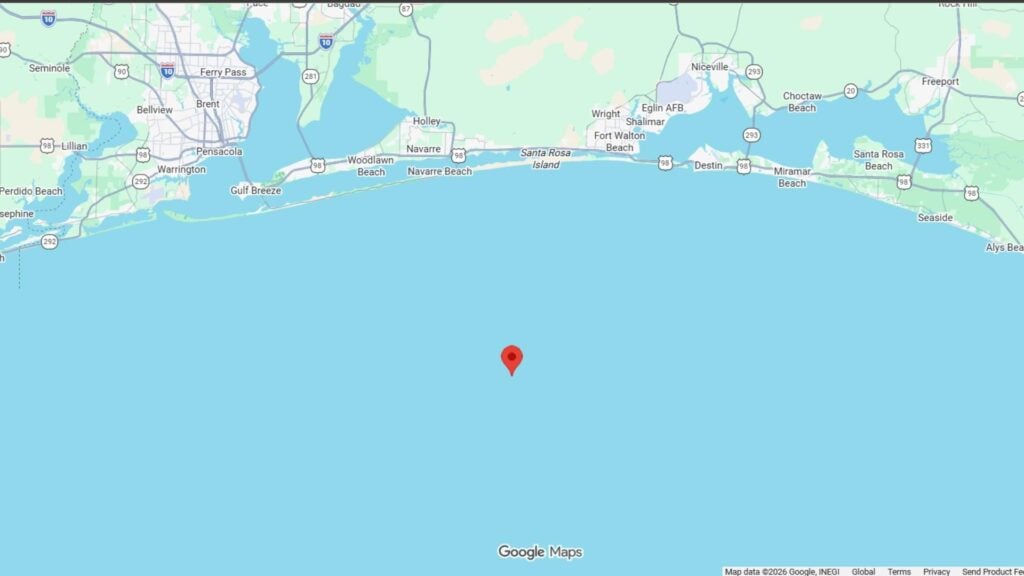
The planned deployment site is approximately 22 nautical miles southwest of Destin-Fort Walton Beach, Florida, in the Gulf of Mexico.
The announced sinking coordinates are
The vessel is expected to rest in approximately 180 feet of water. Its upper decks should remain around 55 to 60 feet below the surface, making the wreck accessible to appropriately certified divers.
According to the schedule announced by Okaloosa County, the operation is planned as follows:
- November 9, 2026: The SS United States is scheduled to depart M.A.R.R.S. Pier 4 in Mobile, Alabama, and begin its final tow.
- November 11, 2026: A public farewell ceremony is scheduled for 1:30 p.m. at the Destin-Fort Walton Beach Convention Center.
- November 12, 2026: The deployment is scheduled to begin at 10 a.m., weather permitting.
AJ’s Seafood and Oyster Bar in Destin is also planning a public viewing event beginning at 9 a.m. on November 12. The sinking is expected to be livestreamed through the official SS United States project website.
The actual sinking is expected to take approximately 45 minutes, according to county officials.
The Coast Guard has established a 100-yard moving safety zone around the vessel while it is being towed out of Mobile Bay. At the final deployment location, other vessels must remain at least one nautical mile away until the operation is complete.
These restrictions are important because sinking a vessel of this size involves a controlled marine operation, not simply allowing an old ship to fill with water.
The county’s plan involves using the ship’s existing seawater intake arrangements to introduce water into the hull in a controlled manner. Some tanks have already been prepared, with additional water expected to be introduced on deployment day.
All dates and times remain subject to weather and operational conditions.
What Will Happen to the Ship After the SS United States Sinking?
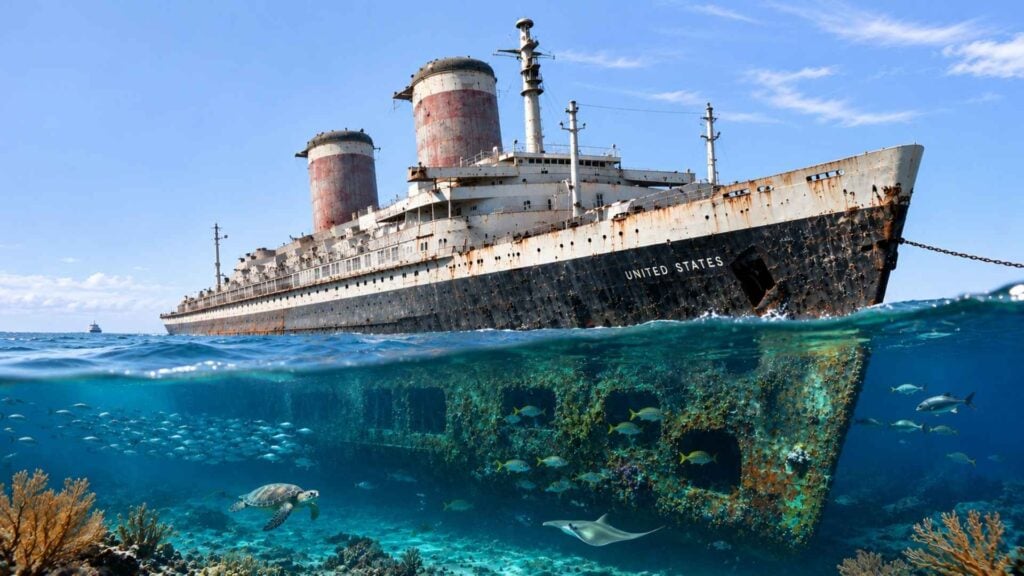
The intention is to create a large underwater structure that supports marine life and becomes a destination for recreational diving.
Once the ship reaches the seabed, its remaining steel structure will provide a surface where marine organisms can attach and develop. Over time, barnacles, corals, sponges, and other marine species may colonize different parts of the wreck.
Fish and other marine animals can use the structure for shelter, feeding, and breeding. The surrounding area may gradually develop into a more complex underwater habitat.
The location and depth also make the project attractive to divers. With the upper decks expected to sit around 55 to 60 feet beneath the surface, different sections of the wreck may offer opportunities for appropriately trained and certified divers.
However, the depth of the seabed is approximately 180 feet, so exploring the deeper sections will require more advanced diving capabilities.
The county also expects the wreck to generate significant tourism interest. Dive operators, fishing charters, and other local businesses could benefit from visitors traveling specifically to see the former ocean liner.
There is another part of the project for people who will never dive to the wreck.
The SS United States Conservancy has plans for a land-based museum that will preserve artifacts, historical material, and personal stories connected with the ship. Major features removed from the vessel, including its funnels, radar mast, and a propeller, are intended for future display.
That means the ship’s history is not expected to disappear entirely beneath the Gulf. Some of its most recognizable features and historical records will remain available for future generations to explore on land.
Why Is the SS United States Sinking Facing a Legal Challenge?
While Okaloosa County has presented the artificial reef project as an opportunity for marine conservation and tourism, not everyone agrees that sinking this particular ship is the right decision.
The SS United States Preservation Foundation believes the vessel’s historical importance deserves greater protection.
The foundation and its co-founder, Steven R. Perry, filed a lawsuit on November 3, 2026, in the U.S. District Court for the Northern District of Florida, Pensacola Division.
The defendants include the U.S. Army Corps of Engineers and Okaloosa County, along with relevant federal officials.
The following day, November 4, the plaintiffs submitted an emergency request for a temporary restraining order and preliminary injunction.
Their immediate objective was to prevent the vessel from being towed out of Mobile and ultimately sunk before the court could consider the underlying legal questions.
The lawsuit raises several important issues, particularly concerning environmental protection and historic preservation.
One of the central arguments is that the Army Corps of Engineers allegedly did not adequately evaluate the environmental consequences of placing the vessel in the Gulf.
The foundation also argues that the federal agency did not properly complete the required historic preservation review before allowing the project to proceed.
These are allegations made by the plaintiffs. They have not been established as findings of wrongdoing by the court.
The Zinc Chromate Paint Controversy: Could the Ship Contaminate Gulf Waters?
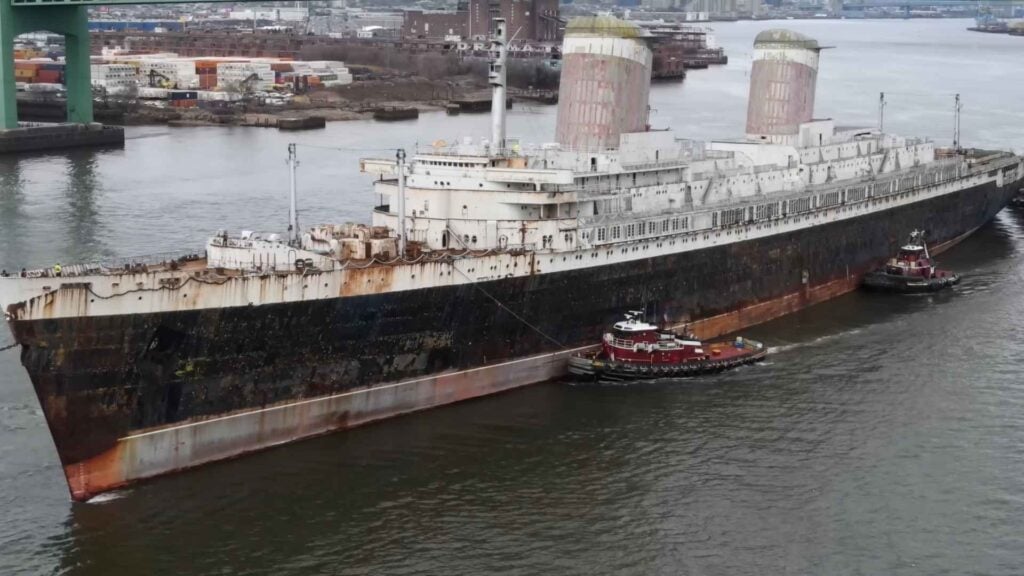
Perhaps the most significant environmental concern involves zinc chromate paint used on the ship’s steel surfaces.
The preservation group argues that coatings containing zinc chromate may contain hexavalent chromium, commonly known as chromium-6 or Cr(VI).
This chemical is a recognized hazardous substance because certain forms and exposures can cause serious health and environmental harm.
The foundation’s concern is that the remaining coatings could deteriorate after prolonged exposure to seawater. If hazardous chromium compounds are released, they could potentially affect marine sediments, organisms, and the wider food chain.
The lawsuit refers to an estimate of approximately 59,334 pounds of zinc chromate originally applied to the vessel. Importantly, this is an estimate based on historical painting specifications and modeled surface area, not a direct measurement of the amount of hazardous material that will remain when the ship is sunk.
The distinction matters. The amount originally applied does not automatically establish how much remains, how much could be released, or what concentration might reach surrounding marine life.
The preservation foundation argues that further testing and a more thorough assessment are necessary before an irreversible operation takes place.
Okaloosa County takes a different position.
According to its official SS United States FAQ, the vessel has undergone more than a year of preparation and cleaning to make it suitable for artificial reef deployment.
The county says it has followed relevant environmental preparation guidance and regulatory requirements, including EPA/MARAD best management practices for preparing vessels intended to become artificial reefs.
It also points to the U.S. Army Corps of Engineers permit and its own vessel-preparation procedures.
Regarding the zinc chromate controversy, the county says the coating substance receiving attention is not a federally regulated substance for artificial reefing purposes.
The two sides are therefore approaching the same issue from very different perspectives: the preservation group is concerned about the potential long-term consequences of remaining coatings, while the county maintains that the vessel has been appropriately prepared under the applicable standards.
The central question is whether the existing environmental review and preparation are sufficient to protect the Gulf’s marine environment.
What Do American Environmental and Historic Preservation Laws Say About SS United States Sinking?
The lawsuit is not simply an argument about whether an old ship should be saved. It raises questions about whether federal agencies have followed the laws governing environmental review and historic properties.
Three legal frameworks are particularly relevant.
1. National Environmental Policy Act (NEPA)
The National Environmental Policy Act requires federal agencies to consider the environmental consequences of major federal actions.
Depending on the circumstances, an agency may prepare an Environmental Assessment (EA) to determine whether a proposed action is likely to have significant environmental effects.
If the agency concludes that significant impacts are not expected, it may issue a Finding of No Significant Impact (FONSI).
If significant impacts are likely, a more detailed Environmental Impact Statement (EIS) may be required.
The preservation foundation argues that the Army Corps’ environmental assessment did not adequately address the potential risks associated with the ship’s remaining coatings and the possibility of chromium entering the marine environment.
The important distinction is that NEPA does not automatically require a full Environmental Impact Statement for every project. The legal question is whether the agency’s review was sufficient under the applicable requirements.
2. National Historic Preservation Act (NHPA)
The National Historic Preservation Act of 1966 protects America’s historic and cultural resources.
Its Section 106 process requires federal agencies to consider the effects of their actions on historic properties when a federal undertaking is involved.
This generally includes consultation with relevant preservation authorities and consideration of ways to avoid, minimize, or mitigate adverse effects.
The SS United States was listed on the National Register of Historic Places in 1999, making its historical significance an important part of the dispute.
The preservation foundation argues that the federal review did not adequately account for the consequences of destroying the vessel as a historic resource.
It also questions the removal of important historic features, including the funnels, radar mast, propeller, and other components.
Section 106 does not automatically give preservation groups the power to veto a project. It requires the responsible federal agency to follow the applicable review and consultation process.
3. Administrative Procedure Act (APA)
The lawsuit also involves judicial review under the Administrative Procedure Act.
The APA allows courts to review certain federal agency decisions and determine whether they were unlawful, arbitrary, or otherwise inconsistent with the law.
The foundation is challenging the federal approvals associated with the reef project and seeking to have the relevant decisions set aside.
In practical terms, the plaintiffs want the court to examine whether the Army Corps followed the correct procedures before allowing the project to move forward.
These laws do not automatically prohibit the sinking of a historic vessel. They establish the legal procedures that federal agencies must follow when approving projects with environmental or historic consequences.
Federal Judge Rejects Emergency Request to Stop the SS United States Sinking
With the November 9 towing date approaching, the preservation foundation needed an immediate court order to prevent the ship from leaving Mobile.
On Friday, November 6, U.S. District Judge M. Casey Rodgers denied the foundation’s initial request for a temporary restraining order.
However, the reasoning behind the decision is important.
The judge pointed out that the court record lacked a verified complaint or an affidavit confirming the truthfulness of the factual statements presented in the complaint and emergency motion.
In other words, the emergency request did not provide the sworn factual support the court considered necessary.
The judge also raised concerns about the financial consequences of keeping such a large vessel docked for an extended period.
Holding the SS United States in Mobile would involve substantial expenses, including berthing, mooring, docking, and storage. The plaintiffs had asked the court to waive the security bond or set it at a minimal amount.
Judge Rodgers said any subsequent request for a temporary restraining order must propose a bond sufficient to cover these expenses and support the proposed amount with a reasonable factual basis.
Under the federal rules governing temporary restraining orders and preliminary injunctions, courts can require security to protect parties against costs and damages if an injunction is later found to have been wrongly issued.
The denial was not a final decision on the environmental and historic preservation claims. It was a rejection of the initial emergency request based on the shortcomings identified by the judge. And there was another development.
According to local reporting, the foundation submitted a renewed emergency motion later on November 6, accompanied by an affidavit from its co-founder, Carlos Camacho Jr.
As of the latest reporting on November 7, no subsequent ruling on that renewed request had been confirmed. The underlying lawsuit also remains active.
Will the SS United States Still Be Sunk on November 12?
For now, Okaloosa County says the plan remains unchanged.
The ship is scheduled to leave Mobile on November 9, with the county maintaining its intended deployment date of November 12.
The latest court developments have not resulted in a confirmed postponement.
However, the renewed legal filing means the possibility of another emergency court decision cannot be completely ruled out.
There is also a practical reason the county wants the vessel to leave Mobile on schedule. The recycling facility preparing the ship has another major project approaching.
The decommissioned hull of the former USS Enterprise aircraft carrier has been towed from Newport News, Virginia, and is expected to arrive at the M.A.R.R.S. facility around November 13.
The carrier is scheduled to undergo dismantling and recycling work, a project expected to continue through 2030.
Keeping the SS United States at the facility longer could therefore complicate the work planned for the incoming vessel.
Still, the immediate issue is whether the renewed legal challenge produces another order before the ocean liner begins its final tow.
For the moment, the countdown continues.
Jim’s View on the SS United States Sinking

The SS United States deserves to be remembered for what she achieved at sea, not just for how she eventually reaches the seabed.
Turning her into an artificial reef may give the vessel a useful second life, but the environmental questions deserve clear answers before an irreversible decision is carried out.
A ship of this historical importance should receive careful treatment right to the end.
Final Verdict: SS United States Sinking
As of November 7, 2026, the SS United States is still scheduled to leave Mobile on November 9 and become an artificial reef on November 12. The first emergency court request has been denied, but a renewed motion means the legal story is not entirely over. Unless another court order or weather-related delay intervenes, the historic liner appears set for her final journey into the Gulf of Mexico.
FAQs: SS United States Sinking
1. When will the SS United States sink?
The SS United States is scheduled to be sunk on Thursday, November 12, 2026, at approximately 10 a.m. local time, weather permitting. The ship is expected to leave Mobile, Alabama, on November 9.
2. Where will the SS United States be sunk?
The vessel is scheduled to be deployed approximately 22 nautical miles southwest of Destin-Fort Walton Beach, Florida, in the Gulf of Mexico. Its announced deployment coordinates are 30° 07.148′ N, 86° 46.755′ W.
3. Why is the SS United States being sunk?
Okaloosa County plans to turn the historic ocean liner into the world’s largest artificial reef. The project is intended to create marine habitat, attract recreational divers, support fishing opportunities, and increase tourism in the Florida Panhandle.
4. Who is trying to stop the SS United States sinking?
The SS United States Preservation Foundation and its co-founder, Steven R. Perry, filed a federal lawsuit against the U.S. Army Corps of Engineers and Okaloosa County. The group argues that environmental and historic preservation requirements were not adequately addressed.
5. Did the court stop the SS United States from sinking?
No. On November 6, 2026, Judge M. Casey Rodgers denied the foundation’s initial request for a temporary restraining order. However, the group submitted another emergency motion later that day, and the underlying lawsuit remains active. No confirmed ruling on the renewed motion was available as of November 7.
6. What environmental concerns surround the SS United States artificial reef?
The preservation foundation is concerned about remaining zinc chromate coatings that may contain hexavalent chromium. It argues that these materials could deteriorate in seawater and potentially release harmful substances into marine sediments and surrounding waters.
Okaloosa County maintains that the ship has undergone extensive cleaning and preparation under applicable artificial reef guidance.
7. How deep will the SS United States wreck be?
The ship is expected to rest in approximately 180 feet of water. Its upper decks should be around 55 to 60 feet below the surface, creating opportunities for appropriately certified recreational and technical divers.
8. Can the public watch the SS United States sinking?
Yes. A public viewing event is planned at AJ’s Seafood and Oyster Bar in Destin beginning at 9 a.m. on November 12. The deployment is also expected to be livestreamed through the official SS United States project website at thessus.com.
A public farewell ceremony is scheduled for November 11 at 1:30 p.m. at the Destin-Fort Walton Beach Convention Center.