A balcony can be one of the best parts of a cruise cabin, though if you are still deciding whether to book one, it helps to review the 8 strong reasons a balcony cabin on a cruise is not worth it. But a few careless mistakes can damage the furniture, create safety problems, or even result in additional charges.
A balcony can be one of the best parts of a cruise cabin, but a few careless mistakes can damage the furniture, create safety problems, or even result in additional charges.
Unlike a balcony at home, a cruise ship balcony is exposed to salt air, strong winds, changing weather, and strict fire-safety regulations. There are also rules about what you can leave outside, what you can hang over the railing, and how you should use the space.
The good news is that most problems are easy to avoid once you know what not to do.
Here are five cruise balcony mistakes to avoid, along with the rules that matter most if you want to protect your cabin, enjoy your outdoor space, and avoid an unnecessary problem with the cruise line.
Table of Contents
What You Need to Know About Cruise Balcony Rules Before Sailing
Cruise balconies might look like ordinary outdoor spaces, but they’re treated differently from balconies at home. The cruise line owns and maintains the cabin, and passengers are expected to follow its safety and property rules.
Although specific policies vary between cruise lines and ships, several basic principles apply across much of the industry.
- Never throw anything over the balcony railing.
- Don’t hang clothing, towels, or other items over the railing.
- Avoid using unauthorized heating or cooking equipment.
- Don’t tamper with balcony doors, locks, or safety equipment.
- Keep the balcony clear of items that could blow away.
- Follow the cruise line’s smoking and fire-safety restrictions.
- Report damaged furniture or fixtures rather than attempting repairs yourself.
The biggest thing to remember is that a balcony is part of your cruise cabin, not an unrestricted outdoor living space.
Let’s look at the five mistakes that can cause the most trouble.
1. Leaving Furniture and Loose Items Exposed to Strong Winds

One of the easiest ways to damage your cruise balcony is to leave loose belongings outside when the weather changes.
Cruise ships travel through different weather conditions, and even a relatively calm day can bring stronger winds once the ship gets underway.
Lightweight items can move around surprisingly quickly. Think about what you might leave outside:
- Flip-flops and sandals
- Towels and clothing
- Hats and sunglasses
- Small decorations
- Empty plastic cups
- Personal belongings
A sudden gust could send something across the balcony or over the railing.
That creates two problems. First, you could lose something you paid for. Second, an item falling from a ship can create a serious safety hazard for people below.
Balcony furniture can also move around during rough weather or strong winds, potentially scratching surfaces or damaging other items.
How to avoid this mistake:
- Bring loose belongings inside when you’re finished using the balcony.
- Don’t leave lightweight decorations outside.
- Keep towels and clothing away from the railing.
- Secure personal items when weather conditions deteriorate.
- Follow crew instructions if balcony access is restricted.
My advice is to treat the balcony as an outdoor space that needs a quick tidy before you leave the cabin.
It only takes a minute, and it can prevent a much bigger problem.
2. Hanging Towels, Clothing, or Decorations Over the Balcony Railing
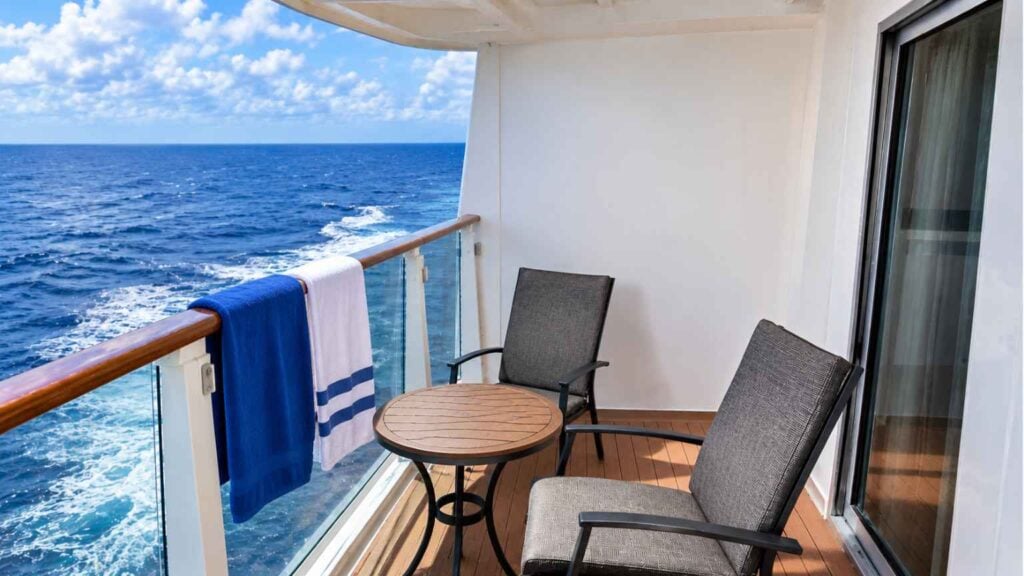
This is one of the most common cruise balcony mistakes, and it can also be a serious safety violation. You might think hanging a wet swimsuit or towel over the railing is harmless.
After all, it’s a convenient way to dry things after swimming or spending the day at the beach. However, cruise lines generally prohibit hanging items over balcony railings.
There are several reasons.
First, strong winds can blow clothing and towels away. An item falling from a high deck can injure someone or create a hazard for another balcony.
Second, some items can obstruct the ship’s exterior or create additional maintenance and safety problems.
Third, cruise ships have specific fire-safety and exterior appearance standards that passengers are expected to respect. Decorations can create similar issues, particularly if they’re attached to railings or exterior surfaces.
How to avoid this mistake:
- Don’t hang towels over the balcony railing.
- Avoid attaching decorations to exterior balcony fixtures.
- Use the designated drying arrangements provided inside your cabin.
- Ask your cabin attendant if you’re unsure where wet clothing should go.
One important point: Don’t assume that something is allowed simply because you see another passenger doing it.
Cruise lines can enforce balcony restrictions even if other guests ignore them.
3. Using Candles, Grills, or Unauthorized Heating Equipment
This mistake is more serious than it might initially sound. A cruise balcony is not a suitable place for open flames or unauthorized cooking equipment.
You might want to enjoy a romantic evening outside with a candle, or perhaps bring a small portable heating device to make the balcony more comfortable.
However, cruise ships have strict fire-safety requirements.
An open flame on a balcony creates a potential fire hazard, particularly because ships carry combustible materials and operate in an environment where emergency response is more complicated than it is at home.
Unauthorized electrical equipment can also create problems. Examples include
- Candles and other open flames
- Portable grills
- Charcoal cooking equipment
- Unauthorized electric cooking appliances
- Unapproved heating devices
How to avoid this mistake:
- Don’t use candles on your balcony.
- Never bring a portable grill or cooking appliance for balcony use.
- Don’t use unauthorized heaters.
- Follow the cruise line’s approved electrical-device policy.
- Use only equipment specifically permitted by the cruise line.
If you want a romantic atmosphere, look for safer alternatives such as battery-operated candles or approved decorative lighting, provided your cruise line permits them.
A balcony should never become a fire-safety risk just because you’re trying to make it more comfortable.
For a complete list of items that are not allowed onboard, check out our guide to Cruise Ship Prohibited Items. Some everyday items may also pose a fire-safety risk and are not permitted on cruise ships.
4. Smoking or Vaping Where It Isn’t Allowed
Smoking restrictions are another important part of cruise balcony rules. Some passengers assume that because their balcony is private, they can smoke or vape there without bothering anyone.
That assumption can be expensive.
Many major cruise lines prohibit smoking on private balconies, including cigarette and cigar smoking. Vaping restrictions can also apply, although exact policies vary.
Cruise ships generally designate specific smoking areas, and passengers are expected to use those locations.
Why are balcony smoking restrictions so strict?
Fire safety is the main concern. A cigarette butt or ember can potentially ignite combustible materials, and wind can carry burning debris away from the balcony.
There is also the issue of secondhand smoke. Smoke can travel between nearby balconies and into neighboring cabins, making the experience unpleasant for other passengers.
How to avoid this mistake:
- Read your cruise line’s smoking policy before sailing.
- Never assume private balcony access means smoking is permitted.
- Use designated smoking areas when available.
- Follow separate rules for vaping and electronic cigarettes.
- Never throw cigarette butts or other smoking materials overboard.
If you smoke, check the policy before booking rather than assuming you’ll be able to use your balcony.
This is particularly important if having a private smoking space is part of what you’re paying extra for.
5. Slamming the Balcony Door or Leaving It Open During Rough Weather

This mistake is less obvious, but it can affect both your cabin and your comfort.
Cruise balcony doors are designed to withstand the conditions of a moving ship. However, that doesn’t mean you should treat them like ordinary patio doors.
Strong winds can make balcony doors difficult to handle, and letting them slam shut can potentially damage the door mechanism or surrounding fixtures.
Leaving the balcony door open can also create problems.
Many cruise cabins use systems that connect the balcony door to the air-conditioning controls. Depending on the ship, opening the door may interrupt or affect the cabin’s cooling system.
You may also experience:
- Increased humidity inside the cabin.
- Warm air entering the room.
- Condensation on interior surfaces.
- More outside noise.
- Wind and weather entering the cabin.
On some ships, opening a balcony door while another cabin door is open can create uncomfortable pressure changes and strong airflow.
How to avoid this mistake:
- Close the balcony door gently.
- Don’t force a door that feels difficult to operate.
- Avoid leaving it open during strong winds or bad weather.
- Keep the cabin door closed when using the balcony.
- Report unusual door noises or problems to your cabin attendant.
If your balcony door suddenly becomes difficult to close, don’t try to force it. Ask the crew to inspect it.
Cruise Balcony Rules That Can Get You Into Trouble
The five mistakes above cover common ways passengers can damage their cabin or create safety issues.
However, there are several other balcony rules worth knowing.
| Balcony activity | What to know |
|---|---|
| Throwing objects overboard | Strictly prohibited |
| Feeding birds or marine animals | Avoid; may violate ship rules |
| Hanging towels over railings | Generally prohibited |
| Using candles | Not permitted under typical fire-safety rules |
| Smoking on balconies | Prohibited on many major cruise lines |
| Moving balcony furniture | Follow ship instructions and avoid damaging fixtures |
| Attaching decorations | Check cruise line restrictions |
| Climbing or sitting on railings | Extremely dangerous and prohibited |
Policies differ between cruise lines, so always check the rules for your specific sailing.
For example, Royal Caribbean, Carnival, Norwegian, MSC, and Princess may have different wording and enforcement procedures.
Don’t assume a rule you followed on one cruise line automatically applies to another.
Can You Get Fined for Breaking Cruise Balcony Rules?
Yes, certain balcony violations can lead to financial penalties or more serious consequences. The exact outcome depends on the cruise line, the rule involved, and the circumstances.
Possible consequences include:
- Charges for damage to cabin fixtures or furniture.
- Smoking-related penalties where prohibited.
- Confiscation of prohibited equipment.
- A warning from ship security.
- Removal from the cruise in serious cases.
Fire-safety violations and actions that endanger other passengers are treated particularly seriously.
It’s also worth remembering that damaging something accidentally doesn’t necessarily mean you’ll automatically be charged. The circumstances matter, and the crew should be notified as soon as possible.
If you damage a balcony fixture, report it rather than trying to hide or repair the problem yourself.
How to Protect Your Cruise Balcony During Your Sailing

A little care can help keep your balcony in good condition throughout the cruise. Here are a few simple habits worth following.
Before leaving your cabin:
- Bring loose items inside.
- Make sure the balcony door is closed.
- Check that towels and clothing aren’t hanging over the railing.
- Remove anything that could blow away.
While using the balcony:
- Don’t climb on furniture or railings.
- Keep children supervised.
- Avoid leaning over the railing.
- Don’t use prohibited appliances or open flames.
- Follow any temporary restrictions imposed by the crew.
When the weather changes:
- Bring belongings inside.
- Close the balcony door securely.
- Avoid going outside if conditions become unsafe.
- Follow crew instructions about balcony access.
These habits are particularly useful on sea days when the ship may experience changing wind and weather conditions.
Who Should Be Extra Careful With Cruise Balcony Rules?
Everyone should follow balcony safety rules, but some travelers should pay particular attention.
Families with children: Balcony safety deserves extra attention when traveling with young children. Keep the balcony door secured when the space isn’t being used, supervise children closely, and never allow climbing on furniture or railings.
First-time cruisers: If this is your first balcony cabin, don’t assume every rule is obvious. Read the cruise line’s policies and listen to the safety instructions provided onboard.
Smokers and vapers: Check the smoking policy before booking. If smoking on a private balcony is important to you, understand that many cruise lines don’t permit it.
Travelers who enjoy decorating: If you want to personalize your cabin, check decoration restrictions first. Some items can be prohibited because of fire safety or potential damage to cabin surfaces.
Passengers sailing in windy or colder conditions: Be particularly careful with loose furniture and belongings. Wind can make a balcony less comfortable and create hazards that aren’t obvious when the ship is docked.
FAQs About Cruise Balcony Rules
1. Can you hang towels over a cruise balcony railing?
Generally, no. Cruise lines typically prohibit hanging towels, clothing, or other items over balcony railings because they can blow away and create hazards. Use the designated drying arrangements inside your cabin.
2. Can you smoke on a cruise ship balcony?
Many major cruise lines prohibit smoking on private balconies. Smoking is generally restricted to designated areas. Always check the specific smoking policy for your cruise line.
3. Can you use candles on a cruise balcony?
No. Open flames create a fire risk and are generally prohibited. Consider battery-operated alternatives if permitted by your cruise line.
4. Can you bring a small grill on a cruise ship balcony?
No. Personal grills and unauthorized cooking equipment are generally prohibited. Cruise balconies aren’t designed for passenger cooking.
5. Can you leave your balcony door open overnight?
You may physically be able to, depending on the ship, but it’s generally not advisable. It can affect cabin temperature and humidity, create additional noise, and allow wind or weather inside. Some ships also have systems that interrupt air conditioning when balcony doors are open.
6. Can you put decorations on a cruise balcony?
This depends on the cruise line’s rules. Attaching decorations to railings, fixtures, or exterior surfaces may be prohibited. Check the policy before bringing anything specifically for balcony decorating.
7. Can you move the furniture on your cruise balcony?
Small adjustments may be possible, but avoid dragging furniture or moving it into positions that could create safety issues. Follow crew instructions and report damaged or unstable furniture.
8. Can you get kicked off a cruise for breaking balcony rules?
Serious violations can lead to significant consequences, including removal from the ship. Actions involving fire hazards, dangerous behavior, or serious safety violations are treated particularly seriously.
9. Can children use a cruise balcony without an adult?
Children should always be supervised on a cruise balcony. Never allow them to climb on chairs, tables, or railings, and keep balcony access secured when an adult isn’t present.
10. Are cruise balcony rules the same on every cruise line?
No. Although many safety principles are similar, individual cruise lines have different policies regarding smoking, decorations, permitted equipment, and balcony use. Check your cruise line’s current rules before sailing.
Jim’s Take: A Cruise Balcony Is Worth Protecting

I think a balcony can make a meaningful difference to a cruise, especially if you enjoy having somewhere private to sit outside, watch the ocean, or relax without going up to the pool deck.
But paying extra for a balcony doesn’t mean you can use it however you want.
The biggest mistakes are usually avoidable: leaving loose belongings outside, hanging towels over the railing, using unauthorized equipment, and ignoring smoking restrictions.
One thing I would pay particular attention to is the balcony door. A comfortable cabin matters just as much as the outdoor space, and you don’t want unnecessary humidity, noise, or cooling problems affecting the room.
If you’re still deciding whether a balcony is worth the extra money, think about how much time you’ll realistically spend using it.
A balcony can be fantastic for couples who enjoy private outdoor space, but it may not be worth a substantial upgrade for travelers who spend most of their time exploring the ship or visiting ports.
And if you’re comparing cabin categories, don’t overlook the importance of location. A great balcony in a noisy or inconvenient location may not be the upgrade you expected.
Final Verdict: Cruise Balcony Rules
Cruise balcony rules aren’t complicated, but ignoring them can lead to unnecessary damage, safety problems, and potentially expensive consequences.
Keep loose belongings inside, never hang items over the railing, avoid unauthorized equipment, follow smoking restrictions, and treat the balcony door carefully.
Most importantly, remember that your balcony is part of the ship’s overall safety environment.
Look after it, follow the cruise line’s rules, and you’ll have a much better chance of enjoying that private outdoor space throughout your vacation.