The 45-Minute Canaveral Shortcut: Stress-Free Port Canaveral Arrival
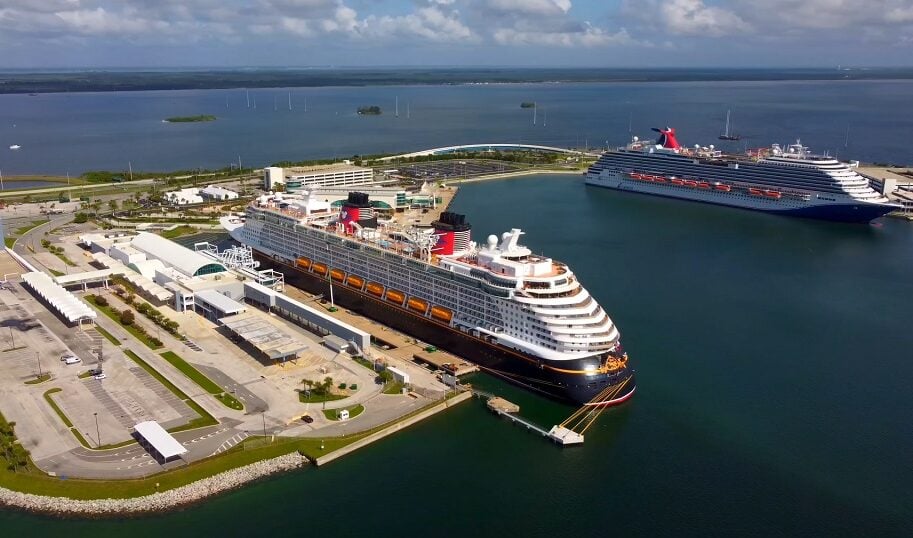
Port Canaveral should be one of the easier cruise ports to drive into.
The terminals are clearly divided between the north and south sides of the port, parking is located right next to the cruise terminals, and you don’t have to take a shuttle just to get from the official parking area to your ship.
The problem is that Port Canaveral parking gets confusing when you arrive without knowing which terminal you’re using.
That’s when people end up in the wrong lane, driving past their terminal, hauling luggage farther than necessary, or comparing parking options after they’ve already entered the port.
Here’s the solution: read the complete arrival playbook.
Table of Contents
North vs. South Terminals: The Lane Decision That Saves You 45 Minutes
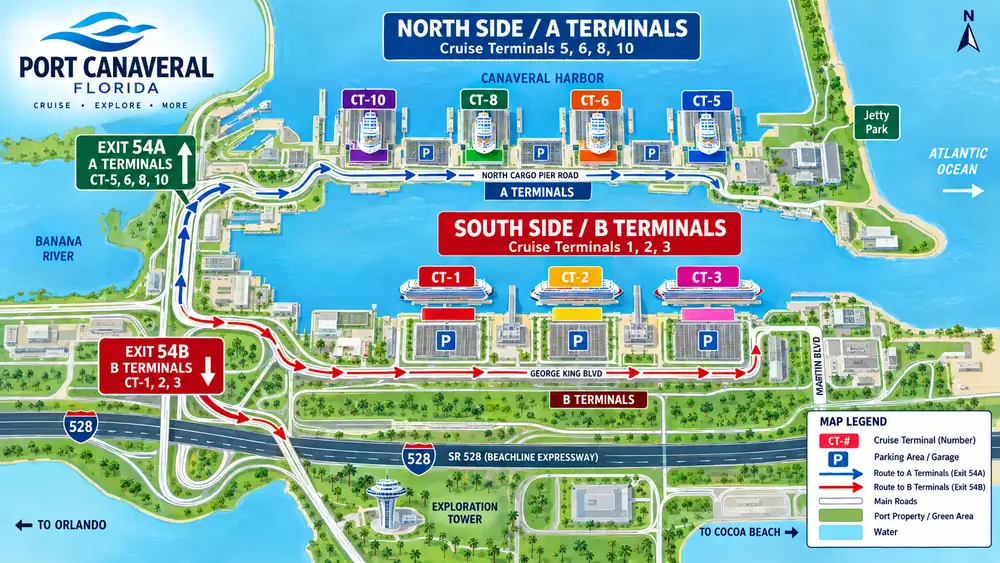
Port Canaveral is divided into two main cruise-terminal areas.
The A Terminals are on the north side of the port and are accessed from Exit 54A.
The B Terminals are on the south side and are accessed from Exit 54B.
That distinction matters. If your ship is using an A Terminal, you don’t want to accidentally follow the B Terminal signs and then spend your arrival time correcting the mistake.
North side: Exit 54A
Exit 54A serves the A Terminals, including:
- Cruise Terminal 5
- Cruise Terminal 6
- Cruise Terminal 8
- Cruise Terminal 10
The official Port Canaveral directions list dedicated parking garages at Terminals 6, 8, and 10. If your ship is departing from one of these terminals, follow the signs for A Terminals / Exit 54A.
South side: Exit 54B
Exit 54B serves the B Terminals. These currently include:
- Cruise Terminal 1
- Cruise Terminal 2
- Cruise Terminal 3
The port lists these terminals on the south side, with parking facilities associated with the individual terminal areas. The key point is simple:
54A = north-side A Terminals.
54B = south-side B Terminals.
That’s the lane decision you want to make before you’re sitting in traffic wondering where your ship went.
Coming from Orlando International Airport?
The official route from Orlando International Airport uses the Central Florida Greenway/S.R. 417 to S.R. 528 East.
Continue on S.R. 528 East toward Port Canaveral, then use Exit 54A for A Terminals or Exit 54B for B Terminals.
S.R. 528 is the important road to remember.
Once you’re on the final approach, stop relying entirely on generic GPS instructions and start following the port’s terminal signs. Your cruise terminal is the destination that matters.
Check your terminal before leaving home.
This sounds obvious. It is also one of the easiest things to overlook. Port Canaveral has multiple cruise terminals, and the terminal assignment can depend on the ship and sailing date. The port provides individual arrival guides for Terminals 1, 2, 3, 5, 6, 8, and 10.
Check your cruise line’s latest embarkation information before leaving. Then put the terminal address into your navigation app. That is much better than typing only “Port Canaveral” and hoping your GPS figures out the rest.
Baggage Drop Without the Backups: Step-by-Step Terminal Porter Logistics
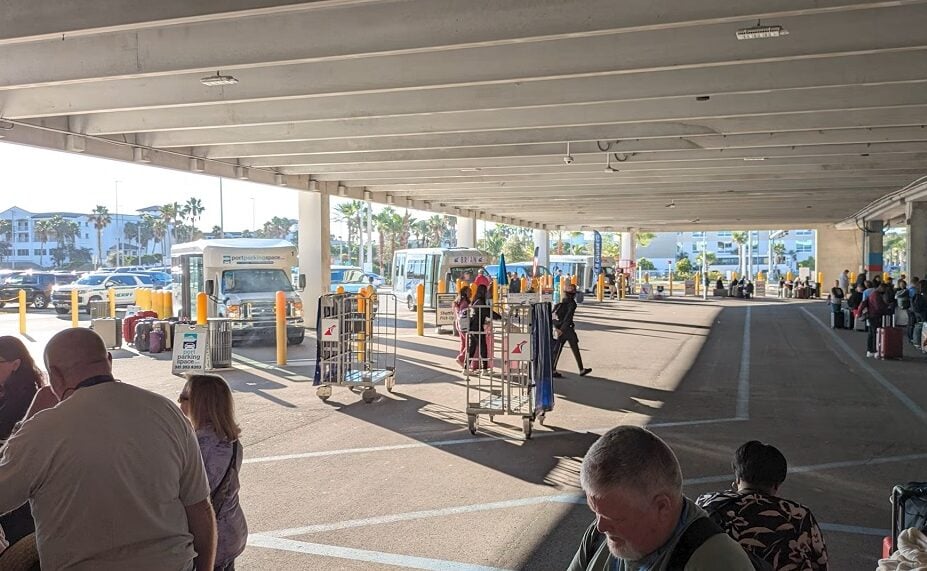
Once you’ve reached the correct terminal area, don’t immediately hunt for a parking space.
Drop your passengers and checked luggage first.
Port Canaveral specifically tells arriving cruise passengers to proceed directly to the cruise terminal to drop off passengers and baggage. Porters are available to assist with luggage, and parking personnel will direct drivers to the appropriate parking facility. This is the simplest way to keep embarkation day moving.
Step 1: Get your luggage ready before you arrive.
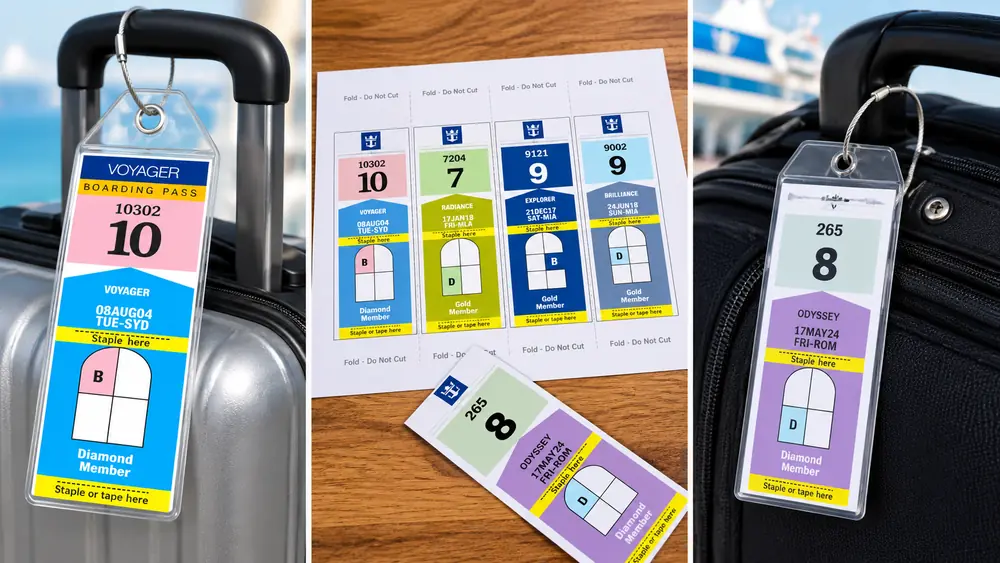
Have your cruise-line luggage tags attached before reaching the terminal. That way, you aren’t standing at the curb with a pile of suitcases while trying to fill out tags.
The goal is to arrive organized enough that the bags can go straight from the vehicle to the porters.
Step 2: Follow the signs for passenger and luggage drop-off.
Port Canaveral provides passenger and luggage drop-off areas at the terminals.
The official directions specifically list passenger pickup and drop-off locations for the A-side terminals, while the port’s general arrival guidance directs passengers to proceed directly to the cruise terminal for luggage drop-off.
Don’t improvise. Follow the signs for your specific terminal.
Step 3: Hand-checked bags to the porters
Port Canaveral confirms that cruise-line porters are available to assist with luggage. Give them the bags that you intend to check. Keep your important items with you.
That includes things such as
- Passport or other required identification
- Cruise documents
- Medication
- Wallet
- Phone
- Chargers
- Valuables
- Anything you’ll need before your checked bags reach your cabin
Your cruise line’s documentation requirements take priority, especially for international itineraries.
Step 4: Don’t check something you need immediately.
Remember what happens after you hand over your luggage. You may not see those bags again until they’re delivered to your stateroom.
So don’t put your afternoon essentials in the suitcase you’re checking. A small carry-on can save you from spending the first few hours onboard wishing you’d packed differently.
Step 5: The driver parks after the luggage is gone
This is the part that makes the whole system work.
One person can stay with the luggage and other passengers while the driver moves the vehicle to the appropriate Port Canaveral parking facility.
Port Canaveral says parking personnel will direct drivers to the appropriate facility, and its parking areas are adjacent to the cruise terminals. No need to drag four giant suitcases through a garage.
What about tipping the porter?
Porters are there to assist with your luggage. A cash tip is customary for good service, although the amount is ultimately up to you.
The important part is having the luggage properly tagged and ready before you reach the curb. That keeps the line moving for everyone.
Official Terminal Garages vs Off-Site Park-and-Ride: Cost vs Convenience
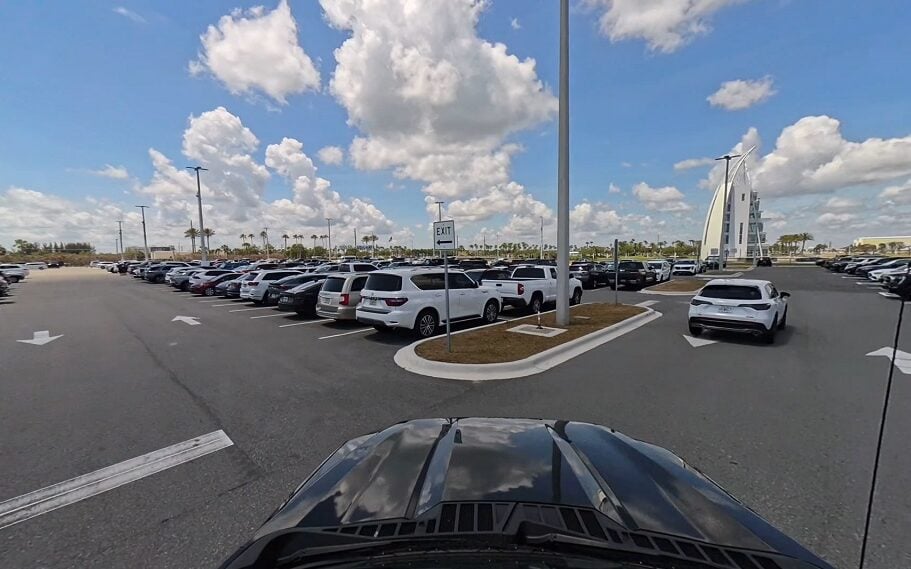
This is where Port Canaveral parking becomes a genuine cost-versus-convenience decision. You have two broad options:
Park at the port or park at a private off-site lot and take a shuttle.
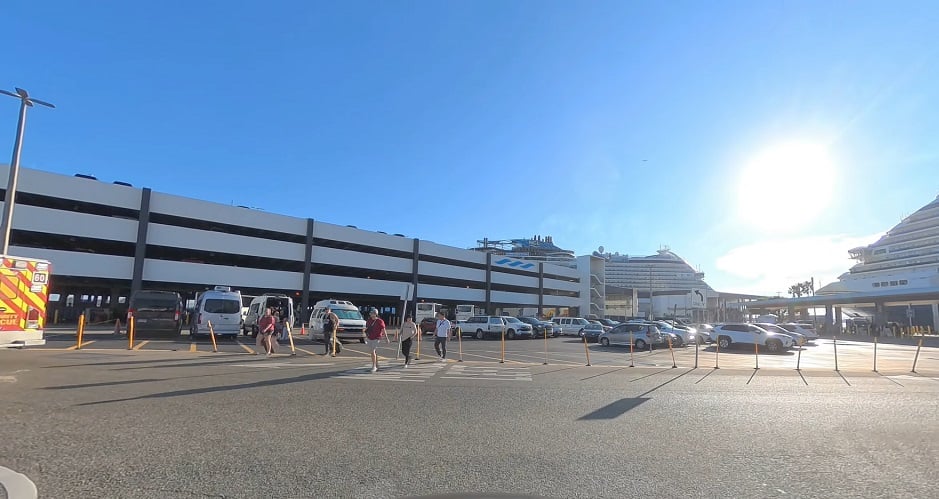
Port Canaveral says its parking garages and surface lots are located adjacent to each cruise terminal, meaning passengers can park and walk to the ship without a parking shuttle. That’s the convenience you’re paying for.
How much is official Port Canaveral parking?
The current Port Canaveral parking rate is $20 per day plus tax for vehicles and RVs.
Importantly, the port charges for both the day of arrival and the day of departure. Parking is pay-on-entry.
So if you’re taking a seven-night cruise, don’t automatically assume you’ll pay for only seven parking days. The parking calculation includes the arrival and departure dates.
The port’s current official information should be checked before every cruise because rates are subject to change.
Port Canaveral parking is pay-on-entry.
This is another detail worth knowing before you arrive. The port currently operates a cashless parking system.
Major credit cards, including American Express, Visa, MasterCard, and Discover, are accepted.
So don’t arrive assuming you’ll be handing a parking attendant a wad of cash. Have a usable card ready.
Does Port Canaveral offer reservations?
The port currently says it does not take parking reservations. It states that there is plenty of parking available at every cruise terminal.
That makes official Port Canaveral parking particularly simple:
Arrive → enter parking → pay → park → walk to the terminal.
There isn’t a reservation code or off-site shuttle schedule to coordinate.
Every terminal has parking.
Port Canaveral says every cruise terminal has a garage and surface parking.
The official parking information also states that oversized parking is available, including spaces for RVs and buses.
That makes the terminal parking system much more straightforward than at ports where passengers have to park several miles away and rely entirely on shuttles.
What about off-site park-and-ride?
Private off-site parking is available around Port Canaveral.
These facilities typically compete on price and bundle parking with transportation to the cruise terminal.
Some examples show some private operators advertising rates below the port’s $20-per-day official rate, although pricing varies by operator, sailing, vehicle, and package.
That’s where the potential savings come from. But there’s a trade-off.
Instead of:
Park → walk to terminal
You’re doing:
Park → unload → wait for shuttle → ride to terminal → unload again.
The shuttle itself may only take a few minutes once you’re moving. The less predictable part is the waiting time.
Don’t compare only the advertised daily rate.
This is where parking comparisons can get misleading. Suppose an off-site lot advertises a much lower daily rate. That sounds great.
But ask:
- Is the rate per calendar day or a cruise package?
- Are both arrival and departure days included?
- Is the shuttle included?
- How frequently does the shuttle run?
- Does the shuttle serve your specific cruise terminal?
- Do you need to reserve in advance?
- How early does the shuttle start?
- How long does the return transfer take after the cruise?
- Are there extra vehicle or booking fees?
A lower parking rate isn’t automatically a lower total trip cost.
Official parking vs. off-site parking
| Factor | Official Port Canaveral Parking | Off-Site Park-and-Ride |
|---|---|---|
| Current published rate | $20/day + tax | Varies by operator |
| Reservation | Not accepted | Often available |
| Shuttle to terminal | Not needed | Usually required |
| Distance from terminal | Adjacent | Varies |
| Convenience | Park and walk | Park and transfer |
| Main advantage | Simplicity | Potential savings |
| Main drawback | Higher daily cost than some private lots | Waiting/transfer time |
The choice really comes down to what matters more on embarkation day.
If you want simple and predictable, official terminal parking is hard to complicate.
If you’re taking a longer cruise and want to reduce the parking bill, compare reputable off-site options.
A seven-night cruise changes the math.
Here’s where the difference can become meaningful.
At the current official rate of $20 per day plus tax, an eight-day parking period would be $160 before tax.
That’s because the Port Canaveral parking system charges for both the arrival and departure dates. If an off-site operator offers a significantly lower total package, the savings can become worthwhile.
But if the difference is only a few dollars, you have to decide whether saving that money is worth adding a shuttle transfer to embarkation day.
For a family with young children and several bags, convenience may matter more.
For a couple traveling light, the calculation may look different. There isn’t one right answer.
Watch the timing, not just the price.
The most important thing to compare with an off-site lot isn’t necessarily the advertised shuttle duration. It’s the whole sequence.
You may have to:
- Arrive at the private lot.
- Check in.
- Park.
- Unload your luggage.
- Wait for the shuttle.
- Load the shuttle.
- Travel to the port.
- Unload again.
- Reach your terminal.
An official garage removes most of those steps. That’s why a $10 daily saving isn’t really a $10 daily saving if the process adds an hour of unnecessary hassle.
On a longer cruise, the savings may justify it.
On a short cruise, convenience can be worth more.
The Simple Arrival Playbook for Port Canaveral Parking
If the goal is to make a cruise morning boring, in the best possible way, use this order.
Before leaving home
- Confirm your cruise terminal.
- Check whether you’re using an A or B terminal.
- Have your luggage tags attached.
- Keep your important documents with you.
- Decide whether you’re using official or off-site parking.
- Bring a credit card for official parking.
- Follow your cruise line’s assigned boarding time.
When you reach Port Canaveral
- Take the correct exit.
- Follow the signs to your terminal.
- Drop off passengers and checked luggage.
- Let the driver continue to park.
- Pay for official parking on entry if you’re using the port’s facilities.
- Walk back to the terminal.
Mistakes to Avoid: Port Canaveral Parking
Driving to Port Canaveral without confirming the terminal
The port has multiple terminals across its north and south sides. Know yours before you go.
Taking the wrong exit
54A and 54B are not interchangeable. Check your terminal before approaching the port.
Parking before dropping luggage
Port Canaveral specifically recommends proceeding directly to the cruise terminal to drop passengers and baggage before parking.
Assuming seven cruise nights means seven parking days
Port Canaveral charges for the arrival and departure dates. A seven-night sailing can therefore involve eight parking days.
Showing up with cash
The port currently operates cashless parking. Bring a major credit card.
Assuming an off-site lot is automatically cheaper
Compare the complete package, including shuttle arrangements and any additional fees.
Forgetting that shuttle time is part of the price
You’re not just buying a parking space. You’re buying a parking space plus a transfer process. That’s why cost and convenience need to be evaluated together.
A few mistakes come up again and again. If you want to avoid other common problems that can make your first day stressful, check out our guide to common embarkation day cruise mistakes.
FAQs About Port Canaveral Parking
How much is parking at Port Canaveral?
Official Port Canaveral parking is currently $20 per day plus tax for vehicles and RVs. The rate includes both the arrival and departure days. Rates are subject to change.
Does Port Canaveral have parking at every cruise terminal?
Yes. Port Canaveral states that every cruise terminal has garage and surface parking.
Do I need to reserve Port Canaveral parking?
No. The port currently says it does not take parking reservations and that parking is available at every cruise terminal.
Is Port Canaveral parking cashless?
Yes. The port currently accepts major credit cards, including American Express, Visa, MasterCard, and Discover, and does not accept cash.
Should I drop my luggage before parking?
Yes. Port Canaveral advises arriving directly at the cruise terminal to drop passengers and baggage. Porters are available to assist with luggage.
What is the difference between Exit 54A and 54B?
Exit 54A serves the A Terminals on the north side, including Terminals 5, 6, 8, and 10. Exit 54B serves the B Terminals on the south side, including Terminals 1, 2, and 3.
Is off-site parking cheaper than official Port Canaveral parking?
Some private operators currently advertise lower rates than the port’s $20-per-day official rate. However, off-site parking adds a shuttle transfer, and prices and conditions vary by operator. Compare the complete cost and transfer process before booking.
Does Port Canaveral have oversized parking?
Yes. Port Canaveral states that oversized parking is available at every terminal, including spaces for RVs and buses.
Jim’s Take On Port Canaveral Parking

Port Canaveral is one of those places where knowing the layout before you arrive matters more than trying to outsmart the port.
The first thing I’d check is the terminal. Not the parking price. Not the garage. The terminal.
Once I know where the ship is, the rest becomes much easier. The north/south split tells me which exit to use, and then the terminal signs take over.
I’d also drop the luggage before parking every time.
There’s no reason to turn embarkation day into a family exercise in dragging suitcases across a parking garage. Let the porters handle the checked bags, keep the important stuff with you, and then send the driver to park.
As for parking itself, I’d look at the length of the cruise.
For a short sailing, paying the official rate for the convenience of parking right beside the terminal is pretty easy to justify.
For a longer cruise, I’d compare the numbers. But I wouldn’t look at the daily rate alone.
For Port Canaveral, that usually means keeping embarkation simple.
Know the terminal. Take the correct exit. Drop the bags. Park. Walk aboard.