When you line up MSC cruise ships by size, you’re really lining them up by vibe and onboard personality. A 215,000+ GT World Class giant feels completely different from a 65,000 GT Lirica-class classic, even if they sail the same itinerary. Ship size quietly shapes crowds, energy levels, venue choice, and even how long it takes to get anywhere, so understanding it upfront can save you from booking a ship that simply doesn’t match how you like to cruise.
This guide walks through the full MSC fleet from largest to smallest, but instead of just dumping numbers, we use size as a shortcut to the real onboard experience. Once you know where your ship sits on the scale, you’ll have a much clearer picture of what your week at sea will actually feel like: floating city, big modern resort, mid-size all-rounder, or compact classic cruiser. If you want to zoom out even further, pairing size with MSC cruise ships by age and MSC Cruises ships by class gives you an even sharper way to compare similar ships across the fleet.
Table of Contents
MSC fleet size snapshot: largest to smallest
Before we get into individual ship descriptions, it helps to see the entire fleet stacked by gross tonnage. Think of this as your quick reference: find your ship, note roughly where it lands, and you instantly know what category of experience you’re in.
You’ll see clear bands emerge: huge World Class mega-ships, big modern resort ships, classic large ships with Yacht Club, then the mid-size and smaller veterans that trade features for intimacy and calmer crowds.
Table: MSC ships ordered by size (gross tonnage)
| Ship | Gross Tonnage (GT) | Class / Type |
|---|---|---|
| MSC World Europa | 215,863 | World Class |
| MSC World Asia | 215,863 | World Class |
| MSC World America | 205,700 | World Class |
| MSC Euribia | 181,541 | Meraviglia Plus |
| MSC Virtuosa | 181,541 | Meraviglia Plus |
| MSC Grandiosa | 177,000 | Meraviglia Plus |
| MSC Meraviglia | 171,598 | Meraviglia |
| MSC Bellissima | 171,598 | Meraviglia |
| MSC Seashore | 170,412 | Seaside EVO |
| MSC Seascape | 169,400 | Seaside EVO |
| MSC Seaside | 154,000 | Seaside |
| MSC Seaview | 154,000 | Seaside |
| MSC Preziosa | 139,072 | Fantasia |
| MSC Divina | 139,072 | Fantasia |
| MSC Splendida | 137,936 | Fantasia |
| MSC Fantasia | 137,936 | Fantasia |
| MSC Magnifica | 95,128 | Musica |
| MSC Musica | 95,128 | Musica |
| MSC Poesia | 92,627 | Musica |
| MSC Orchestra | 92,409 | Musica |
| MSC Sinfonia | 65,591 | Lirica |
| MSC Lirica | 65,591 | Lirica |
| MSC Opera | 65,591 | Lirica |
| MSC Armonia | 65,542 | Lirica |
From here, we can break the lineup into easy size tiers:
- Super-giants (200k+ GT): World Class, city-at-sea scale with districts and huge waterparks.
- Modern big resort ships (170k–185k GT): Meraviglia / Meraviglia Plus and Seaside EVO, lots of venues and features.
- Classic big ships (around 138k–139k GT): Fantasia class, full-size ships with Yacht Club and traditional layouts.
- Mid-size and compact ships (90k–95k & 65k GT): Musica and Lirica classes, fewer crowds, simpler design, often great value.
World Class: MSC’s super-giant mega-ships (top of the size chart)
Right at the very top of any list of MSC ships by size sit the World Class giants. These are the ships that break the 200,000 GT barrier and feel less like cruise ships and more like floating cities with districts, neighborhoods, and a ridiculous number of places to eat, drink, and play.
On these hulls, size isn’t just a number; it changes everything: crowd levels, walking distances, sea-day options, and how much “buzz” you live in. Let’s break down what being in the 205,000–215,000 GT bracket actually feels like before we zoom in on each ship.
What this size tier really means on board
On paper, World Class tonnage looks like this:
- Around 215,863 GT for MSC World Europa and MSC World Asia
- Around 205,700 GT for MSC World America
In real life, that translates to:
- 22+ decks and multiple “zones” or districts
- Passenger capacity up around 6,700+ guests at max occupancy
- Several full-size pool areas, plus an Aquapark / slides complex
- Enough restaurants and bars that you genuinely won’t get to them all in one cruise
On these ships, your cruise feels a lot like staying in a huge resort in Vegas or Dubai: you pick your favorite few zones, and the rest becomes background atmosphere unless you deliberately go exploring.
Big-ship size advantages in this band:
- Tons of choice: More bars, lounges, restaurants, and entertainment venues than you can reasonably try.
- Districts by mood: Quiet Zen-style zones, high-energy family districts, nightlife areas, promenade life… all on one hull.
- Massive water and pool areas: Multi-slide waterparks, several pools, and extra sun decks to spread crowds a bit.
- Showcase tech: LNG propulsion, high-efficiency systems, theatrically lit promenades, and big statement features like slides or bridges.
Trade-offs of this much size:
- Walking distances: It’s not unusual for a simple “back to the cabin” run to feel like a mini hike, especially if you’re forward and the kids are aft.
- Crowds at peak times: Embarkation, buffet at rush hour, and main pool on sea days can be very busy if you don’t time things right.
- Decision overload: For some people, having 15+ places to eat and drink is fun; for others, it’s exhausting.
Now let’s zoom into each of the World Class ships at the top of the list and talk about how that shared size plays out differently on each one.
MSC World Europa – 215,863 GT
Role in the fleet:
MSC World Europa is the first World Class ship and, for a while, held the title of largest MSC ship outright. It’s the prototype for everything the brand wants its biggest hardware to be: LNG-powered, district-based, and unapologetically huge.
How the size feels under your feet
On a ship this big, size shows up in a few very specific ways:
- A dramatic Y-shaped open aft, which creates a kind of canyon down the back of the ship and houses the famous slide.
- The Venom Drop dry slide that sends you spiraling several decks down, using vertical space the way a theme park would.
- Multiple pool zones, including a large family pool, a quieter adults area, and a substantial splash / slide complex.
- An interior layout broken into districts, so you’re not just walking past one endless row of generic bars.
You don’t just have “the pool” or “the bar” here; you have mini neighborhoods with totally different atmospheres.
Pros of being on the biggest MSC ship here:
- Non-stop options: On sea days you can genuinely spend the whole day trying different venues and never feel stuck.
- Family power: Kids and teens get the sort of ship where bragging rights are baked in: longest slides, biggest parks, most stuff.
- Excellent “people watching”: The sheer number of guests and spaces means you can always find somewhere lively if you want energy.
Potential downsides:
- It’s a lot of ship: If you dislike elevators, long walks, or crowds, this is not subtle hardware.
- Planning required: You’ll get more out of the ship if you pre-scan venues and shows rather than just wandering and hoping.
- Quiet can take work: There are tranquil corners, but you have to go hunt for them instead of them being the default.
Who this size suits on World Europa:
- Families and multigenerational groups who want the ship to be the destination as much as the ports.
- Big-ship fans who love gadgets, big spaces, and the thrill of exploring a new deck every day.
- Night owls and people-watchers who thrive in busy, high-energy environments.
MSC World Asia – 215,863 GT
Role in the fleet:
MSC World Asia is a sister ship to World Europa, matching that 215,863 GT footprint with the same mega-ship scale. Where it will stand out is region and cultural flavor: as the name suggests, it’s intended to bring the World Class formula into an Asian context with more tailored dining, entertainment, and itineraries.
How the shared size shows up day to day
You can expect the same broad physical experience as Europa:
- Massive multi-deck atriums and promenades with bars, shops, and photo spots.
- Multiple pool and sun zones, including family-friendly and more adult-focused spots.
- A big Aquapark / slides complex that uses vertical space aggressively.
- Districts that separate family action, chillout areas, and nightlife so you can gravitate to your preferred zone.
Where it shifts is in who you’re sailing with and what the onboard vibe emphasizes. You’ll likely see more Asian-inspired venues, menus, and entertainment, all on the same colossal chassis.
Pros of this size specifically in an Asia-focused ship:
- Huge variety of dining influences: You can easily eat something different every night, often with more Asian options than on European or US-based ships.
- Good for language/culture mixing: Expect a very international passenger mix, often quite social and curious.
- Plenty of space for sea days: Asian itineraries can feature long legs; this scale absorbs sea days well.
Trade-offs to remember:
- Still a mega-ship: If you’re hoping that “Asia” means smaller crowds, it doesn’t; the hull is the same huge size.
- Cultural variety can feel noisy: Different cultures have different noise and space norms; some people find that energizing, others find it chaotic.
- Navigation learning curve: As on Europa, you’ll want a day or two to properly learn how to move efficiently around the ship.
Who World Asia’s scale suits best:
- Guests who want a World Class resort feel with Asian itineraries and touches.
- Food lovers who enjoy sampling lots of styles and don’t mind big, lively restaurants.
- Travelers who like their cruises dense with experiences, from morning coffee to late-night snacks.
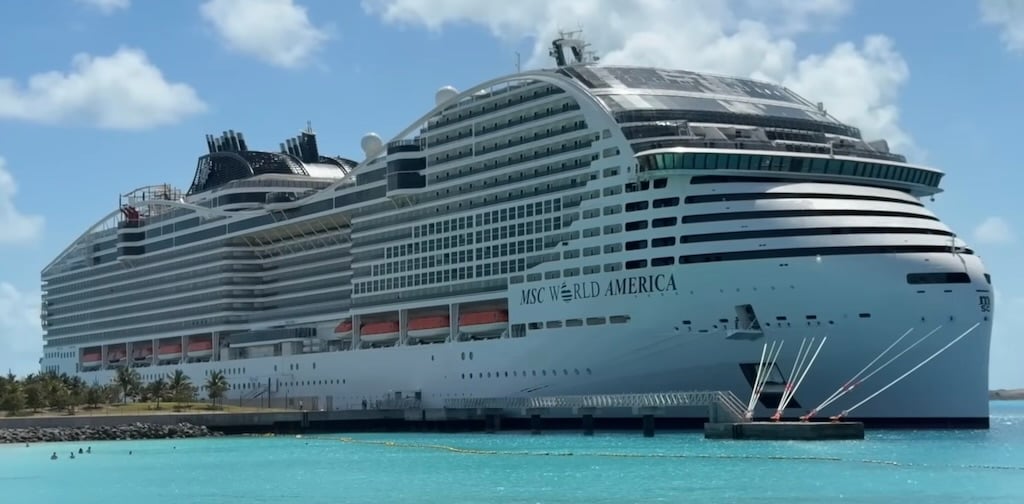
MSC World America – 205,700 GT
Role in the fleet:
MSC World America is the U.S.-tuned sister in the World Class family. At 205,700 GT, she’s slightly smaller on paper than Europa and Asia, but you’ll still experience her as a full-size mega-resort. The big difference is flavor: this ship is purpose-built to sail from Miami with a design and lineup that lean into North American tastes.
How the slightly different size feels vs her sisters
On board, that 10,000 GT difference isn’t something you consciously “feel” as smaller; what you notice is:
- A strong outdoor focus, with lots of open-air bars, deck space, and Caribbean-friendly layouts.
- Dining concepts aimed squarely at US guests, like Eataly at sea, Paxos Greek options, and casual promenade bites.
- Large-scale family and pool zones that make sense for weeklong Caribbean runs with lots of sea time.
Functionally, it’s still a huge ship: if you’re used to mid-size vessels, World America will absolutely feel like a floating city.
Pros of this size for a US-based Caribbean ship:
- So many ways to do a sea day: Pools, slides, kids’ areas, bars, spa, sports, people-watching… you won’t run out.
- Easy to keep big groups happy: Multi-gen families and friend groups can split up and still each have a great day.
- Modern US-friendly vibe: More familiar food concepts and outdoor hangouts if you’re used to Caribbean mega-ships.
Possible downsides:
- Peak-time congestion: On a packed sailing, buffets, elevators, and main pool space can feel intense if you hit them at standard times.
- Less port focus: When your ship is this big and feature-filled, it’s easy for ports to feel like a bonus rather than the main event.
- Cabin choice matters more: With crowds this size, picking your location on the ship has a bigger impact on how tired you feel by day three.
Who World America’s scale really fits:
- North American families who love Royal / Carnival-style mega-resorts and want to try MSC’s version.
- First-time MSC guests who want to see the brand at full power on familiar Caribbean routes.
- Social travelers who enjoy high energy, full venues, and long, lively evenings.
Is World Class “too big” or “just right”?
It’s the question everyone secretly wants answered when they look at the top of any list of MSC cruise ships by size: is that extra tonnage worth it, or is it overkill?
Here’s the honest breakdown from a practical point of view:
When this size is absolutely worth it:
- You love sea days. If a long sea day with multiple meals, drinks, shows, and pool visits sounds perfect, these ships are ideal.
- You’re traveling with kids or teens. The more energy they have, the more a World Class ship earns its keep.
- You enjoy “resort exploring.” If you love discovering hidden bars, trying different venues, and never doing the same thing twice, sheer size becomes a feature.
When this size might be overkill:
- Port-heavy itineraries. If you’re off the ship most days and exhausted by evening, you won’t use half the toys you’re paying for.
- Mobility or stamina concerns. Long corridors, multiple deck changes, and big distances can wear you down.
- You crave quiet and routine. If your ideal day is pool, book, bar, bed, repeat, a mid-size ship can give you that more simply.
As a rule of thumb:
If you want the ship to be a destination in itself, World Class size is a huge plus. If you want the ship to be a comfortable base camp, you’re probably better off a tier or two down the size ladder.
Meraviglia Plus & Meraviglia: big modern resort ships just below the giants
Drop one tier down from World Class and you hit the Meraviglia Plus and Meraviglia ships, sitting in the 171,000–181,500 GT range. On paper they are slightly smaller than the super-giants, but in real life they still feel like serious mega-resort hardware. For many cruisers, this is actually the sweet spot between “wow, this is huge” and “okay, I can still figure this ship out.”
This size band includes:
- Meraviglia Plus: MSC Euribia, MSC Virtuosa, MSC Grandiosa
- Meraviglia: MSC Meraviglia, MSC Bellissima
They all share a core signature: a long indoor promenade with a massive LED sky, surrounded by restaurants, bars, and shops. That one design choice shapes how the size feels more than the raw numbers.
How this size band feels compared to World Class
You’re now looking at ships around 171–181k GT instead of 205–215k GT. So what changes?
- You still get a true mega-ship feel with plenty of venues and multiple pools.
- There is slightly less sprawl than on World Class, which can make navigation easier.
- Crowds are still a factor, but some people find these ships less overwhelming than the very biggest hulls.
Think of them as big, modern resort hotels where the indoor promenade becomes your evening “street,” and the pool decks plus waterpark handle the daytime chaos.
Meraviglia Plus ships (MSC Euribia, MSC Virtuosa, MSC Grandiosa)
These are the stretched, upgraded versions of the original Meraviglia design, and they sit very high on the spectrum when comparing MSC cruise ships by size. The extra length isn’t just cosmetic. It’s used for more cabins, wider walkways, and larger public spaces, which helps these ships feel less cramped than earlier designs at similar passenger counts.
All three ships share nearly identical proportions and layouts, which is why they feel so familiar once you’ve sailed one of them. Euribia and Virtuosa come in around 181,541 GT, with Grandiosa just a touch smaller on paper, though you’d be hard-pressed to notice any difference under your feet. When evaluating MSC cruise ships by size, this trio represents the sweet spot where scale, amenities, and walkability finally start to balance, just before you step into full World Class megaship territory.
What the extra size buys you on Meraviglia Plus
On this platform you get:
- A long Galleria-style promenade covered by a huge LED dome that runs light shows at night.
- Multiple pools, including a main open-air lido, quieter areas, and a covered pool for poor weather.
- A dedicated kids and family zone, with slides and splash features in a compact waterpark.
- The full MSC Yacht Club ship-within-a-ship enclave on the forward upper decks.
Compared to World Class, you have slightly fewer districts but a very strong, central evening spine in the promenade. This makes them excellent “stroll and snack” ships.
MSC Euribia – 181,541 GT
Position in the size band:
MSC Euribia sits at the upper end of this tier, matching Virtuosa in tonnage and bringing the newest take on the Meraviglia Plus footprint. Her size is used not just for space, but also for branding around sustainability and art.
How her size feels day to day
- The interior promenade feels wide, high, and busy, especially during pre-dinner and after-dinner hours.
- Five separate pool areas soak up crowds, so even on a hot sea day you can usually find somewhere to cool off.
- The ship’s generous volume allows for a sprawling spa, large kids’ zones, and multiple lounges, all without feeling cramped.
You’re not getting a small-ship feel here; you’re getting a modern, busy resort that just happens to float.
Size-based pros on Euribia:
- Plenty of indoor space: Great for cooler regions and shoulder seasons where outdoor decks are less usable.
- Good crowd distribution: Multiple pools and lounges make it easier to avoid one single jammed hotspot.
- Big-ship entertainment: Room for large-scale shows, promenade parties, and evening events.
Trade-offs of 181k GT:
- Promenade bottlenecks: The same central galleria that feels magical can be crowded at peak times.
- Lots of walking: Getting from an aft cabin to the forward Yacht Club or spa is still a decent trek.
- Noise bleed: On a ship this size, with so many venues, sound can travel in some parts of the layout.
Who this size makes sense for on Euribia:
- Guests who want a modern, feature-rich ship but like the idea of a strong indoor hub.
- Families and couples who want entertainment variety without needing the full World Class scale.
- Cruisers sailing cooler-weather regions who appreciate ample indoor promenades and covered pool options.
MSC Virtuosa – 181,541 GT
Position in the size band:
MSC Virtuosa matches Euribia in tonnage and is another top-end Meraviglia Plus build. She shares the same basic size but uses it to showcase a slightly different set of “headline” features, especially around tech and shopping.
How you feel the size on Virtuosa
- The Galleria Virtuosa promenade feels like a full-blown mall, with shops, bars, and a huge LED ceiling.
- There’s space for special attractions like the robot bartender, which needs a sizable, attention-grabbing venue.
- Wide public corridors and large lounges mean that, even at high capacity, the ship feels busy rather than cramped.
This is still a big ship that rewards exploring. The raw volume translates into more choice, not just bigger rooms.
Size-based pros on Virtuosa:
- Lots of “rainy day insurance”: You can easily fill an afternoon indoors if the weather turns.
- High-energy nightlife: A big passenger load plus plenty of venues keeps the ship lively well into the evening.
- Strong shopping scene: The size allows a larger retail footprint than you’ll see on smaller MSC ships.
Trade-offs at this size:
- Queues at peak times: Popular attractions like the ropes course or VR experiences can draw lines.
- Decision fatigue: So many places to eat and drink means you might leave feeling like you missed out.
- Less intimacy: You’re cruising with thousands of others; it rarely feels “quiet all over” in the evenings.
Who meshes well with Virtuosa’s scale:
- Guests who love urban energy: lights, music, and people everywhere.
- Families with older kids and teens who will explore independently and use the extra venues.
- Social cruisers who like making new friends and hopping between bars and lounges.
MSC Grandiosa – 177,000 GT
MSC Grandiosa kicked off the Meraviglia Plus series and sits just a notch below Euribia and Virtuosa in overall tonnage, but she is still very firmly in large resort ship territory. When you’re comparing MSC cruise ships by size, Grandiosa is a great example of how smart layout matters more than raw numbers.
Instead of using her footprint for endless add-ons, the space is applied in more comfortable circulation, wider promenades, and better crowd flow through key areas like the central galleria and pool deck. She doesn’t feel scaled down, just slightly more controlled, which is why many repeat cruisers find Grandiosa easier to live on day to day than some of the even larger hulls.
How 177,000 GT feels on board
- The promenade and LED ceiling are central again, forming a high-volume, high-energy evening hub.
- Pool and deck space feel generous without being overextended; you can cross the ship without feeling like you ran a marathon.
- The public areas are scaled so that shows and events feel lively but not stadium-sized.
You’ll still see thousands of fellow guests, but the slightly smaller tonnage compared with World Class makes Grandiosa feel a notch more manageable.
Advantages of this size on Grandiosa:
- Better “walkability”: It is easier for some guests to get from cabin to venue compared to the super-giants.
- Full-featured but focused: You still have lots of choice, yet the ship’s layout naturally guides you through key areas.
- Nice balance for mixed groups: Enough for kids, enough for adults, without extremes in either direction.
Size trade-offs vs bigger and smaller ships:
- Still busy: If you are used to 2,000-passenger ships, this will feel crowded at prime time.
- Fewer headline gimmicks than newer World Class ships, although most guests never miss them.
- Not a “small ship retreat”: Even at this slightly lower tonnage, you are still on a genuine mega-ship.
Best match for Grandiosa’s size:
- Families and groups looking for a “Goldilocks” big ship: not the absolute biggest, but still very modern and large.
- Guests who love the idea of a promenade with shows and atmosphere every evening.
- Travelers who want a big MSC experience without jumping straight to World Class scale.
Meraviglia ships (MSC Meraviglia, MSC Bellissima) – 171,598 GT
The original Meraviglia pair sits slightly below Meraviglia Plus in size, at around 171,598 GT. In practice, that still feels like a large modern resort ship, just with a bit less stretching and a little more compactness baked into the design.
Shared size feel on Meraviglia and Bellissima
On both ships, you’ll notice:
- A long LED-covered promenade that functions as the main indoor boulevard.
- Multiple pools and whirlpools, including a decent waterpark for their era.
- Spacious theatre, lounges, and casino, sized appropriately for the guest count.
- Enough restaurants and bars that you have real choice, but not so many that it’s impossible to try a good sampling.
Compared to the Plus sisters, these ships feel just a touch tighter and more focused, which some guests love.
MSC Meraviglia – 171,598 GT
Role in the fleet:
MSC Meraviglia was the namesake and first ship in this design family. When she launched, her size put her among the largest cruise ships in the world, and she still feels impressively big today.
How 171,598 GT translates on board
- The central galleria feels busy and atmospheric in the evenings, without stretching endlessly.
- The pool deck is large enough to handle crowds but small enough that you can see most of what’s happening at a glance.
- Entertainment venues and lounges are sized so that events feel full rather than echoing.
For many guests, this size hits the “enough but not too much” balance perfectly.
Pros of this tonnage on Meraviglia:
- Strong all-weather capability: A lot of indoor space keeps the ship fun even in cooler climates.
- Big-ship amenities without extreme scale: You get a full collection of venues without World Class walking distances.
- Great for first-timers: Easy to show off what MSC can do without overwhelming people who are new to mega-ships.
Downsides relative to bigger sisters:
- Slightly less venue variety: You will get to “know” every bar and restaurant in a week, which some love and some don’t.
- Waterpark smaller than on the latest hardware, though still fun for kids.
- Promenade can feel crowded at chokepoints because there is less total volume to absorb guests.
Who Meraviglia’s size suits best:
- First-time large-ship cruisers moving up from smaller hardware.
- Families that want a big ship but not necessarily the biggest ship in the fleet.
- Guests who like structured, busy evenings and a feeling of a central “main street.”
MSC Bellissima – 171,598 GT
MSC Bellissima is essentially Meraviglia’s near twin, matching her almost exactly in tonnage and core layout, which places her squarely in the upper-middle tier when comparing MSC cruise ships by size. From a distance and even while walking the decks, the two ships feel immediately familiar, especially around the central promenade, pool layout, and main public spaces.
Where Bellissima quietly differentiates herself is in tech-forward touches and subtle design details rather than structural changes. Features like the in-cabin virtual assistant and slightly different decor choices give her a more modern, gadget-friendly feel without changing the overall experience. For cruisers who like the Meraviglia blueprint but want a bit more digital polish, Bellissima fits that niche nicely within the MSC cruise ships by size lineup.
Size experience on Bellissima
- The galleria again functions as a lively central hub, sized for crowds but still intimate enough for people-watching.
- Pool and sun deck areas feel comparable to Meraviglia, handling big sea days but rewarding early risers.
- The ship’s total volume supports multiple kids’ areas, lounges, and entertainment spaces without feeling sparse.
You still feel that you are on a big modern ship, just one that is slightly more focused than the Plus and World tiers.
Advantages of Bellissima’s size:
- Well-balanced design: Enough space for features without endless walking routes.
- Good for tech-curious guests: The ship’s scale supports things like in-cabin assistants and enhanced digital experiences.
- Solid family platform: Big enough for kids to have fun, small enough that parents can still keep mental track.
Limitations compared with bigger ships:
- Fewer extremes: If you want the absolute biggest slide or wildest attraction, those live on newer, larger ships.
- Venue variety capped: You will repeat favorite bars and restaurants, which some see as a plus, others as a minus.
- Busy at peak times: The slightly smaller size means that when everyone wants the same thing, you feel it more.
Best match for Bellissima’s tonnage:
- Families and couples who want a big-ship experience with modern touches without chasing the newest headlines.
- Guests who like having a single main indoor hub rather than a ship broken into too many zones.
- Cruisers who prefer a strong but not overwhelming level of choice.
Meraviglia vs Meraviglia Plus: does the extra tonnage matter?
If you’re comparing ships in this band, you’re probably asking:
“Should I care if it’s Euribia/Virtuosa/Grandiosa or Meraviglia/Bellissima, or are they basically the same?”
From a size standpoint, here is the quick logic:
- Meraviglia Plus (around 177k–181k GT)
- Slightly larger with more venues and refinements.
- Better if you want maximum choice and don’t mind a bit more walking.
- Great for longer itineraries where extra variety helps keep things interesting.
- Meraviglia (171,598 GT)
- Slightly more compact, easier to navigate.
- Better if you like revisiting the same favorite spots instead of chasing new ones every night.
- Great for 7-night or shorter cruises where you’ll still feel like you got a full tour of the ship.
Size-wise, all five ships feel like large, modern MSC flagships. The question is not “too big or too small,” but whether you want maximum variety or a more focused version of the same concept.
Seaside EVO & Seaside: big warm-weather ships built around outdoor space
Drop another rung down the MSC size ladder and you land in the Seaside EVO and Seaside family, which sits roughly between 154,000 and 170,400 GT. On paper, these ships are a step smaller than the Meraviglia line when comparing MSC cruise ships by size. In practice, they often feel just as expansive, because so much of their volume is pushed outward instead of packed into interior corridors and promenades.
If Meraviglia is built around indoor boulevards, Seaside is built around the ocean itself. These ships lean heavily into wraparound waterfront living, with wide outdoor promenades, glass elevators facing the sea, aft pool decks that feel like modern beach resorts, and long railings where you’re actually looking at water, not LED ceilings. For warm-weather itineraries, this outward-focused design makes Seaside ships feel larger than their tonnage suggests within the MSC cruise ships by size lineup.
Seaside EVO: MSC Seashore & MSC Seascape (around 169–170k GT)
These two ships take the original Seaside concept and evolve it, stretching the hull, reshaping some spaces, and doubling down on outdoor areas while keeping the tonnage in the 169–170k range.
How Seaside EVO size feels on board
On MSC Seashore and MSC Seascape, you’ll immediately notice:
- A very wide waterfront promenade low on the ship, giving you long stretches of real ocean-facing walking space.
- A dramatic aft pool complex that feels more like a resort terrace than a typical ship lido.
- Multiple levels of sun decks, with infinity-style hot tubs and plenty of loungers overlooking the wake.
All that exterior structure uses a lot of volume, so even though these ships are slightly smaller on paper than some Meraviglia builds, they feel huge outdoors.
Size-based advantages of Seaside EVO:
- Massive outdoor footprint: That 170k GT is used to keep you close to the water, not sealed inside malls.
- Great for hot climates: Caribbean or Med in summer feels made for these hulls, with shade and sun options everywhere.
- Crowds spread across levels: With so many terraces and nooks, pool deck congestion has more places to spill into.
Trade-offs versus same-size inward-focused ships:
- Less cathedral-like indoor promenade: You still have indoor venues, just not the giant enclosed boulevard feel.
- Weather sensitivity: On a cold, windy, or rainy itinerary, a lot of that wonderful outdoor volume becomes harder to use.
- Navigation quirks: Split-level outdoor decks and elevators at odd angles can take a day or two to fully understand.
Who Seaside EVO’s size works best for:
- Sun seekers who want as much fresh air as possible without sacrificing ship size or features.
- Families on warm-weather itineraries where pools, loungers, and spray from the wake are the main events.
- Cruisers who love long outdoor walks at sea, drink in hand, feeling close to the water line.
Original Seaside: MSC Seaside & MSC Seaview (154,000 GT)
The first Seaside twins sit at about 154,000 GT, so they’re a step smaller than the EVO pair, but the design language is the same: pull life down closer to the water, open up aft spaces, line the sides with outdoor bars, and create that South Beach boardwalk energy.
What 154,000 GT feels like on Seaside ships
On MSC Seaside and MSC Seaview, the size translates into:
- A broad lower-deck promenade with outdoor dining, sun loungers, and places to simply watch the sea.
- A large aft pool zone with surrounding terraces that feel more like a land resort than a traditional ship stern.
- Enough indoor lounges and dining rooms to keep evenings lively, without going full indoor city.
Compared to EVO, everything is just a touch more compact, but you still have the sense of a big warm-weather ship.
Pros of this tonnage on the original Seaside pair:
- Big, but not overwhelming: 154k GT still gives you choices without the “where even am I?” feeling.
- Outdoor-maximizing layout: You feel the sea from more places, especially at lower levels, which most megaships hide behind walls.
- Strong pool and sun deck capacity: Plenty of outdoor real estate for typical Caribbean or Med sea days.
Limitations compared to bigger sisters:
- A little less redundancy: Slightly fewer venues means your go-to bar or pool will be everyone else’s favorite at peak times too.
- Smaller water features: Fun, but not as sprawling as newer parks on the absolute largest ships.
- Indoor space more limited: If weather forces everyone inside, the ship can feel busy quickly.
Who this size and layout really suits:
- Guests who pick cruises specifically for hot, sunny itineraries and want maximum outside time.
- People who prefer to see the ocean while they walk instead of wandering interior corridors.
- Cruisers who like the idea of a big ship but still want to feel connected to the waterline, not just sky and screens.
Seaside vs Meraviglia at similar sizes: which “big ship” style fits you?
This is one of the most useful comparisons you can make once you understand MSC’s size tiers.
At roughly similar tonnage bands (mid-150k to high-170k):
- Meraviglia / Meraviglia Plus pour more volume into the indoor promenade and large interior spaces.
- Seaside / Seaside EVO pour more volume into outdoor promenades, aft terraces, and low-level decks.
So the practical size question is not “Which one is bigger?” but:
- Do you want a city-like interior, with a tangle of venues and a central LED sky?
- Or do you want a coastal boardwalk feel, where an evening stroll means stepping outside into real sea breeze?
If you love nightlife, shopping, and a bit of spectacle, Meraviglia-family ships make more sense for your tonnage.
If you dream of alfresco everything and hearing the sea under your feet, Seaside-family ships are the smarter version of “big.”
Fantasia class: classic big MSC ships in the 137k–139k GT band
Step further down the MSC size ladder and you arrive at the Fantasia class, which sits in the 137,936–139,072 GT range. When you line up MSC cruise ships by size, these vessels still land squarely in classic big-ship territory, even if they predate the ultra-modern design language of today’s flagships.
These ships were massive when they launched, and that sense of scale hasn’t disappeared. What has changed is the design era they come from. Fantasia-class ships were built before LED sky promenades, hyper-themed neighborhoods, and tech-heavy spectacles became the norm. Instead, their size is expressed through long interior spaces, broad pool decks, and a more traditional cruise flow that many seasoned cruisers still prefer.
In this size tier you’ll find:
- MSC Preziosa – 139,072 GT
- MSC Divina – 139,072 GT
- MSC Splendida – 137,936 GT
- MSC Fantasia – 137,936 GT
You can think of them as classic large cruise ships: big atriums, multiple pools, proper walk-around outer decks, and a full theatre, but with slightly fewer venues than the newer mega-builds.
How 138–139k GT feels on Fantasia ships
On board these four sisters, size shows up differently than on newer designs:
- Outdoor decks are more traditional: big lido, secondary pool, and long sunbathing areas with classic railings.
- There are multiple pools and whirlpools, but not the huge, multi-level waterparks of later generations.
- The interiors lean into grand atriums, lounges, and theatres, rather than promenade malls or district zones.
The total tonnage gives you a lot of space, but it’s arranged in a way that feels more like “ship first, resort second”.
Strengths of this size in the Fantasia layout:
- Plenty of space without sprawl: Easy to understand the ship’s flow after a day or two.
- Full-featured but not extreme: Pools, gym, spa, theatre, bars, kids’ clubs… everything you need, but not duplicated endlessly.
- Yacht Club available: On this tonnage, there is still enough volume to carve out a proper ship-within-a-ship suite enclave.
What you give up compared to newer, slightly larger ships:
- No LED sky promenades: Evenings are more about atrium bars, lounges, and the theatre than an indoor “street.”
- Simpler water and family zones: Fun, but not destination-level waterparks.
- Fewer specialty venues: You still have variety, but not the “how did I miss that bar?” experience.
Who this size tier is perfect for:
- Guests who like big-ship choice but prefer more classic cruise layouts.
- People who want access to Yacht Club without necessarily paying top-tier prices on the very newest ships.
- Travelers who get anxious on 6,000-guest megaships and want something big but more human-scale.
MSC Preziosa & MSC Divina – 139,072 GT
These two are the heavier sisters, nudging up near 139,072 GT. In everyday terms, that means:
- Slightly more interior space for lounges, cabins, and public areas.
- A bit more weight to absorb motion compared with mid-size ships, especially helpful in choppier waters.
- Room for statement features like long waterslides, expansive pool decks, and ornate interior staircases.
On either ship, you feel like you’re on a full-size, grown-up cruise ship without tipping into overwhelming mega-resort.
MSC Splendida & MSC Fantasia – 137,936 GT
Just a step below in tonnage, these ships feel nearly identical in scale:
- The difference in GT is not something a typical guest would consciously notice.
- You still get multiple pools, long sun decks, full theatre, casino, spa, and kids’ spaces.
- The overall vibe is “grand but not gigantic” – lots of elevator banks and wide stairs instead of multi-deck mall corridors.
Size here is about solidity and presence, not shock value. You always know you’re on a substantial ocean liner, but you won’t need a tracker app to remember where the main bar is.
Musica class: mid-size large ships around 92k–95k GT
Drop another rung down the MSC ships-by-tonnage ladder and you reach the Musica class, which sits in the 92,000–95,128 GT range. When you’re scanning MSC cruise ships by size, this is where the experience shifts from mega-resort to balanced, livable cruising. These ships are often described as mid-size, but they still feel unmistakably “big” compared to older or boutique-style vessels.
You still get real ship infrastructure here, just without the sprawl of 6,000-plus guests. There are multiple dining venues, several bars and lounges, more than one pool area, and enough deck space to spread out without constant crowd pressure. What you lose is excess, not comfort. For many cruisers, Musica-class ships hit a sweet spot within the MSC cruise ships by size lineup: large enough to feel complete, small enough to stay manageable from day one.
Ships in this band:
- MSC Magnifica – 95,128 GT
- MSC Musica – 95,128 GT
- MSC Poesia – 92,627 GT
- MSC Orchestra – 92,409 GT
These ships are the definition of “big-ship lite”. You have choice, but not endless choice. You have crowds, but not full stadiums.
How 92k–95k GT feels on Musica ships
On board, this tonnage translates to:
- One main lido pool plus a secondary or adjacent sunning space, sometimes with a partially covered area.
- A full theatre sized for a couple of thousand guests at show time.
- A decent number of bars and lounges, but not dozens; you’ll learn favorites quickly.
- A buffet, main dining room, and a handful of additional options, rather than a whole dining district.
You can walk from one end of the ship to the other without feeling like you’ve accidentally trained for a 5K.
Benefits of this size band:
- Easier navigation: You can understand the entire layout in a day and rarely get lost.
- Calmer overall feel: Fewer guests means less peak-time chaos, especially on sea days.
- Great value potential: These ships often price below the mega hardware but still feel like full-featured cruise ships.
What you sacrifice vs larger ships:
- No giant waterparks or headline rides: Pools, maybe a slide, but nothing theme-park extreme.
- Limited dining variety: You won’t choose between ten specialty restaurants; it’s more like two or three extras.
- Less “wow” architecture: Atriums and public spaces are attractive but not cathedral-sized.
Who this size suits best:
- Guests who want a big-ship toolkit without mega-ship overwhelm.
- Itinerary-focused cruisers who still like to have a few bars and a theatre at night.
- Families who are okay with simple pool fun instead of all-day waterpark marathons.
Lirica class: compact classics around 65,500 GT
At the very bottom of the MSC tonnage ladder sit the Lirica-class ships, all clustered right around the 65,500 GT mark. When you line up MSC cruise ships by size, these vessels clearly represent the most compact end of the mainstream ocean-cruise spectrum. They have fewer decks, fewer passengers, and tighter interior footprints, which immediately changes how the ship feels once you step onboard.
These ships are unapologetically functional, and that’s not a bad thing. The layout makes it very clear that the ship is a means to reach destinations rather than the destination itself. You’ll notice narrower corridors, smaller pool decks, and fewer parallel venues running at the same time. For cruisers who value port-heavy itineraries, simplicity, and ease of navigation, the Lirica class offers a quieter, more traditional experience within the MSC cruise ships by size lineup.
Ships in this size tier:
- MSC Sinfonia – 65,591 GT
- MSC Lirica – 65,591 GT
- MSC Opera – 65,591 GT
- MSC Armonia – 65,542 GT
Think traditional: one main lido, a theatre, a couple of lounges, and a simple, easy-to-learn layout.
How 65,500 GT actually feels at sea
On these ships, size means:
- Shorter walking distances: From your cabin to the pool or restaurant is a quick hop, not an expedition.
- A single main pool area with adjacent hot tubs and sun space.
- A modest buffet and main dining room, plus a few extra options depending on refits and deployments.
- A smaller theatre and fewer bars, which naturally makes the social scene feel more intimate and repetitive (in a good way for many).
You’ll actually recognize fellow passengers by day two or three, something that rarely happens on the mega-hulls.
Advantages of this compact size:
- Calm by default: Even when “busy,” these ships rarely reach the chaos of a 6,000-guest pool deck.
- Easier on mobility: Less distance, fewer decks, fewer long corridors to traverse multiple times a day.
- Port-friendly: Smaller ships can sometimes access more unusual or smaller ports, depending on the itinerary.
Limitations you must be okay with:
- Minimal splash zones: Great for simple pool play, not for thrill-seeking kids and teens.
- Limited entertainment variety: One show lounge, a couple of bars, some daily trivia and live music, not a festival.
- Dining repetition: You will quickly cycle through every venue on board; variety comes more from ports than from the ship.
Best match for this smallest MSC tier:
- Cruisers who want to feel like they’re on a ship first, resort second.
- Port collectors who care more about the places than the onboard hardware.
- Guests who value peace, simplicity, and shorter walks over slides, robots, and mega-promenades.
How ship size actually changes your cruise experience
Looking at raw numbers is helpful, but what really matters is how each size tier feels once you’re actually living on the ship. The gap between a 215,000 GT World Class giant and a 65,000 GT Lirica-class ship is enormous when it comes to crowds, noise levels, walking distances, and daily rhythm. If you understand those differences upfront, you can use MSC cruise ships by size as a fast, practical filter long before you start squinting at deck plans.
At a high level, ship size defines the personality of your cruise. Smaller ships tend to feel more like classic ocean liners, with predictable routines and quieter evenings, while the biggest ships operate more like floating resort cities that never really slow down. Neither approach is right or wrong. The key is matching the correct size band to how you actually like to spend your days and nights at sea, not just what looks impressive in a brochure.
Crowds, energy, and personal space at different sizes
Size is the biggest predictor of how busy or calm your days and nights will feel. Two ships can have the same itinerary and price, but a totally different energy level because one carries 6,700 passengers and the other carries 2,600.
World Class & Meraviglia Plus (roughly 177k–215k GT)
On these ships you get high energy almost all the time.
- Pros:
- Lively vibe: Bars, promenades, and pool decks feel like busy city squares.
- More events: Size supports multiple shows, parties, and activities running in parallel.
- Better people-watching: With thousands of guests, there is always something happening somewhere.
- Cons:
- Peak-time crush: Embarkation, buffet at noon, and main pool on sea days can feel intensely crowded.
- Noise everywhere: Even when you’re not in a party venue, background sound and motion are constant.
- Privacy takes effort: You often need to seek out quiet corners instead of them being the default.
Seaside / Seaside EVO & classic Fantasia (roughly 137k–170k GT)
Here you still have a big-ship buzz, but with a touch more breathing room.
- Pros:
- Balanced feel: Ship feels big and social without always feeling packed.
- Outdoor flow: Seaside especially spreads guests along long promenades and terraces, easing congestion.
- Comfortable theatre sizes: Shows feel full but not overwhelming, which suits many travelers.
- Cons:
- Busy hot spots: Certain bars or pool zones still get very crowded at prime times.
- Limited duplication: Fewer backup venues means everyone converges on the same spaces.
- Less late-night depth: There is nightlife, but fewer distinct late-night pockets than on the biggest ships.
Musica (around 92k–95k GT)
These ships are where “big” starts to feel more personable and calm, especially on non-peak sailings.
- Pros:
- Milder crowds: Pool, buffet, and theatre are busy, but rarely crushingly packed.
- Easier social circle: You start seeing familiar faces, which many guests like.
- Cozy nightlife: Bars and lounges feel alive but not chaotic, ideal for low-key evenings.
- Cons:
- Fewer hideaways: With fewer total venues, it can be harder to escape a vibe you don’t like.
- Less variety: Entertainment and dining options are more limited and repetitive.
- Big groups stand out: If a large group is onboard, their presence can shape the ship’s social mood.
Lirica (around 65,500 GT)
At the smallest MSC size tier, you’re in true small-ship mainstream territory.
- Pros:
- Quiet by default: There is often a gentle, relaxed atmosphere even at peak times.
- Personal feel: Crew and fellow guests become recognizable quickly, which many people love.
- Less queueing: Fewer guests means shorter lines for most things, especially off-peak.
- Cons:
- Limited buzz: If you like a lively crowd, you may find evenings too subdued.
- Same faces, everywhere: Socially, the ship can feel small-town very fast.
- Events feel smaller: Shows and activities are more intimate than spectacular.
Walking distances and “ship fatigue” by size band
Ship size quietly determines how tired your legs feel by day three. This matters more than people expect, especially if you have kids, mobility issues, or just don’t enjoy trekking.
Very large ships (World & Meraviglia Plus)
- Reality check: You can easily walk thousands of steps just going about your day.
- Pros:
- More to explore: Long walks can feel like intentional exercise and discovery if you enjoy roaming.
- Plenty of lifts: Many elevator banks and stairs keep vertical moves reasonably manageable.
- Cons:
- Long cabin-to-venue routes: Forward cabins and aft venues mean a lot of back-and-forth.
- “Forgot something” penalty: Leaving something in your cabin can mean a 10–15 minute detour.
Big but not extreme (Seaside / EVO, Fantasia)
- Reality check: You’ll walk a lot, but routes feel shorter and more direct.
- Pros:
- Simpler layouts: More traditional deck plans often mean straightforward navigation.
- Manageable distances: Getting from pool to buffet or theatre to cabin feels reasonable.
- Cons:
- Bottlenecks: A few key areas can create pinched corridors, especially near the theatre or main staircases.
Mid-size (Musica)
- Reality check: Daily movement feels comfortable, even if you’re not particularly active.
- Pros:
- Quick transitions: It’s easy to “pop back to the cabin” or change venues on a whim.
- Good for older guests: Less walking helps those with limited mobility or stamina.
- Cons:
- Less sense of “grand adventure”: Some people want the feeling of a massive, sprawling ship, which you don’t get here.
Compact (Lirica)
- Reality check: This is about as easy as it gets in mainstream ocean cruising.
- Pros:
- Everything close: Dining, pool, and theatre are never far from your stateroom.
- Less fatigue: Great for anyone who tires easily or doesn’t want to spend days in long corridors.
- Cons:
- Fewer “secret” corners: Smaller footprint means fewer hidden nooks to discover.
Motion, stability, and comfort at different ship sizes
A lot of people quietly worry about seasickness, and ship size plays a noticeable role in how motion feels.
Largest size tiers (World, Meraviglia Plus, Seaside EVO)
- Pros:
- More stable in average seas: Huge hulls dampen a lot of everyday rolling and pitching.
- Better in wind and chop: Extra width and weight help the ship feel solid and calm most of the time.
- Cons:
- Motion feels strange when it happens: When these big ships do move, the motion can feel slow and sweeping, which some people notice more.
Mid-to-large (Fantasia, original Seaside)
- Pros:
- Good balance: Big enough to soften typical swell, small enough to still feel like a ship.
- Comfortable in most mainstream routes: Great for Med, Caribbean, and shorter crossings in decent seasons.
- Cons:
- More noticeable in rough weather: In strong storms, motion is more obvious than on the very biggest hulls.
Mid-size and compact (Musica, Lirica)
- Pros:
- Real “ship feel”: You know you’re at sea; there is a gentle movement even in calmer conditions.
- Connected to the ocean: For some people this is a huge plus; they want to feel the water.
- Cons:
- More prone to motion: In swell or strong winds, smaller ships respond with sharper movement.
- Cabin placement matters: On these ships, being midship and low can significantly improve comfort.
If motion worries you and you’re comparing MSC cruise ships by size, leaning toward the larger tiers (World, Meraviglia Plus, Seaside EVO) plus a midship, lower cabin is usually the safest combination.
How ship size affects families, couples, and different traveler types
Different size bands are naturally better fits for different styles of traveling. Let’s break it down by who you’re sailing with.
Families with kids and teens
For families, size mostly translates into entertainment capacity and energy level.
- Best fits:
- World Class and Meraviglia Plus for kids and teens who want maximum action.
- Seaside / Seaside EVO for water-loving families who crave outdoor time.
- Why:
- Bigger ships = more distraction: Multiple pools, slides, kids’ clubs, and hangout spots are crucial when you’re traveling with high-energy kids.
- Sea days are easier: It’s much simpler to handle rainy days or long crossings when you can bounce between activities, shows, and snacks.
- When smaller works:
- Short, port-heavy itineraries: On a compact ship, if the kids are off the ship all day, they may not notice the reduced features.
- Calmer families: If your kids are content with a pool, ice cream, and evenings in the theatre, mid-size Musica can be fine.
Couples and adult friend groups
Couples don’t all want the same thing, so your ideal size depends on whether you crave buzz or peace.
- If you like nightlife & variety:
- Go for Meraviglia / Meraviglia Plus or World Class.
- You’ll have more bars, lounges, live music venues, and late-night spots.
- If you like relaxed sea days & quieter evenings:
- Look at Fantasia and Musica, or even Lirica if you’re very port-focused.
- You’ll get enough evening choice without being overwhelmed.
- Best compromises:
- Seaside / EVO for couples who want sun, sea views, and some night energy without indoor mall vibes.
Solo travelers
Solo guests often care about social dynamics more than raw GT.
- Larger ships:
- Pros: Lots of events, bars, and group activities make meeting people easier.
- Cons: You may feel like a small fish in a huge pond if you prefer quieter connections.
- Mid-size / smaller ships:
- Pros: Faster to recognize faces and staff, easier to slip into familiar routines.
- Cons: If the passenger mix is quiet, evenings can feel low key and repetitive.
In practice, solo travelers who enjoy mingling often do well on big but not biggest ships (Seaside, Fantasia, Musica), where the atmosphere is social but not overwhelming.
Older guests and anyone with mobility concerns
For anyone who tires easily or has mobility limitations, ship size is a major comfort factor.
- Smaller / mid-size (Musica, Lirica):
- Pros: Shorter distances, fewer decks, and less day-to-day walking.
- Cons: Less variety, so you rely more on itinerary and relaxation.
- Larger ships (World, Meraviglia Plus, EVO):
- Pros: More lifts, ramps, and accessible spaces, plus plenty of indoor seating.
- Cons: Distances between cabin, dining, and theatre can be long and tiring.
If mobility is a concern and you still want modern features, a Fantasia or Musica ship is often a sweet middle ground: full-sized but not punishing to navigate.
Budget-focused travelers
Size and age are closely linked to price.
- Newer, larger ships:
- Usually carry a “new ship premium”, especially for popular dates.
- You pay for LNG tech, waterparks, headline features, and hype.
- Older, mid-size and smaller ships:
- Often offer the lowest per-night rates.
- You trade away some features for lower fares and quieter ships.
If you’re price-sensitive, the best strategy is often:
- Book a mid-size or Fantasia ship and invest the savings in a better cabin category (like a balcony) or more excursions and onboard treats.
Size vs itinerary: which matters more?
You can’t judge a cruise on size alone; itinerary length and port mix matter just as much.
- Sea-day-heavy itineraries:
- The more sea days, the more ship size matters.
- For two or more full sea days, being on a larger ship with more to do usually feels worth it.
- Port-intensive itineraries:
- If you’re off the ship most days from morning to late afternoon, ship size becomes less critical.
- In that case, a mid-size or smaller ship can give you better value, because you’re paying mainly for transport and comfort, not resort features.
A good rule:
If your calendar has lots of little ship icons and only a few anchors, prioritize a larger ship. If it’s mostly anchors with few ship icons, a smaller ship can be the smarter play.
Using size as a fast decision filter
Whenever you look at an MSC itinerary, do a quick three-step size check before diving into the details:
- Identify the ship and find its size tier.
- Over 200k GT → World Class super-giant.
- Around 170–185k GT → Meraviglia or Seaside EVO big resort.
- Around 138–140k GT → Fantasia classic big ship.
- Around 92–95k GT → Musica mid-size.
- Around 65k GT → Lirica compact classic.
- Ask what you actually want from this trip.
- Big ship as destination?
- Ship as comfortable hotel between ports?
- High-energy social experience or quiet, slow-paced escape?
- Check whether the ship’s size matches that intent.
- If you want nonstop activity and picked a 65k GT ship, you may be disappointed.
- If you want calm and simplicity and picked a 215k GT mega-ship, you may feel overwhelmed.
If those three don’t align, you know you need to adjust the ship, not the itinerary.
FAQs about MSC ship size
Let’s wrap this up with the questions people actually ask once they’ve looked at all these tonnage numbers and ship names and thought, “Okay… but what does this mean for my cruise?”
Q: Do bigger MSC ships always mean a better experience?
A: Not automatically. Bigger ships give you more choice, more venues, more slides, more bars, and more buzz, but they also bring more people, more noise, and more walking. If you love resort-style energy, late nights, and endless options, larger ships are a win. If you value peace, routine, and simplicity, a mid-size or smaller ship can feel far more relaxing, even if the feature list is shorter. The best ship size is the one that matches how you actually like to spend your days at sea, not just the one with the biggest number in the brochure.
Q: Which MSC ships feel the most crow
A: The ships that usually feel the most crowded are those with the highest guest capacity, especially the World Class giants and the Meraviglia Plus ships, particularly during school holidays and peak seasons. On these larger ships, the main pool, buffet, and central promenade can feel very busy at peak times. However, “crowded” also depends on design and timing. Ships with multiple pools, spread-out venues, and wide promenades handle guests better, and if you eat slightly early or late, avoid obvious rush hours, and use secondary venues, you can dramatically soften the crowd experience even on the largest ships. If you really dislike crowds, you’ll usually be happier on Fantasia, Musica, or Lirica class ships, especially outside school holidays.
Q: Which MSC ships feel the most crowded?
A: The ships that usually feel the most crowded are those with the highest guest capacity, especially the World Class giants and the Meraviglia Plus ships, particularly during school holidays and peak seasons. On these larger ships, the main pool, buffet, and central promenade can feel very busy at peak times. However, “crowded” also depends on design and timing. Ships with multiple pools, spread-out venues, and wide promenades handle guests better, and if you eat slightly early or late, avoid obvious rush hours, and use secondary venues, you can dramatically soften the crowd experience even on the largest ships. If you really dislike crowds, you’ll usually be happier on Fantasia, Musica, or Lirica class ships, especially outside school holidays.
Q: Are the smallest MSC ships too boring for a week-long cruise?
A: For some people they are, but for others they’re ideal. It depends on what “fun” means to you. On the smallest ships you still get a main pool with hot tubs, a theatre with nightly shows, a few bars and lounges, and daily activities such as trivia, dance classes, and live music, so there is always something to do. What you won’t find are huge waterparks with multiple slides, giant ropes courses or thrill rides, or a dozen different specialty restaurants and bars. If your ideal cruise is port-focused, with evenings spent at a show, then a drink, then bed, a smaller ship is perfectly fine for a week or even longer. If you want your sea days to feel like theme park events, you’ll be happier higher up the size ladder on a larger, newer ship.
Q: Are larger MSC ships better for rough seas
A: Generally, yes. Larger hulls tend to ride more smoothly in typical ocean conditions, and the biggest ships use their length, width, and tonnage to soften everyday movement. World Class, Meraviglia Plus, and Seaside EVO ships usually feel more stable and solid than smaller vessels in moderate seas. That said, even on a big ship you can still feel motion in truly rough weather, and on smaller ships cabin location matters more. Cabins midship and on lower decks usually feel the calmest, while cabins far forward or very high up make motion more noticeable. If seasickness worries you, the best combo is a larger ship, a midship, lower-deck cabin, and simple remedies like wristbands, tablets, or ginger.
Q: Which MSC size tier gives the best value for money?
A: The best value often lives in the middle and lower size bands, especially the Fantasia class (big ships, slightly older, still very full-featured), the Musica class (solid mid-size all-rounders), and sometimes the Lirica ships on port-heavy itineraries. On these ships you often get lower fares per night than on the newest mega-ships, enough venues that you never feel stuck, and more relaxed crowds with easier navigation. A smart strategy is to book a mid-size or older large ship and use the savings to upgrade your cabin, for example choosing a balcony instead of an inside, or to invest more in excursions, drinks packages, or specialty dining. Many cruisers end up happier in a better cabin on a slightly smaller ship than in a basic inside room on a giant flagship they barely explore.
Q: If I’m new to MSC, should I pick the biggest ship I can?
A: Not automatically. For a first MSC sailing, it often makes sense to aim for “big but not the biggest”, such as a Meraviglia or Meraviglia Plus ship, a Seaside or Seaside EVO ship, or a Fantasia-class ship if you prefer a more classic feel. These ships showcase what MSC does well (evening life, variety, a European vibe) while still being easier to understand and navigate than the very largest hulls. They give you a clear taste of big-ship style without feeling overwhelming. If you already know you love mega-ships on other lines and specifically want MSC’s newest, flashiest hardware, then a World Class ship makes sense. Otherwise, starting one notch down lets you test the waters first.
Q: Is there a best ship size for Mediterranean vs Caribbean itineraries?
A: You can mix and match, but certain size tiers pair naturally with certain regions. In the Caribbean, you get lots of sea days, beach stops, and hot weather, so larger, outdoor-focused ships like World Class, Seaside EVO/Seaside, and Meraviglia Plus often shine, because there’s a lot to do on board when you’re not at the beach. In the Mediterranean, many itineraries are port-heavy, with daily calls and long days ashore, so mid-size or classic big ships such as Fantasia, Musica, or even Lirica can be ideal, because you’re off the ship so much that you don’t need as many megaship features. If your Med itinerary includes several sea days or a repositioning crossing, a bigger ship can earn its keep. If it’s a classic “new port every day” route, a smaller or mid-size ship often gives you better value and less crowd stress.
Q: Will I feel stuck on a small MSC ship during sea days?
A: You might, but only if your idea of a great sea day requires multiple waterslides, themed bars all day, huge kids’ and teens’ complexes, and nonstop high-energy activities. On a compact ship, a typical sea day looks more like pool time, reading on deck, one or two organized activities, an evening show, and a drink in a bar or lounge. If that sounds relaxing and comfortable, you won’t feel stuck at all, and a smaller ship can be a big plus. If that sounds boring, you should lean toward at least a mid-size Musica-class ship, or a Fantasia, Seaside, or Meraviglia-class ship, where there are more venues and activities to carry a long sea day.
Q: Is it easier to meet people on big or small MSC ships?
A: It depends on your social style. On big ships, you get more structured activities, bars, and entertainment venues where social people naturally gather, so if you enjoy mingling and joining events, you’ll have plenty of chances to meet others. The trade-off is that you’re less likely to keep bumping into the same faces unless you revisit the same spaces. On small ships, you’ll see the same people at breakfast, around the pool, and at evening shows, which makes striking up conversations and forming slow-burn connections easier. The flip side is that if you don’t click with your fellow guests, there are fewer fresh faces to meet. If you’re naturally outgoing and like working a crowd, larger ships give you more variety. If you prefer familiar faces and a cozy, village-like feel, smaller ships are often better.
Q: How much should I care about ship size vs ship age?
A: Both matter, but in different ways. Size tells you about crowds, choice, and energy level, while age tells you about design era, decor style, and tech level. A slightly older large ship can still feel more feature-rich and versatile than a newer small ship, and a well-refurbished older vessel can feel fresh and comfortable even if it lacks the very latest megaship toys. The best approach is to use size first to pick the type of experience you want, then look at age and refits within that size tier to choose a specific ship that’s in good condition and fits your taste. That way you’re matching both scale and era to the way you actually like to cruise, instead of just chasing the newest hull or the biggest number.
Final thoughts on choosing the right MSC ship size
When you list out all MSC cruise ships by size, it’s tempting to think the choice is about bigger vs smaller, full stop. In reality, you’re choosing between four very different styles of vacation: floating city, big resort, mid-size all-rounder, or compact classic.
If you wake up excited by the idea of slides, lights, crowds, and choices, the higher end of the tonnage chart is your playground. Those ships reward wandering, staying up late, and treating the vessel itself like a destination. You’ll never run out of bars, decks, or shows to try, and sea days will fly by.
To see MSC cruises official website you can see that here.
If your happy place looks more like quiet decks, easy routines, shorter walks, and port days that wipe you out, the mid-size and smaller tiers are your friends. They give you enough comfort and entertainment without shouting for your attention every minute, and they often deliver better value for the same itinerary.
The trick is simple: whenever you’re comparing itineraries, don’t just look at dates and prices. Find the ship, note its size tier, and ask yourself whether that tier matches how you actually like to travel. Do that consistently, and you’ll stop playing cruise roulette and start booking ships that feel like they were built for the way you cruise, not just the way they look in the brochure.