When you line up MSC cruise ships by age, you’re not just looking at dates on a timeline. You’re comparing entire styles of cruising. A 2025 LNG-powered World Class mega-ship feels completely different from a compact early-2000s Lirica-class vessel, even if they sail the same route at the same price.
Newer ships lean into “floating resort” energy: huge waterparks, indoor promenades, robot bartenders, and more restaurants than you’ll try in a week. Older ships lean into “classic cruise ship” territory: simpler layouts, fewer crowds, and itineraries where the ports are the real stars. Neither is automatically better; it’s all about what kind of week at sea you actually want.
In this guide, we’ll walk through MSC Cruises’ fleet from newest to oldest, grouping ships into clear “generations” so you can instantly tell whether a ship is a cutting-edge flagship, a modern workhorse, or a small, seasoned veteran. Along the way, I’ll flag the real-world pros and cons of each age band: how busy it feels on sea days, how modern the cabins are, what kids and teens actually get, and where the best value usually hides.
By the end, you’ll be able to glance at any itinerary, see the ship name, and immediately know what era you’re booking into – and whether that’s the right fit for how you like to cruise.
Table of Contents
MSC cruise ships by age at a glance
Before we dive into each ship in detail, it really helps to see the whole MSC Cruises fleet on one timeline. This is the “zoomed out” view that makes everything else click, because you can instantly spot which ships are brand-new flagships and which are the seasoned older workhorses.
If you’d also like to see how these same ships group together by design family rather than age, take a look at our MSC Cruises ships by class guide. Using both views together makes it much easier to decide which ship style actually fits how you like to cruise.
The list below shows newest to oldest, using the year each ship entered service for MSC Cruises (or is scheduled to). Don’t worry about memorizing it. The goal is simply to see how the ships cluster into clear generations so you can decide whether you’re more of a “latest hardware” cruiser or a “smaller, classic ship” cruiser before you even start comparing individual vessels.
| Ship | Year in MSC service* | Class / Type |
|---|---|---|
| MSC World Asia | 2026 (planned) | World Class |
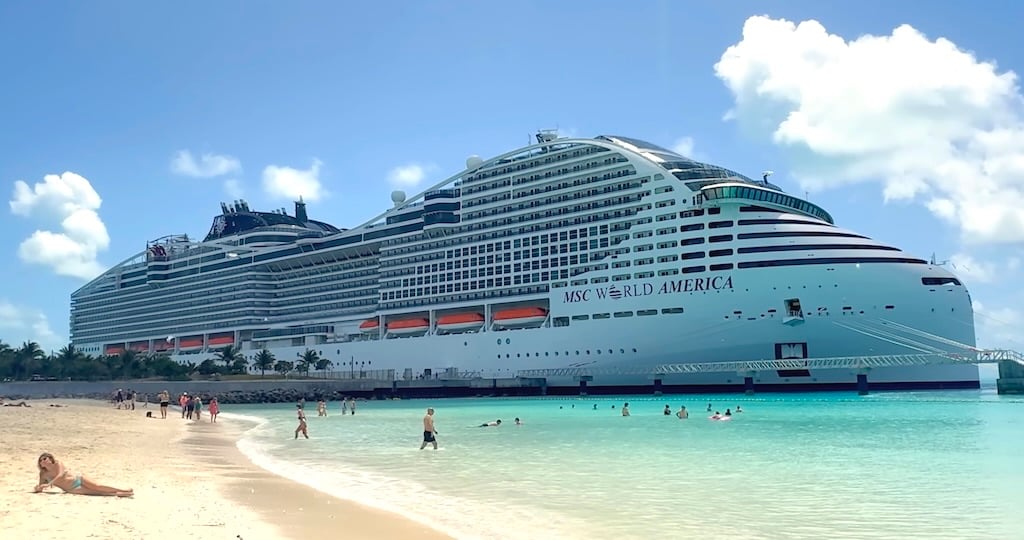
| MSC World America | 2025 | World Class |
| MSC Euribia | 2023 | Meraviglia Plus |
| MSC World Europa | 2022 | World Class |
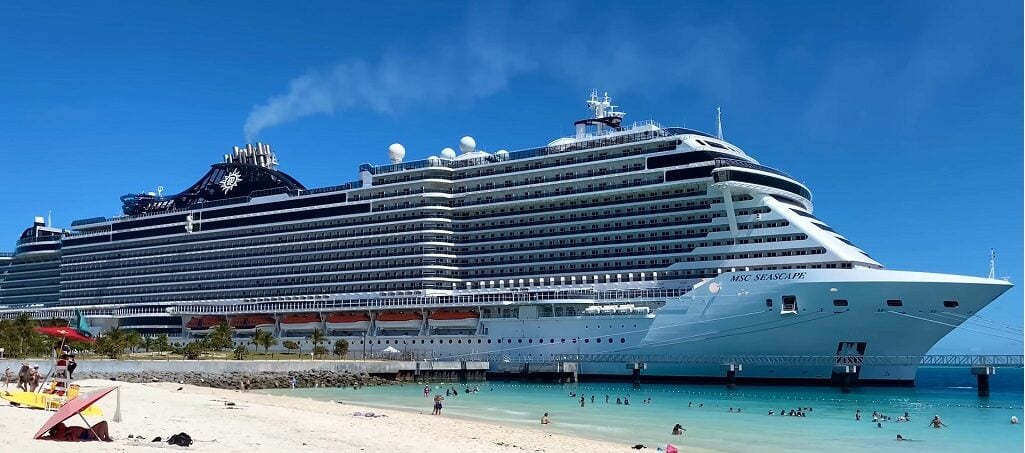
| MSC Seascape | 2022 | Seaside EVO |
| MSC Seashore | 2021 | Seaside EVO |
| MSC Virtuosa | 2021 | Meraviglia Plus |
| MSC Grandiosa | 2019 | Meraviglia Plus |
| MSC Bellissima | 2019 | Meraviglia |
| MSC Seaview | 2018 | Seaside |
| MSC Seaside | 2017 | Seaside |
| MSC Meraviglia | 2017 | Meraviglia |
| MSC Preziosa | 2013 | Fantasia |
| MSC Divina | 2012 | Fantasia |
| MSC Magnifica | 2010 | Musica |
| MSC Splendida | 2009 | Fantasia |
| MSC Fantasia | 2008 | Fantasia |
| MSC Poesia | 2008 | Musica |
| MSC Orchestra | 2007 | Musica |
| MSC Musica | 2006 | Musica |
| MSC Opera | 2004 | Lirica |
| MSC Lirica | 2003 | Lirica |
| MSC Sinfonia | 2005 (for MSC) | Lirica (ex-Festival) |
| MSC Armonia | 2004 (for MSC) | Lirica (ex-Festival) |
*For MSC Sinfonia and MSC Armonia, the year shown is when they entered service for MSC Cruises, not their original build year for Festival Cruises.
The newest generation of MSC Cruises ships (2026–2023)
Right at the top of any list of MSC cruise ships by age you’ll find the World Class LNG megaships and the youngest Meraviglia Plus sister. These are the ships where MSC Cruises throws everything at the design: huge waterparks, multi-zone “districts,” indoor promenades, and the latest sustainability tech.
If you want the ship to feel like a destination in its own right and you don’t mind crowds, this is your playground. Let’s walk through each of the youngest four so you can see how they differ in practice.
MSC World Asia (2026)
Ship type: World Class, LNG-powered mega-ship, scheduled to enter service in December 2026.
MSC World Asia will be the third World Class ship, following MSC World Europa and MSC World America. Expect the same enormous scale: around 200k+ gross tons, with capacity for roughly 6,700 guests at full occupancy, plus a full collection of pools, slides, and “districts” aimed at different types of cruisers.
Why this ship’s age matters:
Being the newest in the World Class family means World Asia will launch with the most refined version of that design so far. MSC has already learned from Europa and America, so things like crowd flow, venue placement, and cabin tweaks should all benefit from two earlier sisters. You’re getting the freshest decor, the latest tech, and the longest runway before anything starts to feel dated.
What to expect on board:
- A “split” superstructure with an open aft and multi-deck promenade
- LNG propulsion and advanced environmental systems
- Family, entertainment, and quiet zones separated into distinct districts
- A huge waterpark, multiple pools, and lots of indoor and outdoor bar space
Best for:
Cruisers who are planning for 2026+ and want to be on the shiny new thing, families who love big-ship chaos in a good way, and anyone who gets more excited about sea days than port days.
MSC World America (2025)
Ship type: World Class, built for the North American market, entered service April 2025.
MSC World America is basically World Europa with a US passport. Same massive footprint, same LNG platform, but the onboard experience is tuned for guests sailing from Miami to the Caribbean. You get all the World Class scale plus North America–friendly dining and bar concepts like Eataly at sea, Paxos Greek options, and new promenade snack and bar experiences.
Why this ship’s age matters:
As one of the newest MSC ships, World America sits right at the top of the MSC cruise ships by age list. That usually means:
- Higher demand and slightly higher fares per night
- MSC throwing a lot of love at the ship in terms of entertainment, staffing, and marketing
- Very up-to-date cabin design, tech, and sustainability gear
What to expect on board:
- A huge central promenade and multiple themed districts
- Big waterpark, multiple pools, and plenty of sundeck space
- Packed restaurant lineup, with several concepts debuting on this ship first
- A very Miami + Caribbean flavor in the decor and programming
Best for:
Cruisers sailing from the US who want a mega-resort experience without having to fly to Europe, families and groups who want a ship where everyone can do something different at the same time, and anyone who likes being on the “newest toy” without waiting for future builds.
MSC Euribia (2023)
Ship type: Meraviglia Plus class, entered service June 2023.
MSC Euribia is the youngest Meraviglia Plus ship and the one most heavily branded around sustainability. It’s LNG-powered, with advanced wastewater treatment and waste management systems, and a distinctive hull artwork that leans into the ocean-protection theme. Inside, it takes the Meraviglia formula and gives it a fresher, more art-forward feel.
Why this ship’s age matters:
Being a 2023 ship, Euribia has that “almost brand-new” feeling but usually prices a bit more gently than the latest World Class giants. You still get modern cabins, a long LED-domed galleria promenade, and multiple pools, but in a slightly smaller, tighter package that some people find more manageable.
What to expect on board:
- The Galleria Euribia, with one of the longest LED ceilings at sea
- Five pools that can collectively handle around a thousand guests
- The first MSC Foundation Youth Centre, tying kids’ spaces into the eco theme
- A full Meraviglia Plus lineup of restaurants, bars, lounges, and entertainment
Best for:
Cruisers who want a modern promenade-style ship without stepping all the way up to World Class size, guests who care about sustainability messaging, and families that want a big water-and-activity ship but prefer something a touch less overwhelming than the very largest hulls.
MSC World Europa (2022)
Ship type: First World Class ship, entered service December 2022.
MSC World Europa is the original World Class flagship. It was the first LNG-powered ship in the MSC Cruises fleet and made a splash as one of the largest cruise ships in the world not owned by Royal Caribbean. Its distinctive Y-shaped open aft and the enormous Venom Drop dry slide give it an instantly recognizable profile.
Why this ship’s age matters:
Although it’s now slightly older than World America and will be older than World Asia, World Europa is still firmly in the “ultra-modern” bucket. It set the template:
- Showed MSC could handle a 22-deck, 200k+ GT design
- Introduced one of the largest waterparks in the fleet
- Debuted the “districts” approach that all later World Class ships refine
In practice, most guests will just experience it as a massive, very new ship with a huge amount of space and things to do.
What to expect on board:
- Multiple pools, including a huge family water area
- The Venom Drop slide spiraling many decks down the stern
- Distinct adult, family, and entertainment zones
- A mix of indoor promenade life and outdoor deck space
Best for:
People who want the original World Class experience, big-ship fans who enjoy exploring a new corner of the ship every day, and families who don’t mind lots of walking and lots of fellow passengers in exchange for endless activities.
Modern MSC Cruises mega-ships (2019–2017)
Once you step down from the very newest LNG flagships at the top of the list, you hit the modern backbone of the MSC Cruises fleet. These are the ships most people actually end up sailing: big, flashy, full of venues, but not always the absolute latest hull off the line.
In the middle of the MSC cruise ships by age timeline you’ll find:
- The Meraviglia Plus sisters MSC Virtuosa and MSC Grandiosa
- The original Meraviglia pair, MSC Bellissima and MSC Meraviglia
- The Seaside EVO duo, MSC Seascape and MSC Seashore
- The original Seaside twins, MSC Seaview and MSC Seaside
These ships are where the “Which one should I pick?” questions really start, because they’re often priced aggressively but still feel very new.
Meraviglia Plus sisters: MSC Virtuosa & MSC Grandiosa (2021 & 2019)
Ship types: Meraviglia Plus class
- MSC Virtuosa – entered service 2021
- MSC Grandiosa – entered service 2019
These two are stretched, upgraded versions of the original Meraviglia design. Think of them as “Meraviglia XXL”: longer hulls, more cabins, more public space, more everything.
Both ships share a lot of DNA:
- A long interior promenade / galleria capped with a huge LED screen “sky”
- Multiple pools, a waterpark, and a ropes course
- A full MSC Yacht Club complex perched at the top
- Strong kids’ and teen facilities
Where Virtuosa edges ahead is mainly age and a few headline toys:
- A Formula 1 simulator
- A humanoid robot bartender, Rob, in the Starship Club
- The Galleria Virtuosa, heavily marketed as one of the largest shopping areas at sea
Grandiosa, as the slightly older sister, offers nearly the same experience but is often where you’ll find slightly better pricing for similar itineraries.
How their age affects the experience
Because they sit in the 2019–2021 window, these ships feel:
- Very modern in cabin design and tech (USBs, storage, lighting)
- Polished in layout, since MSC had already iterated on the Meraviglia concept
- Big and busy, but not quite as overwhelming as World Class giants
For many people, this is the sweet spot in MSC cruise ships by age: new enough to feel cutting-edge, old enough that the “brand-new premium” has softened a bit.
Best suited for:
- Families who want lots to do but aren’t chasing the absolute newest ship
- Shoppers and people-watchers who love the idea of an indoor evening promenade
- First-time MSC Cruises guests who want the “modern MSC” experience in one hit
Original Meraviglia pair: MSC Bellissima & MSC Meraviglia (2019 & 2017)
Ship types: Meraviglia class
- MSC Bellissima – entered service 2019
- MSC Meraviglia – entered service 2017
These two are the original blueprint for all the Meraviglia Plus and Euribia-style ships that came after. When Meraviglia first launched in 2017, it was one of the biggest ships in the world and a huge shift for MSC Cruises, thanks to that indoor galleria promenade with the LED dome ceiling.
Both Meraviglia and Bellissima offer:
- The full galleria with shops, bars, and light shows overhead
- Several pools plus a proper waterpark with slides
- A ropes course and big family activity areas
- Strong kids’ clubs and teen spaces
- MSC Yacht Club suites and private sun deck
Bellissima is the younger of the two, but in day-to-day cruising they feel very similar. The big difference is usually where they’re deployed and how aggressively they’re priced.
Age-based pros and cons
Because these are 2017–2019 ships:
- They still feel modern, especially after refurbs and rolling updates
- They’re often cheaper per night than the newer Meraviglia Plus or World Class ships
- Crowd levels are high, but just a shade below the very newest, largest builds
These are perfect if you want the indoor promenade lifestyle without insisting on the newest Meraviglia Plus branding.
Best suited for:
- Guests who like nightlife, bars, and indoor strolling under a digital “sky”
- Families that want good water features but don’t need the biggest park at sea
- Budget-conscious cruisers trying to balance “modern ship” with good value
Seaside EVO duo: MSC Seascape & MSC Seashore (2022 & 2021)
Ship types: Seaside EVO class
- MSC Seascape – entered service 2022
- MSC Seashore – entered service 2021
Seaside EVO is what happens when MSC Cruises takes the original Seaside idea and hits “upgrade”: stretch the hull, refine the layout, and give guests more outdoor space and better flow.
Both EVO sisters share a core identity:
- Designed to live outdoors with a wide, wraparound waterfront promenade
- Huge aft pool decks that feel like beach clubs at sea
- Multiple pools and water features spread over different levels
- Plenty of alfresco dining and bar options
MSC Seascape, as the younger sister, adds:
- The headline Robotron robotic arm ride that swings you out over the side
- Some subtle refinements to public spaces and promenade areas compared with Seashore
Seashore, by contrast, owns the “first EVO” title and may come up with slightly better fares on some itineraries while still feeling extremely new.
How their age plays into your decision
As 2021–2022 ships, both EVO sisters give you:
- Very fresh cabin styling and common-area decor
- Modern environmental tech baked in from the start
- Enough venues to feel like a true megaship, without being the absolute biggest in the fleet
If you scroll a list of MSC cruise ships by age and stop around this band, you’re getting new hardware specifically tuned for warm-weather outdoor cruising.
Best suited for:
- Sun worshippers who want to spend most of their time on open decks
- Caribbean and Mediterranean cruisers who care more about sea breeze than indoor promenades
- Families wanting water fun and modern design but not necessarily a 200k+ GT monster
Seaside originals: MSC Seaview & MSC Seaside (2018 & 2017)
Ship types: Seaside class
- MSC Seaview – entered service 2018
- MSC Seaside – entered service 2017
Before EVO came along, Seaside and Seaview introduced the whole “sun-chaser” idea for MSC Cruises: pull the public spaces down closer to the water, build a wide waterfront boardwalk, and make outdoor dining and lounging the star of the show.
They share key features:
- Long waterfront promenade lined with loungers, bars, and seating
- A dramatic aft pool that feels almost like a resort infinity setup
- Multiple pools and hot tubs across the upper decks
- Zip lines, sports areas, and family-friendly outdoor spaces
Seaview is the slightly newer sister but feels very much like Seaside in practice. The differences you’ll notice most are itineraries and sometimes subtle tweaks in decor and layout.
Age advantages vs EVO and newer ships
As 2017–2018 ships:
- They’re not quite as large or refined as the EVO duo, but still feel modern
- Pricing is often more aggressive, especially outside peak dates
- Crowds can feel a little lighter than on the very newest ships with even higher capacities
On the MSC cruise ships by age spectrum, these original Seaside ships are fantastic value plays if you love outdoor spaces and don’t mind being one generation behind the newest EVO refinements.
Best suited for:
- Warm-weather itineraries where you plan to live outside
- Guests who want boardwalk vibes without paying EVO or World Class premiums
- Cruisers who found the truly mega-sized ships a bit much and want something “only very big” instead of “absolutely enormous”
Where this “modern mega-ship” band fits in the big picture
If you step back and look at everything we’ve covered so far:
- World Asia / World America / Euribia / World Europa = top of the age list, newest and biggest
- Virtuosa / Grandiosa / Bellissima / Meraviglia / Seascape / Seashore / Seaview / Seaside = the core modern workhorses
In practice, these 2017–2022 ships are where most people will find their best balance of:
- Modern features
- Reasonable pricing
- Plenty of choice without needing a map and a compass
If you’re okay with big ships and want your week to feel like “resort first, ship second”, this is the age band where I’d start shortlisting specific ships.
Classic big-ship MSC Cruises era (2013–2008)
Now we drop into the middle of the timeline, where ships are no longer brand-new, but still feel big, impressive, and very “MSC.” This is the Fantasia and late Musica era: large ships with proper theatres, spas, multiple pools, and that slightly glam European style… just without the full-blown LED promenades and LNG tech of the newest hulls.
If the top of the list is “floating resort overload,” this era is more classic big-ship cruising: enough going on that you’re never bored, but simple enough that you don’t need three days to learn your way around.
We’ll break it into two groups:
- Fantasia class – MSC Preziosa, MSC Divina, MSC Splendida, MSC Fantasia
- Musica class in its mature phase – MSC Magnifica, MSC Poesia, MSC Orchestra, MSC Musica
Fantasia class (2008–2013): early big-ship flagships
Ships in this group:
- MSC Preziosa – entered service 2013
- MSC Divina – entered service 2012
- MSC Splendida – entered service 2009
- MSC Fantasia – entered service 2008
When you look at MSC cruise ships by age, Fantasia class is where “modern MSC” really starts feeling big. Back when these ships launched, they were genuine giants and showed off features MSC had never offered before, especially the MSC Yacht Club ship-within-a-ship concept.
What Fantasia ships feel like on board
All four share a familiar personality:
- Large central atrium with lots of glass, chrome, and often Swarovski sparkle
- Multiple pools and whirlpools, including at least one pool with a retractable roof on most deployments
- A proper theatre with production shows and live music nights
- A good number of bars and lounges, each with its own vibe
- A full spa and fitness center, plus kids’ areas and family programming
They don’t have the marquee indoor promenade with LED sky like Meraviglia, and they don’t have Seaside’s low-level waterfront boardwalk, but they still feel like proper big resort ships.
If you like ships that feel grand but still recognizably “ship-shaped”, this is the sweet spot.
MSC Preziosa (2013)
Role in the class: final Fantasia-class ship, and a bit of a “rescued project” story after the original Libyan order was cancelled.
Onboard personality highlights:
- Generally considered the most refined version of the Fantasia design
- Features a water park area and one of the longer waterslides MSC put on its earlier big ships
- Full MSC Yacht Club at the front, with private lounge, restaurant, and sun deck
- Attractive pool deck, with both open-air and more sheltered areas
How its age shows up:
- Public spaces still feel substantial and stylish, though design language is very “2010s MSC” rather than hyper-modern
- You won’t find a huge waterpark complex like on World Europa, but for many cruisers that’s a plus, not a minus
- Pricing often beats newer Meraviglia/Seaside ships on similar itineraries, especially outside peak summer
Who it suits:
- Guests who want a big ship but don’t need the newest gadget on board
- People eyeing Yacht Club on a more classic platform to keep the cost sane
- Families who are happy with a slide, a pool, and sea days that aren’t all about queuing for attractions
MSC Divina (2012)
Role in the class: third Fantasia-class ship, first of the slightly enlarged pair (with Preziosa).
Onboard personality:
- Famous for its Swarovski crystal staircases and glamorous interiors
- Big theatre, multiple lounges, and a central atrium that feels like a proper evening hub
- Full Yacht Club and upgraded energy systems compared with the earlier Fantasia sisters
- Strong Caribbean and Bahamas presence in many seasons, with Ocean Cay calls often in the mix
Age in practice:
- Feels like a stylish, slightly retro-luxe big ship rather than a new-build resort
- You don’t get LED-sky promenades or slides spiralling 10+ decks, but you do get a solid mix of classic cruise features
- Cabins are comfortable but more traditional; think fewer USBs, more need for multi-plug adapters
Who it suits:
- Cruisers who like a bit of old-school glam with their cocktails
- Guests who want big-ship amenities but don’t care if the water slide is the latest record-breaker
- People looking for good value on Caribbean/Europe itineraries without dropping all the way to the smallest ships
MSC Splendida (2009)
Role in the class: second Fantasia ship, one of the earlier big-ship leaps for MSC Cruises.
What you feel on board:
- Very similar in layout to Fantasia, with a classic pool deck and Yacht Club up top
- At launch, it was one of the largest ships operated by a European cruise line
- Interior design leans into that “early big-ship MSC” look: bold colours, strong patterns, plenty of shine
How its age lands today:
- Feels like a solid, slightly older resort hotel at sea – more than enough for many guests
- Venues are a bit simpler and fewer than on newer ships, which can actually make it easier to choose where to spend your time
- Tech is older, but ship operations and entertainment have been updated over time
Who it suits:
- Travelers who prefer a straightforward big-ship experience without needing maps and apps constantly
- Guests more focused on ports plus a comfortable ship than on chasing the latest shipboard “firsts”
- Cruisers happy to trade a bit of shine for better pricing and lighter crowds than on the newest giants
MSC Fantasia (2008)
Role in the class: first Fantasia-class ship, and first ever MSC ship with the MSC Yacht Club concept.
Onboard experience:
- Set the template for large, multi-pool MSC ships with sizeable spas, lounges, and kids’ spaces
- Introduced the Yacht Club suites and private spaces, which later became a huge part of MSC’s brand
- Features like a Formula 1 simulator and 4D cinema (depending on deployment and refurbs) tapped into that early “fun ship” energy
Age realities:
- Interiors show their era, especially in colour choices and some cabin styling, but still functionally solid
- You’ll feel the design is more “classic cruise ship” than “floating mall,” which many people actually prefer
- You won’t find the dense dining variety or promenade shopping of Meraviglia, but you also won’t feel as overwhelmed
Who it suits:
- Guests curious about Yacht Club but happy to try it on a slightly older hull
- Cruisers who want a big-ship platform at a mid-range price point
- People who value space and traditional ship layout over flash
Musica class (2006–2010): mid-size, big-ship lite
Now let’s talk about the Musica family as it appears in this era:
- MSC Magnifica – entered service 2010
- MSC Poesia – entered service 2008
- MSC Orchestra – entered service 2007
- MSC Musica – entered service 2006
These ships are noticeably smaller than Fantasia, but still feel like “proper cruise ships” with multiple pools, theatres, and a decent spread of bars and restaurants. They’re the mid-size workhorses in the middle of the MSC cruise ships by age chart.
MSC Magnifica (2010)
Role in the class: youngest and most refined of the Musica ships.
What you get on board:
- One main pool area and at least one additional or semi-covered pool, depending on refits
- A theatre, casino, spa, and several bars and lounges
- Five or so main dining and specialty spots, plus the buffet – enough variety for most itineraries
- Around 1,300 staterooms and suites, so it feels busy but not swamped
There were plans at one point for a major stretch and rebuild, adding cabins and venues, but those were shelved. So Magnifica keeps its compact big-ship footprint.
Age notes:
- At this age, the ship relies more on good itineraries and classic feel than on shock-and-awe attractions
- Refurbs have kept public spaces from feeling too tired, but styling is still very era-specific
- The smaller size makes it easier to navigate than newer giants, especially for older guests or first-timers
Who it suits:
- Cruisers who want “big ship, light version” – fewer crowds, fewer venues, but all the essentials
- Itinerary-focused guests who still like having bars, a theatre, and a spa to come back to
- Those who found the newest ships too large or chaotic on previous trips
MSC Poesia (2008), MSC Orchestra (2007), MSC Musica (2006)
I’m grouping these three because, for most guests, they’re variations on a theme:
- All sit around the low-90k GT size, meaning mid-size by modern standards
- Each has roughly:
- One main lido pool area plus a secondary pool / sun deck
- A theatre, casino, and a handful of lounges
- A buffet plus main dining room and usually one or two extra options
They differ a little in decor and minor layout choices, but the experience band is the same: solid, mid-sized ships that feel more intimate than the mega-hulls while still offering the basics of big-ship life.
How their age shows up now:
- Décor is firmly late-2000s: lots of patterns, strong colours, less minimalist than newer ships
- Kids’ facilities exist, but they don’t dominate the ship; water features are much simpler
- Sea days are quieter, with more focus on lounges, trivia, music, and pool time than on big-ticket attractions
Who they suit best:
- Couples and friend groups who want a social but not chaotic ship
- Travelers choosing cruises for interesting itineraries rather than waterpark bragging rights
- Guests who get lost on newer mega-ships and prefer something learnable in a day or two
Fantasia vs Musica in this age band: which one fits you?
If you’re staring at an itinerary and the options are something like MSC Preziosa vs MSC Magnifica, here’s the simple mental shortcut:
- Pick Fantasia class (Preziosa, Divina, Splendida, Fantasia) if you want:
- A bigger ship with more pool space and more lounges
- The option of booking MSC Yacht Club
- Slightly more of that “wow, this is a big resort” feeling
- Pick Musica class (Magnifica, Poesia, Orchestra, Musica) if you want:
- A mid-size ship that feels calmer and easier to navigate
- A more intimate onboard vibe, with less chance of feeling overwhelmed
- Good value on port-focused itineraries, especially in Europe
In the middle of the MSC cruise ships by age list, this is really what you’re choosing between: big classic resort vs mid-sized all-rounder.
Early-2000s compact MSC ships (Lirica era, 2004–2001)
Now we’re at the bottom end of the timeline, where the ships are oldest, smallest, and most “classic cruise ship” in feel. This is the Lirica family, including two ships that started life with Festival Cruises before joining MSC.
These ships are the polar opposite of the World Class giants at the top of the MSC cruise ships by age list. No giant waterparks, no robot bartenders, no 20+ restaurants. Instead, you get:
- Smaller guest counts
- Simple, traditional layouts
- Quieter sea days
- Itineraries where the ports do the heavy lifting
If you’re a “ship as a floating hotel” person rather than a “ship as theme park” person, this era is worth a serious look.
The Lirica family overview
Ships in this group:
- MSC Opera – entered service for MSC in 2004
- MSC Lirica – entered service for MSC in 2003
- MSC Sinfonia – entered service for MSC in 2005 (ex–Festival Cruises)
- MSC Armonia – entered service for MSC in 2004 (ex–Festival Cruises)
All four are around the 65,000 GT mark with roughly 2,600 guests at max occupancy. That’s less than half (sometimes less than a third) of the newest mega-ships.
So even before we talk about décor or features, the age alone tells you something important:
These are smallish mainstream ships by today’s standards, with far fewer people and a much calmer, more intimate vibe.
Shared design & onboard feel
Across all four ships, you can count on:
- Two main pool areas (or one main plus a small secondary) with hot tubs
- A single main theatre with nightly shows
- A central atrium with a bar and seating for live music
- A handful of lounges and bars, but not dozens
- One main dining room (sometimes split into named sections)
- A buffet restaurant and simple poolside grill / pizza options
- Compact kids’ areas, but no huge dedicated waterpark or multi-deck family complex
In other words: you won’t be choosing between ten specialty restaurants or four different pool zones. You’ll have a couple of go-to places, get to know your favourites quickly, and see familiar faces at the bar by day two or three.
For some people, that’s exactly the appeal.
MSC Opera (2004)
Position in the family:
- The final Lirica-class new-build for MSC
- Entered service in 2004, built at Chantiers de l’Atlantique
Onboard personality:
Opera is a small, neat, traditionally laid-out ship that feels more like a classic ocean liner than a floating resort mall. You get:
- A simple top-deck pool area with sun loungers and a couple of hot tubs
- A compact theatre, casino, and lounge set
- Around a thousand staterooms and suites, so you’re sharing the ship with far fewer people than on the giants
- A buffet and main dining room, plus basic poolside options rather than extensive specialty dining
How its age shows up:
- Décor is straightforward and a bit dated in places, but generally well maintained after refurbs
- Cabins are smaller and simpler than on the newest ships, with fewer built-in charging options
- You’ll notice less choice and fewer “wow” spaces, but more of a cozy, regulars-at-the-bar feel
Best for:
- Travelers who want a small, easy-to-navigate ship
- Guests who are more excited about ports and price than onboard attractions
- People who don’t want to feel lost in a crowd of 6,000
MSC Lirica (2003)
Position in the family:
- First new-build ever constructed specifically for MSC Cruises
- Entered service in 2003, also at Chantiers de l’Atlantique
Onboard personality:
Lirica is the namesake and spiritual starting point of this whole era. She’s:
- Compact, with fewer than a thousand cabins
- Laid out in a very classic, straightforward pattern: cabins above and below, public decks in the middle, pools up top
- Light on extreme features, heavy on traditional cruise staples: lounges, live music, show lounge, casino, and a small spa
The upside of this simplicity is that everything is easy to find. You won’t spend the first two days wandering around trying to discover some hidden lounge on Deck 8 aft.
Age in practice:
- Public spaces have been refreshed over the years, but the bones of the ship are early-2000s
- There was a refurbishment in the mid-2010s adding an aqua-park style splash zone, but it’s modest compared to modern waterparks
- Lirica will feel quiet and almost old-fashioned if you’re used to the newest MSC ships – which can be a feature, not a bug
Best for:
- Guests who want a compact, no-fuss ship to take them to interesting destinations
- Cruisers who get overwhelmed on mega-ships and prefer a more intimate, low-key vibe
- People who are comfortable trading features for better pricing and less crowd density
MSC Sinfonia (2005 in MSC service)
Position in the family:
- Entered service for MSC Cruises in 2005
- Originally built in 2002 as MS European Star for Festival Cruises
Onboard personality:
Sinfonia feels very similar to Opera and Lirica from a guest’s point of view:
- One central pool deck with hot tubs and plenty of loungers
- A theatre, casino, and a few lounges that host live music and trivia
- Basic but comfortable staterooms, mostly in standard categories (inside, oceanview, balcony where applicable, suites)
- Dining focused on the main dining room and buffet, with smaller side options depending on deployment
Because she had a life before MSC, some parts of the layout can feel slightly different from the pure new-builds, but the overall experience is firmly in that small, classic MSC lane.
Age realities:
- As one of the older hulls in the fleet, you may notice more narrow corridors and lower ceilings compared with new builds
- Décor and fixtures lean older, even if refreshed – this will not feel like a brand-new resort
- The trade-off is a very human scale ship where you can learn faces and spaces quickly
Best for:
- Guests who value itinerary and atmosphere over hardware
- Cruisers who want lower passenger counts and easier navigation
- Repeat MSC guests who have already tried the big ships and want to see the brand’s quieter side
MSC Armonia (2004 in MSC service)
Position in the family:
- Oldest ship currently operating for MSC Cruises
- Built in 2001 as MS European Vision for Festival Cruises
- Joined MSC in 2004
Onboard personality:
Armonia is as classic as it gets in this fleet:
- A smallest-ship-in-the-fleet vibe by today’s MSC standards
- One main pool deck, a handful of bars and lounges, and a compact buffet
- A modest theatre and basic daily entertainment – think trivia, live bands, dance parties, not multi-theatre productions and laser tag
When you walk around Armonia, you feel like you’re on a ship first and a resort second. Views of the sea are everywhere, and nothing is too far from your cabin.
How age matters here:
- She’s often deployed on niche or regional itineraries, where port access and flexibility matter more than size
- You won’t get the latest whiz-bang features, but you will get a strong sense of being at sea
- Guests used to huge promenade ships sometimes find this refreshingly low-key and personal
Best for:
- Travelers who want the smallest possible MSC ship and don’t mind older styling
- Itinerary-first cruisers: people choosing for ports, not slides
- Budget-conscious guests who still want a big-line experience but in a smaller package
What this oldest age band is (and isn’t)
If we put all four Lirica-era ships together, here’s the honest summary:
They are:
- Smaller, simpler, quieter
- Great for port-heavy cruises where you’ll be ashore most days
- Easier to navigate for anyone who hates giant, confusing ships
- Often cheaper per night than newer hardware on similar routes
They are not:
- Packed with waterparks and headline attractions
- Ideal for kids and teens who expect huge slides, go-karts, or VR arenas
- The right choice if your dream cruise is mostly sea days on a mega-resort
On the MSC cruise ships by age spectrum, these ships live in the calm, traditional, value-focused corner. If that’s what you want, they can be perfect. If you secretly want a floating amusement park, you’ll be happier higher up the list.
How to actually choose an MSC ship by age
Now that we’ve walked through each era of the fleet, let’s talk about how to use all of this in real life. Because nobody sits at their laptop thinking, “Hmm, a 2008 Fantasia-class hull really speaks to me emotionally.” You’re thinking:
- “Will this feel crowded?”
- “Will my kids be bored?”
- “Am I overpaying just to be on the newest ship?”
This is where grouping MSC cruise ships by age becomes way more practical than a raw list. Age is a shortcut to vibe.
Step 1: Decide if you’re a “ship person” or a “ports person”
This is the most important question, and almost nobody starts here.
Ask yourself honestly:
- If my itinerary got changed and we spent more time at sea, would I be secretly thrilled… or disappointed?
If your heart says “thrilled”:
- You’re a ship first cruiser.
- You’ll get more value from newer ships (2017 and up), because you’ll actually use the waterparks, promenades, thrill rides, and specialty restaurants.
- World Class, Meraviglia / Meraviglia Plus, and Seaside / Seaside EVO are your natural hunting grounds.
If your heart says “disappointed”:
- You’re a ports first cruiser.
- You don’t need to pay extra for the absolute newest hardware, because your ship is basically a comfortable moving hotel.
- Fantasia, Musica, and especially the Lirica-era ships can save you money while still giving you a perfectly good base between ports.
Think of ship age as a multiplier: the more of a “ship person” you are, the more it pays to be on the younger end of the list.
Step 2: Match age band to traveler type
Now let’s line up the different age eras with different types of travelers. This is where people usually over- or under-buy the ship.
Families with kids and teens
If you’re travelling with younger kids, tweens, or teens, and you know sea days will be a big deal:
- Aim for 2017 and newer as a baseline.
- The sweet spots:
- World Class (World Europa, World America, World Asia)
- Meraviglia / Meraviglia Plus (Meraviglia, Bellissima, Grandiosa, Virtuosa, Euribia)
- Seaside / Seaside EVO (Seaside, Seaview, Seashore, Seascape)
Why this age band works for families:
- Newer kids’ clubs with friendlier layouts and themes.
- Actual waterparks, ropes courses, and in some cases thrill rides, not just a slide and a pool.
- More casual, kid-friendly eateries and snack spots around the ship.
Older ships (Magnifica, Poesia, Orchestra, Musica, Lirica-era) can still work for families, but you’re relying more on ports and simple pool time than on big onboard attractions.
Good rule of thumb:
- If you’re doing a summer Med or Caribbean with lots of sea days, stick 2017+.
- If you’re doing a port-heavy shoulder-season itinerary, you can dip into the 2008–2013 era and still keep kids happy.
Couples and adult friend groups
Couples aren’t all the same, so let’s split this a bit.
If you like energy, nightlife, and options:
- Pick something new-ish but not necessarily brand new:
- Meraviglia / Meraviglia Plus
- Seaside / Seaside EVO
- These still feel lively at night with multiple bars, music venues, and promenade life.
- You get plenty of places to have a drink and people-watch without necessarily needing the full World Class scale.
If you like quieter evenings and fewer crowds:
- Look at Fantasia and Musica ships first.
- Lirica-era ships if you really want small and low-key.
- You’ll still get a theatre, a piano bar, and some live music, but you won’t be wading through 6,000 people on the way to your nightcap.
Age trick for couples:
- For a short cruise (3–5 nights) where you’re fine with noise and excitement, newer ships can be fun even if they’re busy.
- For a longer cruise (10–14 nights), an older, calmer ship often feels more sustainable unless you really love the mega-resort vibe.
Budget-focused travelers
If price is a big driver, ship age is your best friend.
In general:
- The oldest ships (Lirica-era, older Musica, early Fantasia) will often be the cheapest per night.
- Mid-life ships (Magnifica, Poesia, Orchestra, Musica, Fantasia, Splendida) are the value sweet spot for people who still want a decent amount of stuff on board.
- The youngest ships (World Class, Euribia, Virtuosa, Grandiosa, EVOs) command a “new ship tax,” especially in their first 2–3 years.
If you see two itineraries like this:
- 7 nights, World Europa – brand new, full of features
- 7 nights, Preziosa or Divina – older Fantasia-class
Ask yourself:
- “Will I actually use the extra features I’m paying for?”
- “Would I rather save that money for excursions and drinks?”
If the answer is “I just need a nice ship to sleep, eat, and watch the sea,” the older ship is often the smarter buy.
Older cruisers / mobility-conscious guests
Age here matters in a slightly different way.
Newer ships:
- Have more ramps, wider passageways in some areas, and elevators everywhere…
- But they’re also huge, with long walks between venues and cabins.
Older ships:
- Are more compact, with shorter walking distances between cabins, dining rooms, and lounges.
- Sometimes have more bottleneck areas, since they weren’t designed for today’s crowds.
If you or someone in your group:
- Tires easily
- Uses a cane, scooter, or wheelchair
- Just doesn’t fancy 10-minute walks to dinner
Then a mid-size older ship (Musica or Lirica-era, and even Magnifica) can be more comfortable day to day than a World Class giant, even though the newer ship has flashier accessibility features on paper.
Step 3: Factor in refurbs (age vs condition)
One trap with looking at MSC cruise ships by age is assuming that newer automatically means “nicer.” Refurbishments complicate that.
Things to keep in mind:
- Many older ships have had recent dry docks where cabins were refreshed, carpets replaced, and some venues updated.
- Some newer ships can feel a bit scuffed if they’ve been running hard and haven’t had their first big refresh yet.
- A well-refurbished 2010 ship can feel better maintained than a tired 2019 ship that hasn’t had a serious sprucing.
This is why age should be your starting filter, not the only filter. Once you know the era you want, it’s worth quickly checking:
- When was the ship last refurbished or updated?
- Are there recent mentions of it feeling dated or worn, or does everyone say “she’s in great shape”?
You don’t need to obsess over this, but if you’re stuck between two similar-age options, recent refurb wins.
Step 4: Use age as a fast “fit check” before you ever look at deck plans
Here’s how I’d actually apply all of this in the real world, step by step.
- Find an itinerary you like.
Region, dates, and length first. Don’t even worry about the ship yet. - Check the ship name and place it on the age list.
- Is it top-of-list new (World, Euribia, Virtuosa, Grandiosa, EVOs)?
- Middle-aged big (Fantasia, Magnifica)?
- Older mid/small (Musica, Lirica-era)?
- Ask three quick questions:
- Am I a ship person or a ports person on this cruise?
- Who am I travelling with (kids, older relatives, party crew)?
- Is the price I’m seeing “new ship level” or “older ship level”?
- If the answers don’t line up with the ship’s age, look again.
- If you’re a family of five booking a super sea-day-heavy itinerary on a tiny Lirica ship just because it’s cheaper, you might regret it.
- If you’re a quiet couple doing a port-intensive Med itinerary on the absolute newest mega-ship, you might be paying for features you never touch.
- Only then start worrying about cabin type and location.
- Balcony vs inside, midship vs forward, high deck vs low deck… all of that comes after you’ve picked the right age band and class.
Jim’s take: how I personally think about MSC cruise ships by age
I’ll put it bluntly: I don’t automatically chase the newest ship, even though I love seeing them.
- If I’m doing a Caribbean cruise with kids in tow, I start at the top of the list and work down: World Class, Meraviglia Plus, Seaside EVO, then original Seaside/Meraviglia.
- If I’m doing a shoulder-season Med trip for ports, I’m perfectly happy dropping into the Fantasia or Musica era to save cash and avoid mega crowds.
- If a friend says “I hate crowds but I found a deal on World Europa,” I usually suggest they pay the same money for a nicer cabin on a slightly older ship instead. You can’t balcony your way out of a 6,000-guest pool deck on a sea day.
For me, the key is simple:
Newer is only “better” if you’re actually going to use what you’re paying for.
Once you get clear on whether you want ship thrills or port chills, the rest of the MSC cruise ships by age puzzle falls into place pretty quickly.
FAQs about MSC cruise ships by age
Let’s finish by tackling the questions people actually type (or think) once they’ve seen the whole lineup of newest to oldest. You can drop this as a full FAQ section, or break it into smaller blocks if you like.
Are older MSC ships still safe and well maintained?
Yes. Age in cruising isn’t like age in used cars sitting in a driveway. Ships are on strict maintenance cycles, and MSC Cruises has to comply with:
- Flag-state regulations
- Port state inspections
- Classification society rules
- Internal safety and maintenance standards
Older ships go through:
- Dry docks, where hulls are inspected, machinery checked, spaces updated
- Ongoing maintenance at sea (painting, mechanical work, safety system checks)
- Rolling upgrades to things like fire suppression, navigation systems, etc.
What does change with age isn’t safety, but style and layout. A 2003 build won’t suddenly sprout a mega waterpark and LED promenade, but it’ll still be safe and seaworthy if it’s in the fleet.
If safety is on your mind, pay more attention to:
- The line’s overall record and reputation
- How recently the ship had a significant refit
- How guests describe maintenance and cleanliness in reviews
…rather than fixating strictly on build year.
Is newer always better when choosing an MSC ship?
Not automatically.
Newer ships generally bring:
- More dining and bar options
- Bigger waterparks and family areas
- Newer cabins and tech (more storage, more outlets, better lighting)
But they also bring:
- More people per square metre in many public areas
- Higher prices per night
- Longer walks and more potential for noise and crowding
Older ships:
- Give you more intimacy, less of a “shopping mall” feeling
- Are often cheaper on the same route
- Can be easier for some guests to actually enjoy, because there’s less FOMO and fewer lines
The right answer is: newer is better if you’ll genuinely use the extra features. If you’re going to swim, eat, nap, read, and explore ports, paying extra for a slide you’ll never ride doesn’t really help you.
What’s the best age band for a first-time MSC cruiser?
If someone says “I’ve never sailed MSC before, where should I start?” I usually think in three bands:
- Top band: 2026–2021
- World Class, Meraviglia Plus, Seaside EVO
- Best if you want a big “wow, this is what MSC can do” moment
- Great for families and people who love big resort ships
- Middle band: 2019–2010
- Meraviglia, Seaside, Fantasia, Magnifica
- Best if you want a taste of modern MSC without the very biggest crowds
- Good for couples, mixed-age groups, and budget-conscious cruisers who still want plenty to do
- Lower band: 2008–2001 (in MSC service)
- Musica and Lirica-era ships
- Best if you’re used to classic ships or are deliberately choosing a quieter, port-first trip
If you’re truly unsure and not strongly “ship vs ports” either way, I’d generally nudge a first-timer toward something like Meraviglia, Bellissima, Grandiosa, Virtuosa, Seashore, or Seascape. They speak “modern MSC” fluently without needing the full World Class scale.
Are the oldest MSC ships too boring for kids?
It depends on your kids and your itinerary length.
On Lirica-era ships (Armonia, Sinfonia, Lirica, Opera):
- There are kids’ clubs and a pool, sometimes with a small splash area added during refurbs.
- There is entertainment, but it’s more shows, music, and simple activities than big-park attractions.
- There are not giant multi-slide waterparks, ropes courses, or headline rides.
They can work for kids if:
- The cruise is relatively short (3–7 nights).
- The itinerary is port-heavy, so every day is an adventure ashore.
- Your kids are happy with pool time, ice cream, and evening shows rather than all-day slides.
If you’ve got:
- Energetic teens
- A long, sea-day-heavy itinerary
- Or a family that loves “more, more, more” on board
…then the older ships will probably feel light, and you’re better off in the 2017+ bracket.
Is it worth paying more for a brand-new World Class ship?
Sometimes.
Here’s when I’d say yes, it’s worth it:
- You’re doing a sea-day-heavy Caribbean itinerary and you know you’ll spend tons of time on board.
- You’re traveling with kids/teens who will live in the waterpark, slides, and family district.
- You personally enjoy exploring big ships and trying new bars, restaurants, and shows each night.
- You’re celebrating something big and want that “we’re on the newest thing” buzz.
Here’s when I’d consider saving the money:
- The itinerary is super port-focused, and you plan to be off the ship almost every day.
- You or someone in your group doesn’t like crowds or noise.
- You’re on a tighter budget and would rather upgrade cabin type (say, balcony instead of inside) on a slightly older ship.
- You’ve done a few megaships already and realised you didn’t use half the features.
If you’re torn, a good compromise is often a Meraviglia Plus or Seaside EVO ship: very modern, but usually a bit cheaper and a bit less overwhelming than the biggest, shiniest flagship.
Which MSC ships offer the best value for money right now?
Value shifts constantly with promos and seasons, but as a general pattern:
- Fantasia class (especially Splendida, Fantasia, sometimes Divina) often hits a great sweet spot:
- Big-ship feel
- Yacht Club available
- But not “most expensive because newest”
- Magnifica and the Musica trio (Poesia, Orchestra, Musica) can be very good value on Med and repositioning runs, especially outside school holidays.
- Lirica-era ships are often cheapest per night, but remember: you’re choosing them for quiet and ports, not for onboard attractions.
If you see two offers like this:
- New ship, inside cabin, tight budget
- Slightly older ship, balcony or better cabin, similar price
Most of the time, I’d tell a value-focused cruiser to take the better cabin on the slightly older ship, especially in scenic regions where balcony time is gold.
Do older MSC ships “feel” more rocky or unstable at sea?
Smaller ships can feel ocean motion more than the biggest megaships, especially in rough conditions, but it’s not just about age; it’s mostly about size, hull design, and where you sail.
General trends:
- World Class / Meraviglia / Seaside ships are so large and wide that they usually feel very stable in typical cruise conditions.
- Mid-size ships (Fantasia, Musica, Magnifica) are still comfortable, but you may notice movement more in high winds or rough seas.
- Lirica-era ships, being the smallest, can feel the sea the most, especially forward and high up.
If you’re motion-sensitive and browsing MSC cruise ships by age:
- Favour newer, larger ships in rougher seasons or regions (Atlantic crossings, late-fall Med, winter storms).
- On older/smaller ships, try to book a cabin midship and on a lower deck, which is usually calmer.
Are MSC’s oldest ships mainly for Europeans and “old-school” cruisers?
Not exclusively, but the mix of guests and the vibe can feel different.
On the oldest, smallest ships:
- You’re more likely to see longer itineraries in the Med, South America, South Africa, or regional routes.
- You’ll often get a strong European mix of nationalities, languages, and customs on board.
- Entertainment and announcements are usually multilingual (that’s true on newer ships too, but feels more noticeable on small ones).
This can be a huge plus if you:
- Enjoy a more international atmosphere.
- Don’t need an Americanised, ultra-themed big-ship feel.
If you want something that feels closer to North American mega-ship culture, you’re better off at the newer end of the list, especially with World America and some Meraviglia / Seaside deployments.
To learn more about MSC Cruises, visit their official website here.
How do I future-proof my booking if new ships are coming soon?
If you’re cruising in the next year or two:
- Book based on the ships that actually exist or are in their first season (World Europa, World America, Euribia, Seascape, Seashore, Virtuosa, etc.).
If you’re planning farther out and know more ships are coming:
- Decide whether you care more about timing or hardware.
- If your dates are fixed (school, work, event), choose the best ship available in that window instead of waiting.
- If you can be flexible, you can aim your booking at the first full season of a new ship after its inaugural kinks are worked out.
For most people, the best move is to think:
“What’s the nicest ship I can sensibly afford for the dates and region I really want?”
…rather than “Should I wait three years for something newer?”
Because once you’re on board, it won’t matter if your ship is the newest, just that it’s the right fit.